February 5, 2024
via
via
Hardest Punching Legends
Hardest Punching Legends
Power punchers have always held a special place in heavyweight boxing, leaving their mark on the sport with raw strength and spectacular knockouts.
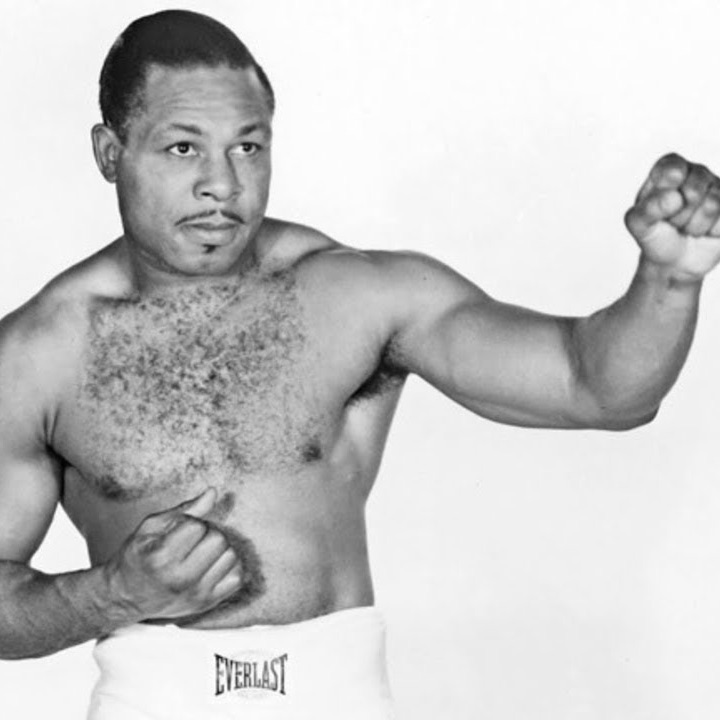
Legendary Contender
Archie Moore built one of boxing's great light-heavyweight championship careers and carried his skill into the heavyweight division. He challenged Rocky Marciano and Floyd Patterson for the world heavyweight title, defeated leading contenders and later faced the young Muhammad Ali. He never became heavyweight champion, but his work against larger opponents was a substantial part of a career that extended across generations.
Known as “The Old Mongoose,” Moore combined a patient defence with deceptive changes of rhythm and damaging counterpunches. His longevity was not simply a matter of continuing to appear in the ring. Long after many of his contemporaries had retired, he was still winning championship fights and finding ways to recover when younger challengers hurt him.
Archie Moore, the long-reigning light-heavyweight champion who twice challenged for the heavyweight crown.
Born Archibald Lee Wright and raised in St. Louis, Moore took the surname of the relatives who helped bring him up. His birth information remains disputed. December 13 appears consistently, but accounts give both 1913 and 1916 as the year; published versions also differ over his birthplace. Rather than assign a definitive age to every late-career achievement, his remarkable longevity can be understood through the documented span of his boxing career.
Moore began professional boxing in the 1930s and developed through the middleweight and light-heavyweight ranks. Historical researchers have continued to revise parts of his early record. That makes exact lifetime bout and knockout totals less secure than the major contests that established his reputation.
Before receiving a championship opportunity, Moore fought a demanding range of opposition. His rivals included Jimmy Bivins, Harold Johnson and Ezzard Charles, men whose ability cannot be measured solely by the titles they held at the time.
Charles beat him in all three of their meetings, an important qualification to any portrayal of Moore as unbeatable. Against Bivins and Johnson, Moore's repeated encounters produced a different pattern: he learned from difficult fights and built successful rivalries. His championship breakthrough came after years in which he had already demonstrated world-class ability.
Moore's style rewarded experience. He could cover up behind his arms, alter the distance with small movements and answer when an opponent overcommitted. Those methods did not make him immune to punishment, but they helped him remain dangerous in exchanges that appeared to favour a younger or larger man.
On December 17, 1952, Moore defeated Joey Maxim by a fifteen-round unanimous decision in St. Louis to win the world light-heavyweight championship. It was the achievement around which the rest of his career should be organised: a veteran contender had finally secured the title his earlier work had made him capable of winning.
He then defeated Maxim in two championship rematches, establishing that the first result was no isolated breakthrough. Moore continued to fight between defences, often moving above the 175-pound light-heavyweight limit to meet heavyweights.
His August 11, 1954, defence against Harold Johnson showed the value of his finishing power. Johnson built an advantage and knocked Moore down in the tenth round. Moore recovered, hurt the challenger with right hands and forced a technical-knockout stoppage in the fourteenth. In June 1955, he stopped middleweight champion Carl “Bobo” Olson in the third round of a light-heavyweight title defence.
Moore's heavyweight ambitions were supported by results against established contenders. He defeated Nino Valdes in 1953 and again in 1955, and stopped Bob Baker in 1954. These were meaningful victories over larger men, rather than exhibitions added to a light-heavyweight champion's schedule.
The second Valdes contest, a fifteen-round decision in Las Vegas on May 2, 1955, strengthened his case for meeting Marciano. Moore brought the experience of a champion and the threat of a skilled counterpuncher, although competing with elite heavyweights also demanded that he absorb the pressure and strength of men above his natural championship division.
Moore challenged Marciano at Yankee Stadium on September 21, 1955. In the second round, a right hand put the heavyweight champion on the canvas. It was a genuine opening, and a lasting demonstration that Moore's timing and power could threaten the unbeaten titleholder.
Marciano recovered and imposed increasingly sustained pressure. He repeatedly knocked Moore down and ended the contest by knockout in the ninth round. It was Marciano's final professional fight.
Moore later disputed aspects of the referee's handling of the second-round knockdown. Such complaints form part of the bout's history, but they do not establish that Moore was denied a certain victory. The official result was a Marciano knockout win; Moore's achievement was to create real danger before the champion's endurance and pressure prevailed.
After Marciano retired, Moore received another opportunity to win the heavyweight championship. On November 30, 1956, he met Patterson at Chicago Stadium for the vacant title.
Patterson's speed and explosive combinations presented a different problem from Marciano's sustained pressure. The younger fighter knocked Moore out in the fifth round and became heavyweight champion. Moore's second title challenge ended decisively, but his light-heavyweight championship career continued.
Moore's December 10, 1958, defence against Yvon Durelle in Montreal was among his most dramatic fights. Repeated trips to the canvas put the champion in serious danger early; accounts differ over whether one first-round fall should be counted as an official knockdown. Moore survived, gradually reversed the contest and knocked Durelle out in the eleventh round.
He won their 1959 rematch by third-round knockout. In June 1961, he defeated Giulio Rinaldi over fifteen rounds in New York in his final light-heavyweight title defence.
Recognition of Moore's championship did not end all at once. The National Boxing Association stripped him in 1960, while New York continued to recognise him until 1962. Describing him as the universally recognised champion throughout that period would obscure the division's changing title situation.
Moore briefly trained Muhammad Ali, then known as Cassius Clay, before later meeting him in the ring. Their November 15, 1962, heavyweight contest in Los Angeles ended with Moore being stopped in the fourth round. It was not a world-title fight: the twenty-year-old Clay was still progressing towards his first championship opportunity.
Moore's final professional appearance came in 1963, when he stopped Mike DiBiase in the third round. His later contribution to heavyweight boxing included training and mentoring George Foreman. Away from competition, his Any Boy Can programme supported young people in San Diego.
Inducted into the International Boxing Hall of Fame in 1990, Moore died on December 9, 1998. His place in boxing rests on a long light-heavyweight reign, victories against exceptional opposition and the willingness to test himself at heavyweight. The uncertain details of his birth and early record need not be forced into a neat statistic for those achievements to stand.

Top Heavyweight Boxing covers the past, present and future of boxing's premier division. Copyright© 2026
Powered by Digital Dynasty Design