WORLD Heavyweight Boxing

Month
Date
,
Year
Legendary Contender
Billy Conn was a world light-heavyweight champion who became a leading challenger for the heavyweight crown. The “Pittsburgh Kid” built his reputation through speed, combination punching and the ability to compete with larger men. His first challenge to Joe Louis in 1941 nearly brought him the sport’s most prestigious championship, but his career deserves more than a retelling of that defeat.
Conn ruled at light-heavyweight from 1939 into 1941, made three successful championship defences and beat established heavyweights before meeting Louis. He never won the world heavyweight title. That distinction leaves his achievement intact: he was an outstanding champion at 175 pounds whose boxing translated into genuine success above his own division.
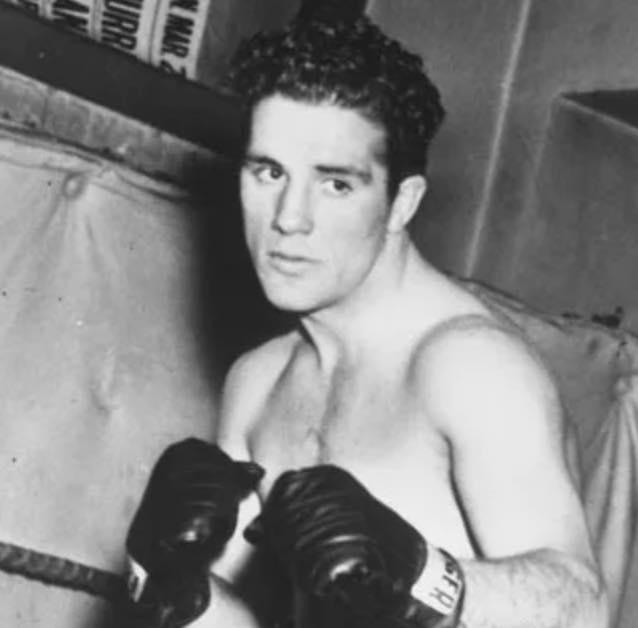
Billy Conn wearing boxing gloves in a black-and-white portrait. The Pittsburgh fighter won the world light-heavyweight championship in 1939.
William David Conn was born in Pittsburgh on October 8, 1917. His recorded professional debut came on July 20, 1934, when he stopped Johnny Lewis in the third round. He was sixteen, beginning a career that would take him from lighter opposition to championship contests against much bigger men.
His early results were uneven. Losses formed part of his apprenticeship, and he did not arrive at the top with an untouched record. What developed was a boxer who could move into range, land quickly and make an opponent reset before the next exchange.
Victories over experienced fighters such as Fritzie Zivic, Teddy Yarosz and Fred Apostoli helped establish his credentials. Those contests gave substance to the reputation that later followed him into heavyweight boxing: his skill had been tested against accomplished professionals, not merely described as a promising attribute.
On July 13, 1939, Conn defeated Melio Bettina over fifteen rounds in New York to win the world light-heavyweight championship. The unanimous decision brought together the New York State Athletic Commission and National Boxing Association recognition.
He confirmed the result in a September 25 rematch with Bettina, again winning a fifteen-round decision. Two successful defences against Gus Lesnevich followed, on November 17, 1939, and June 5, 1940. Conn therefore had a championship reign with three completed defences before the heavyweight challenge became the centre of his story.
These were distance victories built on sustained boxing rather than sudden finishes. Conn could change the direction of an exchange, combine punches and keep working as a contest became demanding. His championship performances established him as more than a talented smaller man taking an ambitious chance against Louis.
Conn’s case for a heavyweight challenge rested on results. On September 6, 1940, he knocked out leading contender Bob Pastor in the thirteenth round. Pastor had twice faced Louis, and beating him gave Conn a significant victory against recognised heavyweight opposition.
A points win over Lee Savold later that year strengthened the argument. Conn also stopped Gunnar Barlund in April 1941. He was not simply moving directly from a lighter championship into a heavyweight payday: he had demonstrated that he could beat men competing in the larger division.
His light-heavyweight recognition ended as he committed to the Louis challenge. Recognition ended at different times under the authorities governing the championship. By the time of the heavyweight title fight, his focus was on defeating Louis rather than maintaining an active 175-pound reign.
On June 18, 1941, Conn challenged Louis at New York’s Polo Grounds. Against a heavier champion with exceptional finishing power, Conn used movement, quick combinations and changes of angle to make Louis work for clear openings.
After twelve rounds, Conn was ahead on two official scorecards and level on the third. He had made a serious championship contest of a fight in which his size placed obvious limits on the punishment he could afford to absorb.
The result changed decisively in round thirteen. Louis hurt Conn and followed with the punches that put him down for the count. The champion retained his title by knockout at 2:58 of the round.
Conn’s quick exchanges had troubled Louis throughout the fight, but a longer exchange exposed him to the champion’s finishing power. His lead after twelve rounds made the finish especially dramatic; it did not make the remaining rounds a formality. Louis’s recovery and accurate attack decided a contest in which Conn had already demonstrated how effective a smaller, mobile challenger could be.
Conn continued competing after the first Louis fight. In February 1942, he outpointed reigning middleweight champion Tony Zale over twelve rounds. It was a non-title contest, not another light-heavyweight defence or a middleweight championship victory.
A Louis rematch planned for June 1942 was cancelled after Conn broke his left hand. A later arrangement for October was also cancelled, this time by the War Department. Both fighters had joined the United States Army, and wartime service interrupted their championship rivalry.
The gap matters when comparing the two fights. The rematch did not follow a normal cycle of training camps and regular competitive appearances. Years passed before the men returned to the same championship stage.
Louis and Conn finally met again on June 19, 1946, at Yankee Stadium. Conn could not reproduce the sustained effectiveness of his first challenge. Louis knocked him out in the eighth round, ending his second attempt to win the heavyweight championship.
Conn’s final professional appearances came in 1948. Published career totals differ between record compilations. His championship wins, three successful light-heavyweight defences and two heavyweight title challenges provide a clearer foundation for assessing the career.
Conn was inducted into the International Boxing Hall of Fame in 1990. He died in Pittsburgh on May 29, 1993, aged seventy-five.
His place in heavyweight history comes from the combination of accomplishment and ambition. He beat serious contenders before facing Louis, carried his boxing skill into a difficult physical matchup and forced an exceptional champion through a demanding first defence against him. The Louis fight remains his best-known performance, but it should sit alongside the championship he actually won and defended.

Top Heavyweight Boxing covers the past, present and future of boxing's premier division. Copyright© 2026
Powered by Digital Dynasty Design