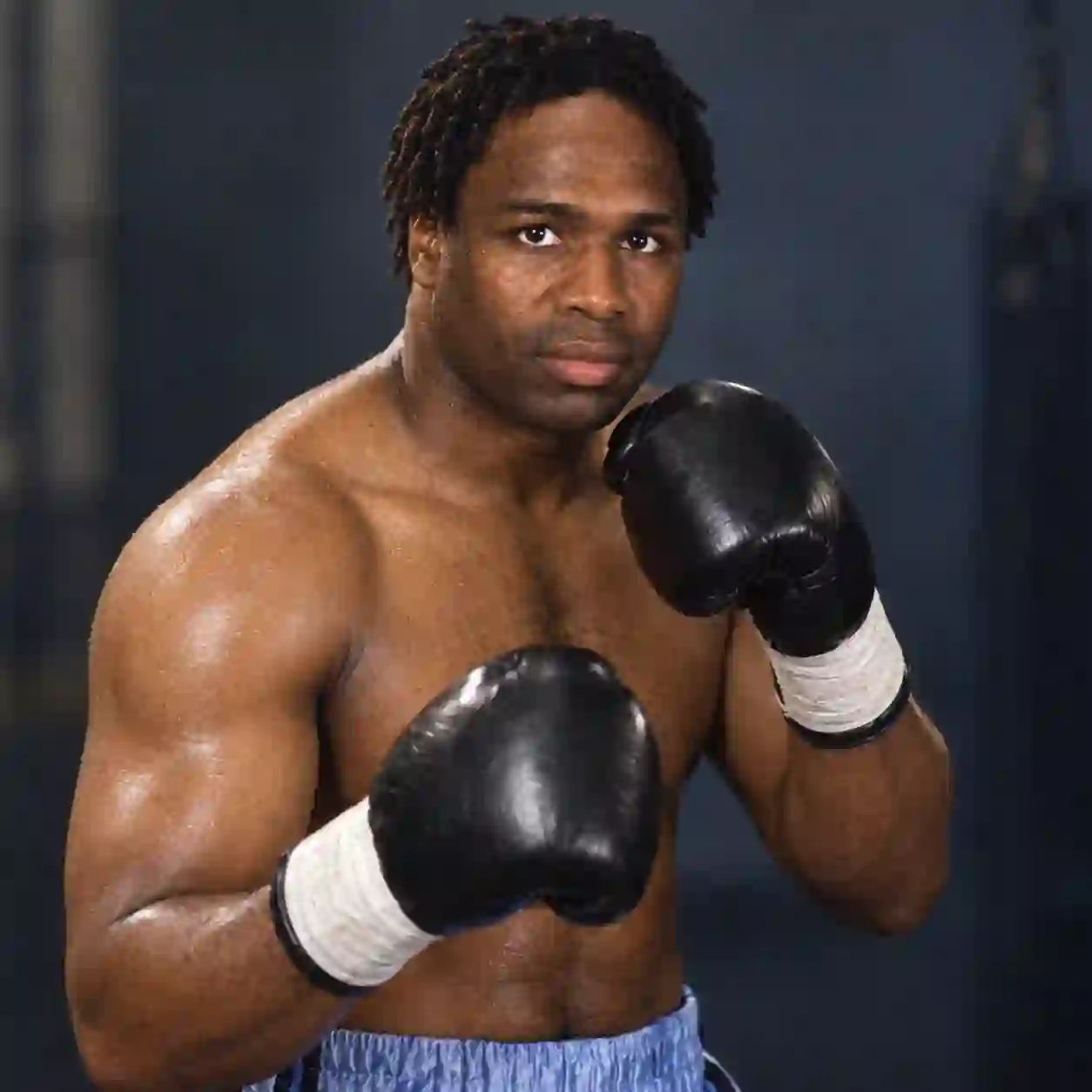
Flint, MI, USA - Chris Byrd built one of the most unlikely championship careers in heavyweight history. A natural middleweight who won an Olympic silver medal at 165 pounds, Byrd moved into boxing’s largest division and routinely defeated men who outweighed him by 20, 30 and sometimes 40 pounds.
Chris Byrd’s boxing career stands as a remarkable testament to skill, intelligence, and perseverance. His journey from a natural middleweight to a two-time heavyweight world champion remains one of boxing’s most unique and inspiring stories - Brain Boxing
Known as “Rapid Fire,” Byrd relied on speed, reflexes, intelligence and an elusive southpaw style rather than heavyweight power. He frustrated some of the division’s most dangerous punchers, defeated Vitali Klitschko and Evander Holyfield to win world championships, and remained near the top of the heavyweight rankings for much of a decade.
Byrd was rarely the biggest man in the ring. He was often the smartest.
Born into a boxing family
Christopher Cornelius Byrd was born on August 15, 1970, in Flint, Michigan. He was the youngest of eight children in a deeply competitive boxing family headed by his father and trainer, Joe Byrd Sr.
Boxing was part of daily life in the Byrd household. Chris began learning the sport as a young child and entered his first official bout at the age of ten. His siblings also became accomplished fighters, including his sister Tracy Byrd, who won world championships in professional women’s boxing.
Under his father’s guidance, Chris developed an unusual style built around movement, anticipation and defensive instinct. He was a natural right-hander who boxed from the southpaw stance, giving opponents another problem to solve.
Byrd compiled an exceptional amateur record of approximately 275-10 while competing across several divisions. He won three United States amateur championships and became one of the country’s most accomplished technical boxers.
Olympic silver in Barcelona
Byrd represented the United States as a middleweight at the 1992 Olympic Games in Barcelona.
Competing at 165 pounds, he defeated Mark Edwards of Great Britain, Aleksandr Lebziak of the Unified Team, Ahmed Dine of Algeria and Canada’s Chris Johnson to reach the gold-medal bout.
In the final, Byrd faced Cuba’s Ariel Hernández, one of the finest amateur middleweights of the era. Hernández won by a 12-7 decision, leaving Byrd with the silver medal.
Although he had fallen one victory short of Olympic gold, Byrd had proven himself at the highest level of amateur boxing. His speed, timing and ability to score without absorbing clean punches appeared suited to a successful professional career—although almost nobody could have predicted that his greatest achievements would come at heavyweight.
From middleweight to heavyweight
Byrd turned professional in January 1993 and began his career around the super middleweight limit. He gradually moved through the weight classes, competing at light heavyweight and cruiserweight before settling among the heavyweights.
The decision seemed almost unreasonable. Byrd stood approximately 6-foot-1, possessed a 74-inch reach and frequently weighed close to 210 pounds. Many of the leading heavyweights of the era stood several inches taller and entered the ring well above 230 pounds.
Byrd understood that he could not compete with those men through strength alone. He made his size disadvantage central to his strategy.
He fought from a low crouch, moved his head constantly and used subtle shifts of distance to make larger opponents miss. From his southpaw stance, he interrupted their attacks with quick jabs, short combinations and counters. He rarely remained directly in front of an opponent after punching.
Byrd won his first 26 professional fights. As the opposition improved, so did the evidence that his unconventional approach could succeed against legitimate heavyweights.
On March 20, 1999, Byrd faced unbeaten contender Ike Ibeabuchi in Tacoma, Washington.
Ibeabuchi was one of the most physically imposing heavyweights of the period. He had already defeated David Tua in a ferocious 12-round fight and appeared to possess the size, stamina and power required to become a future champion.
For four rounds, Byrd used his movement and defensive skills to frustrate him. In the fifth, Ibeabuchi trapped Byrd and landed a perfectly timed left uppercut that sent him heavily to the canvas. Byrd rose but was overwhelmed by the follow-up attack, and the fight was stopped.
It was Byrd’s first professional defeat and one of the most dramatic knockouts of his career. Yet it also demonstrated the level at which he was prepared to compete. Ibeabuchi was not an ordinary prospect; he was considered one of the division’s most dangerous emerging fighters.
Byrd responded by winning four consecutive bouts and placing himself back in contention.
That One Punch Changed Everything 😱🥊
Las Vegas. Mandalay Bay. Chris Byrd was controlling the fight, until Ike Ibeabuchi landed a monster left hook that shut the lights out. One clean shot. Complete shift. Frank Rallo had no choice but to stop it.
Byrd received an unexpected championship opportunity when he agreed to face undefeated WBO heavyweight champion Vitali Klitschko in Berlin on April 1, 2000.
Klitschko was 6-foot-7, unbeaten and had stopped every professional opponent he had faced. Byrd entered at short notice and conceded enormous advantages in height, reach and weight.
For much of the fight, Klitschko controlled the action with his jab and long right hand. Byrd remained difficult to hit cleanly, however, slipping punches, countering from awkward angles and forcing the champion to work continually.
As the contest progressed, Klitschko suffered a serious injury to his left shoulder. Despite leading on the scorecards, he was unable to continue after the ninth round.
The official result was a corner retirement, making Byrd the WBO heavyweight champion.
The ending produced controversy because Klitschko had been ahead, but Byrd had done exactly what a challenger was required to do: remain competitive, survive the champion’s early control and continue fighting until his opponent could not.
A boxer who had represented the United States at middleweight was now heavyweight champion of the world.
The first fight with Wladimir Klitschko
Byrd made his first defence against Vitali’s younger brother, Wladimir Klitschko, on October 14, 2000, in Cologne, Germany.
Wladimir was faster and more technically polished than most men of his size. He used his height, jab and straight right hand to keep Byrd at long range, dropping him twice and winning a wide unanimous decision over 12 rounds.
Byrd lost the WBO title, but he did not disappear from contention. He defeated David Vedder and then outpointed Maurice Harris to win the vacant USBA heavyweight championship.
That victory led to one of the finest performances of his career.
Outboxing David Tua
David Tua was among the most feared punchers in heavyweight boxing. Compact, powerful and equipped with a destructive left hook, he had knocked out former champions and leading contenders throughout the 1990s.
Byrd faced him in an IBF title eliminator on August 18, 2001.
Rather than attempting to overpower Tua, Byrd gave him almost no stationary target. He changed angles, turned the puncher repeatedly and scored with quick combinations before moving away from danger.
Tua pressed forward throughout the fight but struggled to trap the elusive southpaw. Byrd won a clear unanimous decision after 12 rounds, neutralising one of the division’s most dangerous offensive fighters.
The performance was a demonstration of intelligent heavyweight boxing. Byrd could not match Tua’s physical power, so he denied him the conditions required to use it.
Southpaw Chris Byrd fends off Evander Holyfield in #AtlanticCity in 2002. Byrd won a lopsided unanimous decision to deny Holyfield a 5th world title belt in the big man division. "Real Deal" blamed a shoulder injury for his lacklustre performance. #Heavyweight#History#Boxingpic.twitter.com/4IpYk7nHtP
Byrd’s victory over Tua eventually led to a fight with four-time heavyweight champion Evander Holyfield for the vacant IBF title.
They met at Boardwalk Hall in Atlantic City on December 14, 2002. Holyfield was 40 years old but remained experienced, physically strong and difficult to discourage.
Byrd’s speed and movement caused problems from the opening rounds. He made Holyfield reach for punches, countered effectively and maintained a higher work rate. Holyfield later said that a shoulder injury had restricted his left hand, but Byrd controlled enough of the contest to earn a unanimous decision.
With the victory, Byrd became a heavyweight champion for the second time.
His WBO reign had lasted only one fight. His IBF championship would last more than three years.
A fighting reign against larger challengers
Byrd defended the IBF title against Fres Oquendo in September 2003, winning a competitive unanimous decision. Oquendo’s height, speed and counterpunching made the fight difficult, but Byrd finished strongly enough to retain his championship.
His next defence came against Andrew Golota at Madison Square Garden in April 2004. Golota outweighed Byrd considerably and applied sustained pressure over 12 rounds. The fight ended in a draw, a result that divided observers, but Byrd retained the title.
Seven months later, Byrd faced the 6-foot-6, 270-pound Jameel McCline. The size difference was enormous, and McCline dropped the champion in the second round. Byrd recovered, increased his activity and gradually worked his way back into the fight, earning a close split decision.
Byrd made his fourth successful defence against DaVarryl Williamson in October 2005. It was a cautious tactical contest in which neither boxer took many risks. Byrd won a unanimous decision and extended one of the longest heavyweight title reigns of the period.
His championship run was not always exciting, and several decisions were debated. Nevertheless, Byrd repeatedly found ways to retain his title against men who held considerable physical advantages over him.
The Klitschko rematch
By 2006, Wladimir Klitschko had rebuilt himself following knockout defeats to Corrie Sanders and Lamon Brewster. Working with trainer Emanuel Steward, he had developed a more disciplined style based on controlling distance, limiting exchanges and fully exploiting his exceptional size.
Byrd defended the IBF championship against him in Mannheim, Germany, on April 22, 2006.
The rematch was more decisive than their first encounter. Klitschko controlled Byrd with his jab, landed increasingly heavy right hands and knocked him down in the fifth round. Another combination dropped Byrd in the seventh, prompting the referee to stop the fight.
Byrd’s reign was over, while Klitschko began a championship run that would dominate the heavyweight division for nearly a decade.
The final years
Byrd returned in 2007 with a victory over Paul Marinaccio before facing unbeaten Olympic gold medallist Alexander Povetkin in an IBF eliminator.
At 37, Byrd no longer possessed the movement that had defined his championship years. Povetkin maintained a high work rate and gradually wore him down until Byrd’s corner stopped the fight in the eleventh round.
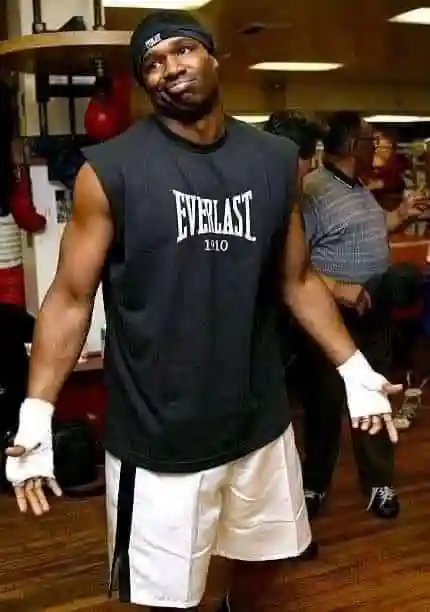
Byrd then attempted to return to the lighter divisions. He dropped a substantial amount of weight to face Shaun George at light heavyweight in May 2008, but the rapid reduction appeared to leave him physically depleted. George stopped him in the ninth round.
Byrd fought once more, defeating Matthias Sandow by fourth-round stoppage in Germany in March 2009. He then retired with a professional record of 41-5-1 (22 KOs).
The craft of Chris Byrd
Byrd’s style was exceptionally rare among heavyweights. He lacked the reach to control fights from the outside in a conventional manner and did not possess the power to discourage every opponent with a single punch.
Instead, he relied on judgement.
Byrd watched an opponent’s shoulders, anticipated punches and moved just far enough to make them miss. His defence was based less on running than on remaining at the edge of danger. He could stand within punching range, roll beneath a shot and answer before the larger man had reset his feet.
His hand speed allowed him to score in short bursts, while his southpaw stance disrupted the rhythm of orthodox opponents. He was also physically tougher than his defensive style sometimes suggested. Byrd could absorb a hard punch, recover and continue operating under pressure.
That combination of craft and resilience allowed him to compete successfully against heavyweights whose natural dimensions dwarfed his own.
The legacy of Chris Byrd
Chris Byrd’s career deserves to be understood in its proper context. He entered professional boxing as a former Olympic middleweight and became a two-time heavyweight champion during an era increasingly controlled by super-heavyweights.
He defeated Vitali Klitschko, Evander Holyfield, David Tua, Fres Oquendo and Jameel McCline. He held the IBF championship for more than three years and made four successful defences.
Byrd’s victories were sometimes dismissed because they rarely ended with dramatic knockouts. His success came through quieter qualities: timing, positioning, concentration, conditioning and the ability to solve difficult tactical problems over 12 rounds.
The heavyweight division traditionally celebrates size and power. Chris Byrd succeeded without an abundance of either. He won through skill, nerve and an extraordinary understanding of distance.
In a division built for giants, “Rapid Fire” proved that boxing intelligence could still overcome the scales.