WORLD Heavyweight Boxing

Month
Date
,
Year
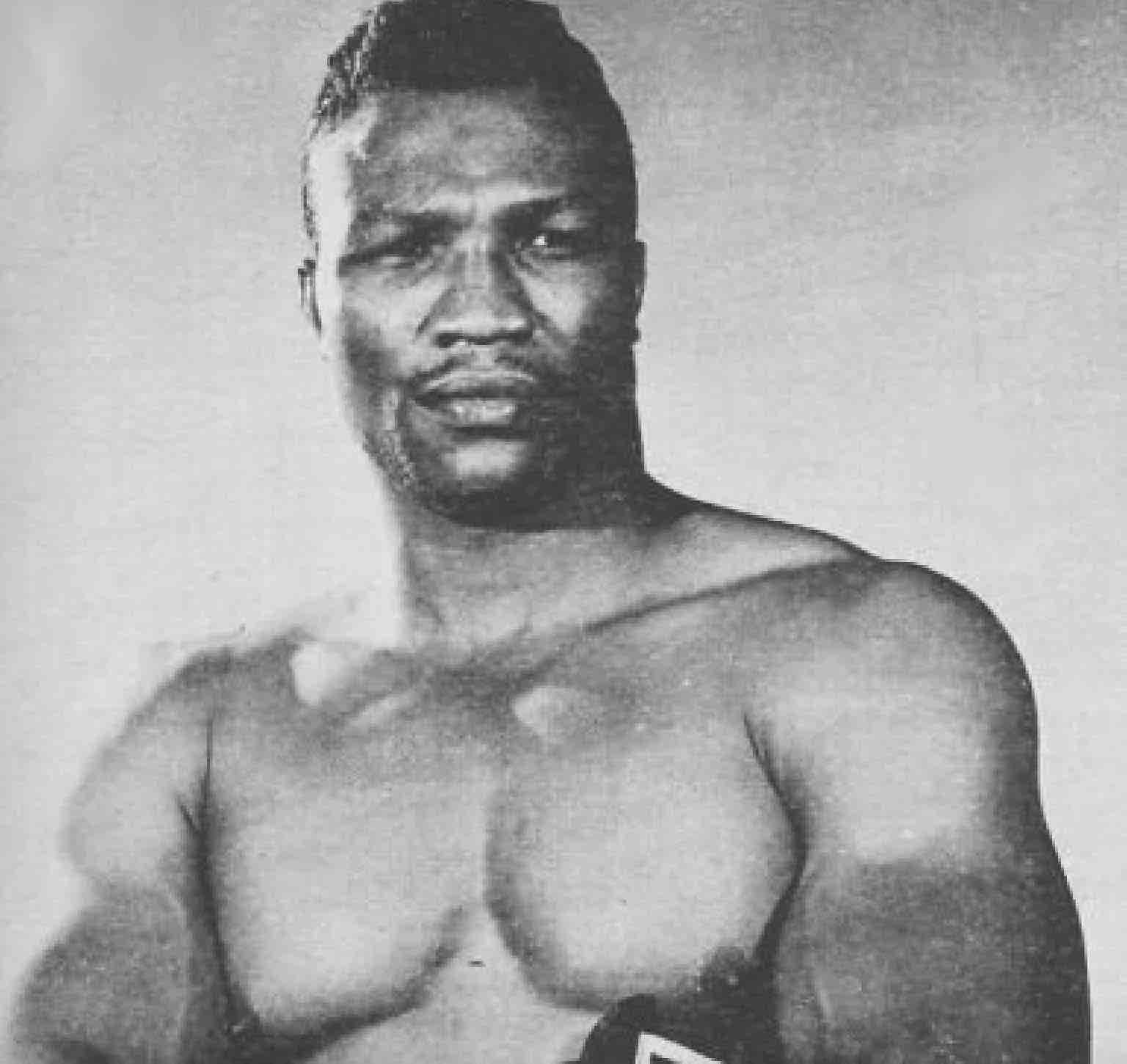
Legendary Contender
Cleveland “Big Cat” Williams was a powerful heavyweight contender whose career is often reduced to his 1966 defeat by Muhammad Ali. His earlier performances tell a broader story: a dangerous puncher who defeated Ernie Terrell, twice fought Sonny Liston and reached championship contention before a shooting changed his life.
Williams never won the world heavyweight title. His place in the division's history rests on his formidable attack, years of serious contention and a return to boxing after injuries that nearly killed him.
Born in Griffin, Georgia, in 1933, Williams built his early career in the American South. He became associated particularly closely with Houston, where his physical presence and punching power made him a popular fighter.
He accumulated a long sequence of wins before Bob Satterfield stopped him in the third round in 1954. Military service interrupted his progress, but Williams returned to boxing and again advanced towards the leading heavyweights.
The nickname “Big Cat” suited a boxer who combined a muscular build with speed and fluid movement. He was more than a stationary slugger, even though his ability to hurt opponents became his defining characteristic.
BIG CAT!-
— KT_BOXING (@KT_BOXING) February 5, 2024
Some specimen & he had to have been one. A truly fascinating career that factually spans from the Joe Louis post war era up to Joe Frazier’s reign in the 1970’s. One of the best to have never got his hands on the heavyweight jewels, Cleveland Williams.#boxing #history pic.twitter.com/CwNSslGBmR
Williams met Liston in April 1959 and lost by a third-round knockout. Their March 1960 rematch ended with Liston winning in the second round.
Those defeats demonstrated the danger of matching two powerful heavyweights, but they did not end Williams's rise. He remained capable of threatening high-level opponents and continued to pursue championship opportunities.
In April 1962, he stopped Terrell in the seventh round. Terrell won their 1963 rematch by split decision over ten rounds. The pair's competitive history later placed them in line for a contest for the vacant WBA heavyweight title.
In late November 1964, Williams was shot during an altercation with a Texas highway patrolman near Houston. Accounts of the confrontation differed, but the consequences for the boxer were devastating.
The bullet caused severe internal injuries. He underwent repeated operations, lost a kidney and suffered lasting damage around his hip. The proposed WBA title contest with Terrell could not proceed.
For Williams, recovering enough strength to resume ordinary life was a major challenge. Returning to heavyweight boxing required substantially more. His eventual comeback should be understood in that context rather than treated as proof that the injuries had left no permanent effects.
Williams returned to the ring in February 1966 and won four consecutive fights. Those results brought him a championship challenge against Ali at Houston's Astrodome on November 14.
Ali dominated with speed, movement and rapid combinations, stopping Williams in the third round. The contest is widely remembered as a brilliant display by the champion.
It was also a meeting between Ali at the height of his abilities and a challenger whose body had endured extraordinary trauma. Williams's inability to compete effectively that night should not be used to erase the dangerous contender he had been before the shooting.
Cleveland Williams, who had been shot by a police officer two years before, on the cover of The Ring prior to his 1966 challenge of world champ Muhammad Ali at the Houston Astrodome. Ali would dominate "Big Cat" and win by third round TKO. #Heavyvweight #History #Boxing pic.twitter.com/DYr7s3FThx
— Heavyweight History (@HVYWeightHeroes) April 1, 2024
After initially retiring following the Ali defeat, Williams returned again in 1968. His later results were mixed, and he could no longer sustain a position among the leading world title contenders.
He nevertheless continued competing into 1972, when he won the Texas heavyweight title against Terry Daniels. After boxing, he worked as a truck driver and remained connected to Houston.
His later years brought serious health problems and financial hardship. In September 1999, he died from injuries suffered when a car struck him while he was crossing a Houston street. He was sixty-six.
Cleveland Williams. pic.twitter.com/4Ut8PuDl1p
— Knuckles and Gloves Podcast (@KnucklesNGloves) March 9, 2024
Williams entered the World Boxing Hall of Fame in 1997. Historical career totals differ where early bouts are included, so an unexplained record figure can obscure rather than clarify his long career.
His strongest achievements are easier to identify: a meaningful victory over Terrell, repeated tests against elite opposition and a remarkable recovery that brought him back into a world championship ring. The Big Cat deserves recognition for that full career, alongside the famous footage of his final title challenge.

Top Heavyweight Boxing covers the past, present and future of boxing's premier division. Copyright© 2026
Powered by Digital Dynasty Design