WORLD Heavyweight Boxing

Month
Date
,
Year
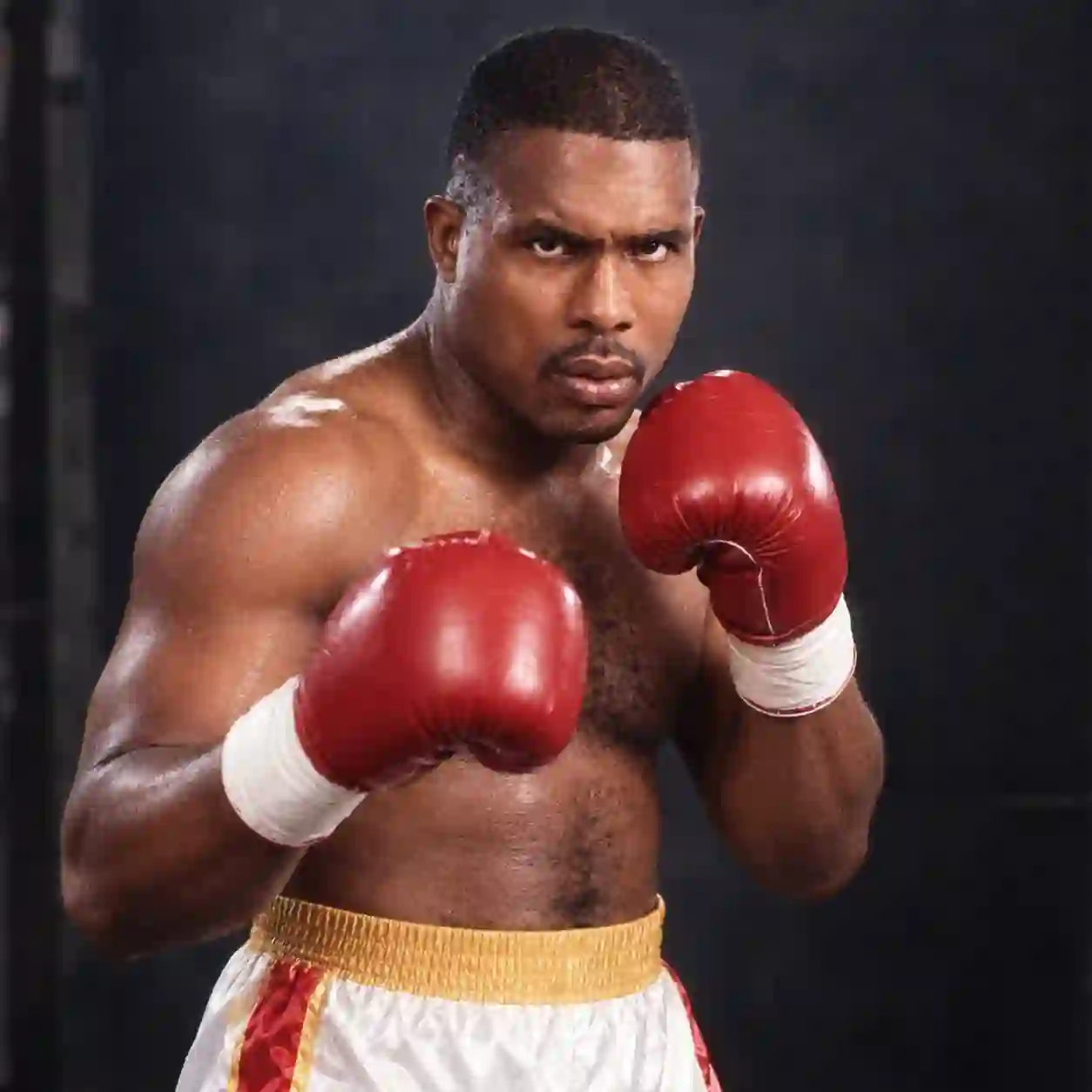
Legendary Contender
Toronto, Canada - Donovan “Razor” Ruddock was one of the most dangerous heavyweights of his generation—a physically imposing contender whose crushing left hand could alter a fight in an instant. During an era crowded with elite talent, the Jamaican-born Canadian defeated several former world champions and twice went to war with Mike Tyson at a time when few fighters were willing to face him.
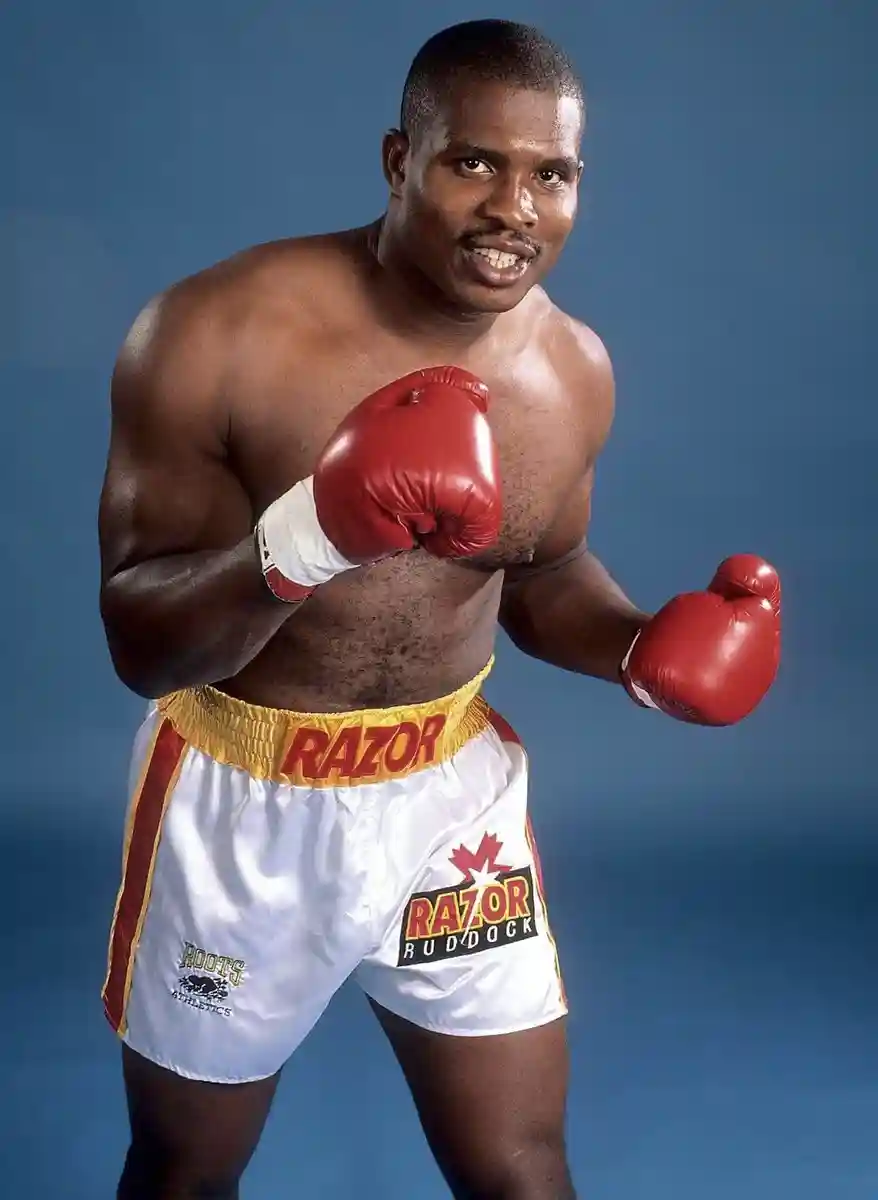
Ruddock never captured a world championship, but his reputation was built on more than a title belt. His frightening knockout of Michael Dokes, punishing victories over James “Bonecrusher” Smith and Greg Page, and two brutal battles with Tyson established him as a genuine championship-level heavyweight.
At his peak, “Razor” was not simply a powerful contender. He was one of the most feared men in boxing.
Donovan Ruddock was born on December 21, 1963, in St. Catherine, Jamaica. He moved with his family to Canada at the age of 11 and settled in Toronto’s Weston neighbourhood.
Standing 6-foot-3 with an 82-inch reach, Ruddock possessed the dimensions of a modern heavyweight, but he initially showed promise at a much lighter weight. As an amateur, he boxed in the 165-pound division and defeated a young Lennox Lewis by split decision at the 1980 Ontario Junior Championships.
Ruddock turned professional in 1982. His early career developed slowly, and in April 1985 he suffered his first defeat when respiratory problems forced his corner to stop his fight with David Jaco after eight rounds.
Doctors discovered that Ruddock was suffering from a rare respiratory illness and reportedly warned him that his boxing career might be over. Instead, he recovered and returned to the ring less than a year later.
The interruption changed the direction of his career but did not diminish his ambition. Ruddock began adding weight and power, transforming himself from a developing boxer into a formidable heavyweight.
Ruddock announced his return by defeating former WBA heavyweight champion Mike Weaver over ten rounds in 1986. The victory demonstrated that he could compete with experienced, world-class opposition and began a long winning streak.
In May 1988, he demolished Ken Lakusta in the opening round to win the Canadian heavyweight championship. Later that year, he stopped James Broad and continued climbing through the international rankings.
Ruddock’s first major breakthrough came against former heavyweight champion James “Bonecrusher” Smith on July 2, 1989. Smith dropped him in the second round, but Ruddock recovered, took control of the fight and knocked out the dangerous former champion in the seventh.
The victory placed Ruddock among the leading heavyweight contenders and appeared to secure him a shot at undisputed champion Mike Tyson. Their fight was scheduled for November 1989 in Edmonton, but Tyson withdrew because of illness. The champion instead travelled to Tokyo, where he suffered his historic upset loss to James “Buster” Douglas in February 1990.
Ruddock had come within reach of the championship, only for the opportunity to disappear.
Donovan “Razor” Ruddock vs James “Bonecrusher” Smith. Two heavy-handed warriors collided in a battle of power, grit, and heavyweight pride. A night that showcased the danger of the division’s biggest punchers.#Boxing pic.twitter.com/XMLkCVpqTL
— Mr Vince🇬🇧🇺🇸 (@daniels_bukola) July 26, 2026
Although Ruddock possessed a long reach and a useful jab, he became famous for one particular punch. He called it “The Smash.”
Thrown with his left hand, the blow travelled somewhere between a hook and an uppercut. Ruddock launched it from unusual angles and generated tremendous force, often splitting an opponent’s guard or catching him underneath the jaw. It became one of the most recognisable—and feared—weapons in heavyweight boxing.
The punch could produce spectacular results, but Ruddock’s reliance on it also became a weakness. As he fell in love with his power, he sometimes neglected his jab, abandoned combinations and waited too long for one decisive opening. When it landed, however, few heavyweights could withstand it.
Michael Dokes discovered that on April 4, 1990, at Madison Square Garden.
Dokes was a former WBA champion with fast hands and considerable experience. Ruddock ended their fight violently in the fourth round, stunning Dokes with a left before unloading a finishing combination that left him unconscious against the ropes.
It was one of the most devastating knockouts of the era. Ruddock was no longer merely a contender. He had become a major attraction and a serious threat to every heavyweight in the world.
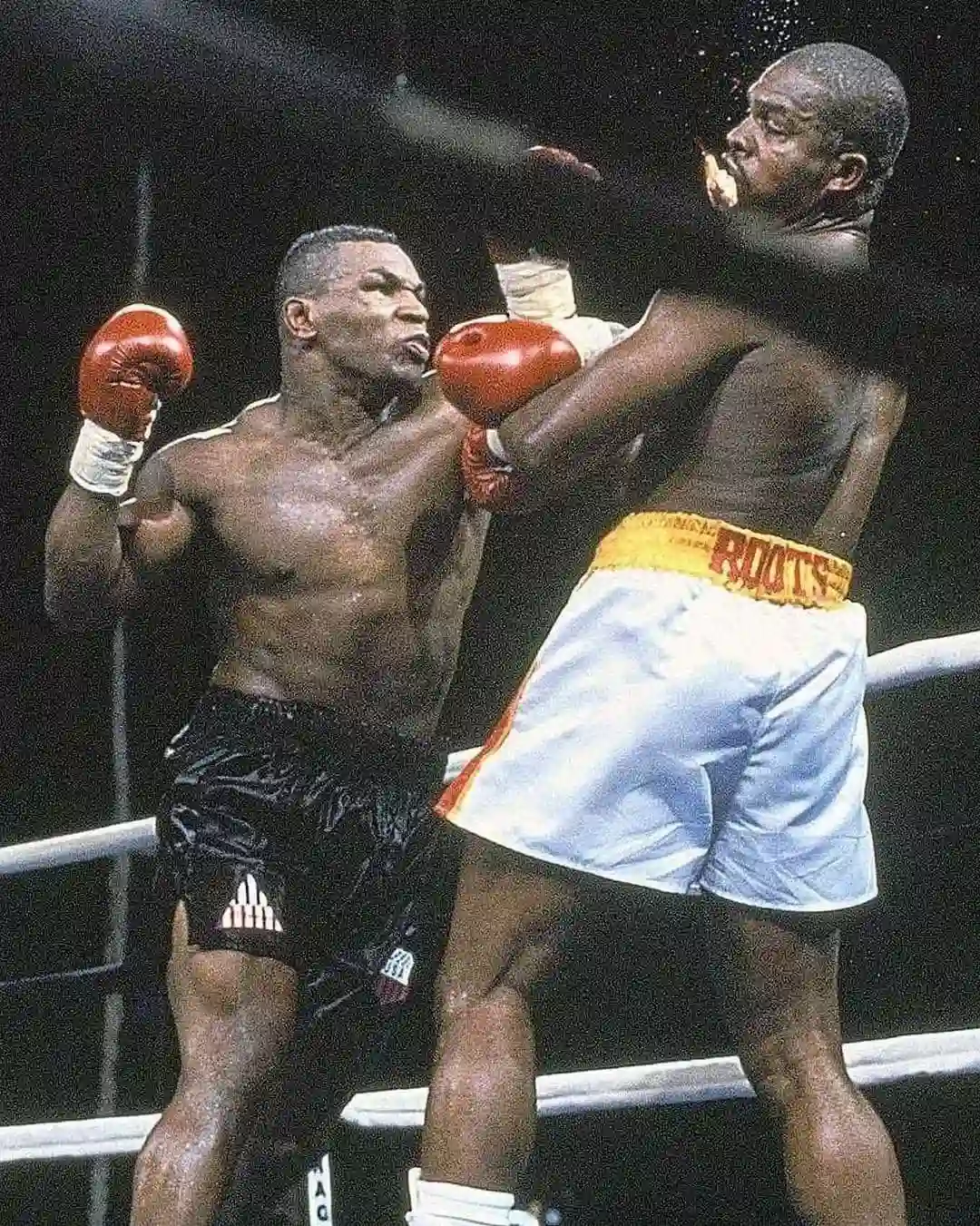
By early 1991, Mike Tyson and Donovan Ruddock were widely regarded as the two leading challengers to heavyweight champion Evander Holyfield. They met at The Mirage in Las Vegas on March 18 in a fight intended to identify the division’s leading contender.
Tyson attacked the body and applied relentless pressure, while Ruddock looked for openings to unleash his left hand. Ruddock was knocked down in the second and third rounds but refused to fold. He began landing the Smash with increasing force and turned the contest into a violent exchange.
Tyson Was Pushed to the Limit by Ruddock 😱🥊
— Joshua Aweda (@AwedaJoshua) September 3, 2026
The Mirage. March 18, 1991.
Razor Ruddock came to trade with Iron Mike.
Uppercuts. Rights. Body shots that sounded like drums.
Tyson hit the ropes. Ruddock went down. Both men kept firing.
Seventh-round stoppage.
One of the hardest… pic.twitter.com/vbK7G5hZK7
In the seventh round, referee Richard Steele intervened while Ruddock was hurt but still standing. The stoppage gave Tyson a technical-knockout victory, but it immediately produced controversy. Ruddock protested, his corner entered the ring, and a chaotic confrontation erupted between members of the two camps.
The disputed ending made a rematch inevitable.
They met again on June 28, 1991, at the same venue. The second fight was even more punishing than the first. Tyson broke Ruddock’s jaw and knocked him down twice, but Ruddock repeatedly fired back with heavy left hands of his own. Neither man gave the other a moment of comfort.
Tyson won a unanimous decision after 12 rounds, but Ruddock’s reputation was strengthened in defeat. He had survived 19 savage rounds with one of history’s most destructive heavyweights and remained dangerous until the final bell.
The two fights proved Ruddock’s courage and durability. They may also have taken something from him. Wars of that severity leave a cost, and Ruddock would never again appear quite as physically commanding as he had before facing Tyson.
Ruddock returned in February 1992 against former heavyweight champion Greg Page. He battered Page until the veteran remained in his corner after the eighth round.
Four months later, Ruddock knocked out previously unbeaten Phil Jackson in the fourth round to win the IBC heavyweight title. Those victories restored his position near the top of the division and placed him into a WBC final eliminator against a familiar opponent.
Lennox Lewis had developed enormously since losing to Ruddock as an amateur. The Olympic gold medallist was now an unbeaten professional contender with size, discipline and a powerful right hand.
They met at Earl’s Court in London on October 31, 1992. Ruddock entered as the more established professional and was widely considered the favourite, but Lewis produced a career-making performance.
Late in the opening round, Lewis dropped Ruddock heavily with a right hand. He resumed his attack in the second, scoring two more knockdowns before the fight was stopped just 46 seconds into the round.
For Ruddock, it was a devastating setback. For Lewis, the victory announced the arrival of a future dominant heavyweight champion.
Ruddock remained away from boxing for more than a year before returning with a decision victory over Anthony Wade in January 1994.
On June 10, 1995, he faced former WBO champion Tommy Morrison in Kansas City. The fight was appropriately billed as “Raw Power.” Both men possessed dangerous left hooks, both had experienced dramatic victories and defeats, and neither was expected to fight cautiously.
Ruddock dropped Morrison in the opening round, while Morrison forced Ruddock into the ropes and earned a count in the second. The momentum shifted repeatedly as the two heavyweights traded damaging punches.
Ruddock appeared to be taking control during the fifth round and hurt Morrison again in the sixth. As he moved forward looking for the finish, Morrison countered with a tremendous left hook that sent him down.
Ruddock rose, but Morrison attacked with a barrage of punches and the referee stopped the fight late in the sixth round. As in the first Tyson contest, Ruddock was still standing when the stoppage came, and some observers believed he should have been allowed more time to recover.
It was a thrilling fight, but it ended Ruddock’s remaining hopes of receiving an immediate world-title opportunity.
Ruddock returned again in 1998 and assembled a series of victories over veteran opposition. His comeback included stoppages of Anthony Willis, Mike Sedillo and former Tyson opponent José Ribalta.
A proposed challenge against WBO heavyweight champion Vitali Klitschko in 2000 was abandoned after Ruddock suffered an injury. It represented another championship opportunity that slipped away before he could enter the ring.
In October 2001, Ruddock stopped former Olympic silver medallist Egerton Marcus in the tenth round to regain the Canadian heavyweight championship. He then stepped away from boxing with 12 consecutive victories behind him.
Fourteen years later, at the age of 51, Ruddock launched an unexpected comeback. He stopped Raymond Olubowale in five rounds and defeated Eric Barrak by majority decision before challenging Dillon Carman for the Canadian title in September 2015.
Carman knocked him out in the third round, bringing Ruddock’s professional career to a final close. He later participated in a six-round exhibition against fellow former champion James Toney in Jamaica in 2023, with the bout ending in a draw.
Ruddock completed his professional career with a record of 40-6-1 (30 KOs).
RAZOR RUDDOCK TURNED THE FIGHT OFF IN SECONDS 😳🥊
— BoxingMMAHub (@Annjoy_O) September 1, 2026
Madison Square Garden. April 4, 1990.
Former WBA champ Michael Dokes was still highly ranked. Ruddock found his opening in round 4.
The left hand changed everything.
53 seconds. Fight over.#Boxing pic.twitter.com/VJ0ocsguQB
Donovan Ruddock competed during one of the deepest heavyweight periods in boxing history. His era included Tyson, Holyfield, Lewis, George Foreman, Riddick Bowe, Michael Moorer, Ray Mercer and several other championship-calibre fighters.
His six professional defeats came against David Jaco during a serious respiratory illness, twice against Tyson, and once each against Lewis, Morrison and Carman—the last when Ruddock was 51 years old.
At his best, he defeated four former heavyweight champions in Mike Weaver, James Smith, Michael Dokes and Greg Page. He won the Canadian heavyweight championship twice and stood among the world’s leading contenders during the late 1980s and early 1990s.
Ruddock’s limitations were visible. His fascination with the Smash sometimes made his attack predictable, and his tendency to carry his left hand low left him open to right-hand counters. Against a disciplined, straight-punching heavyweight such as Lewis, those weaknesses could be punished quickly.
Yet few opponents could afford a mistake against him. Ruddock possessed exceptional physical strength, a long reach, genuine heavyweight courage and enough one-punch power to end a fight without warning.
Ruddock’s career is often defined by the world championship he never won, but that does not adequately measure his place in heavyweight history.
He was one of the few fighters willing and able to meet Mike Tyson in the centre of the ring during Tyson’s destructive prime. He absorbed tremendous punishment, broke his jaw and continued fighting. He also hurt Tyson repeatedly and forced the former undisputed champion through two of the hardest contests of his career.
Ruddock’s knockout of Michael Dokes remains one of the most chilling finishes ever seen at Madison Square Garden. His battles with Tyson and Morrison continue to be revisited by boxing followers, while the Smash remains one of the sport’s most memorable signature punches.
Donovan “Razor” Ruddock may never have held the heavyweight championship, but for several years he was every bit as dangerous as the men who did. In an era overflowing with exceptional heavyweights, he earned something that cannot be awarded by a sanctioning body: the lasting respect of fighters and fans who understood just how formidable he was.

Top Heavyweight Boxing covers the past, present and future of boxing's premier division. Copyright© 2026
Powered by Digital Dynasty Design