HEAVYWEIGHT
BOXINGTHE DIVISION HEADQUARTERS HEAVYWEIGHTBOXING.COM
BOXINGTHE DIVISION HEADQUARTERS HEAVYWEIGHTBOXING.COM
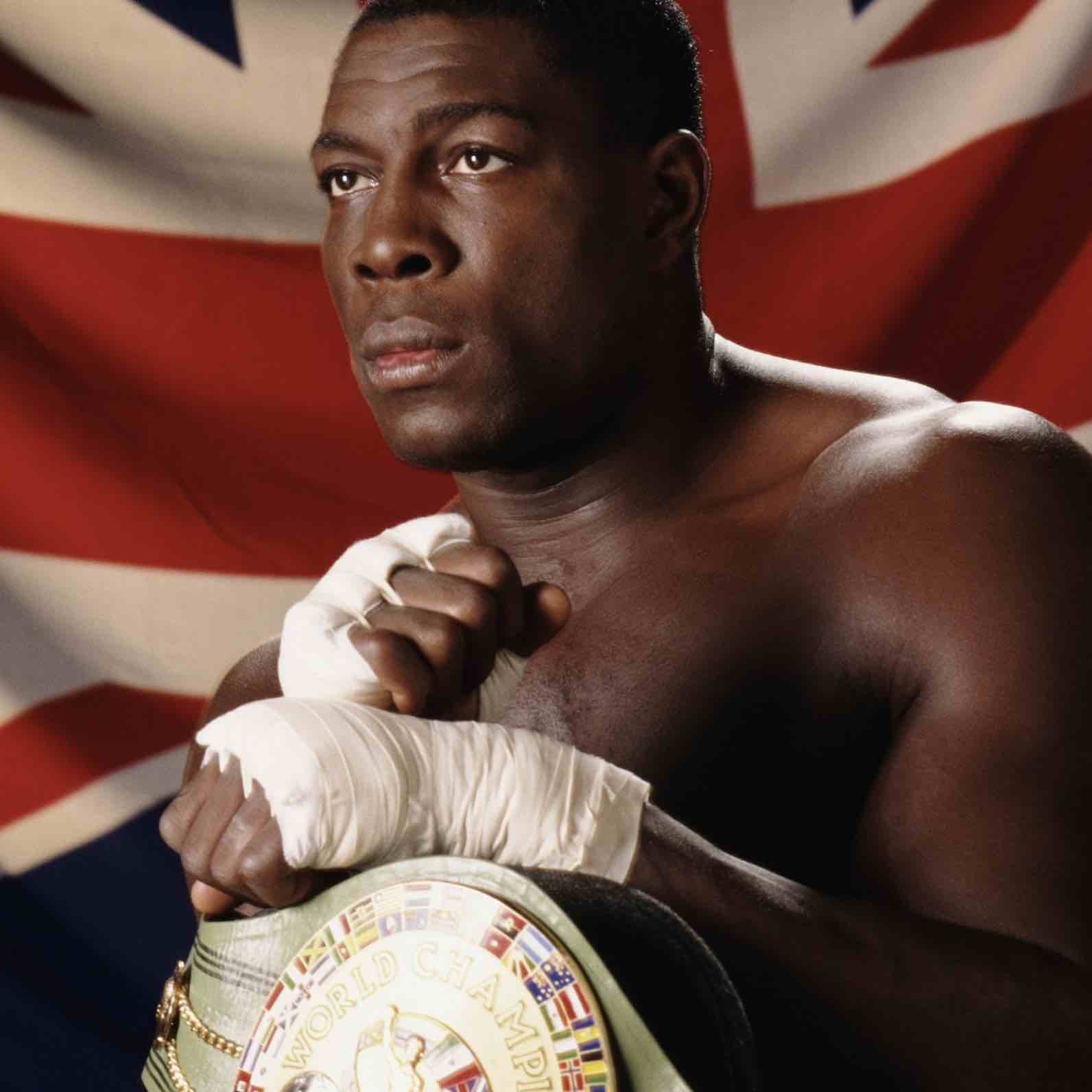
WBC Champion
Frank Bruno’s heavyweight career was a long pursuit of a moment that finally arrived at Wembley in 1995. After three unsuccessful world-title challenges, he defeated Oliver McCall to become WBC champion. The victory gave competitive substance to a popularity that had survived years of disappointment: Bruno was already a British sporting celebrity, but now he had earned the championship he had repeatedly sought.
Frank Bruno with wrapped hands and a championship belt. His 1995 Wembley victory crowned a thirteen-year professional career.
Bruno learned to box as a youngster in London and developed through the amateur system. He won the ABA heavyweight championship at 18 before turning professional in 1982. That background matters because his later reputation as a muscular puncher can obscure the training and experience beneath it.
His professional debut at the Royal Albert Hall ended in a first-round victory over Lupe Guerra. Twenty-one consecutive stoppage wins followed from the beginning of his career, creating expectations that Britain had found a heavyweight capable of reaching the highest level. Bruno’s jab was forceful, his right hand dangerous and his physical presence unmistakable.
Early knockout streaks can establish a fighter’s power while revealing less about his response to resistance. Bruno would have to learn what happened when an opponent remained dangerous after the opening rounds and refused to be discouraged by his strength.
On May 13, 1984, James “Bonecrusher” Smith knocked Bruno out in the tenth and final round at Wembley Arena. Bruno had been ahead, but Smith’s finish overturned the direction of the contest. The first professional defeat was a sharp demonstration that a heavyweight cannot protect a lead through the scorecards alone.
Bruno rebuilt rather than disappearing. He won the European championship by knocking out Anders Eklund in 1985, then stopped former WBA champion Gerrie Coetzee in the opening round in March 1986. Those results restored his standing and led to a challenge for the WBA title.
The recovery became a recurring feature of his career. A damaging defeat did not end his place in the division, because he could return, beat credible opponents and make another case for a championship opportunity.
Bruno challenged Tim Witherspoon at Wembley Stadium on July 19, 1986. The scale of the event showed how far his appeal had grown. His jab and strength gave the champion difficulties, but Witherspoon remained dangerous and experienced enough to find a decisive opening.
The American stopped Bruno in the eleventh round. It was another contest in which promising work did not survive the opponent’s finishing attack. Bruno’s challenge had demonstrated his ability to compete at world level, while also exposing the need to defend and recover effectively when a fight turned against him.
Bruno’s second world-title attempt came against Mike Tyson in Las Vegas on February 25, 1989. Tyson held the WBA, WBC and IBF belts and was the division’s dominant champion. Bruno entered against an opponent whose speed, combinations and pressure could quickly turn a small defensive error into a crisis.
Bruno landed a left hook in the opening round that troubled Tyson, an episode that remains central to British memories of the fight. It showed that his power could affect even this champion. It did not mean he had solved the broader tactical problem.
Tyson stopped him in the fifth round. Bruno’s willingness to engage and the danger of his punches were real, but Tyson was better able to sustain effective attacks. The difference between landing a memorable shot and winning a championship fight was painfully clear.
Bruno returned to contention and challenged Lennox Lewis for the WBC title in Cardiff in October 1993. The meeting carried the weight of a major domestic rivalry, as well as another chance for Bruno to turn his experience into a championship victory.
He boxed effectively in the early stages, using his jab and strength to make Lewis work. In the seventh round, however, Lewis hurt him with a left hook and followed with the attack that forced the stoppage. Bruno had again shown he could trouble an elite heavyweight without completing the task.
By this point, a simple account of bad luck would have been inadequate. His defeats also reflected how difficult he found it to regain control once hurt. Yet his ability to earn another opportunity remained an achievement, and he continued pursuing the title.
On September 2, 1995, Bruno met McCall at Wembley Stadium. McCall had taken the WBC belt from Lewis and defended it against Larry Holmes. Bruno’s fourth challenge was therefore a meeting with an established champion, not an honorary reward for perseverance.
This time Bruno built his advantage and completed the distance. His jab, work rate and determination carried him through twelve rounds, including a demanding late phase. He won a unanimous decision and became WBC heavyweight champion.
The significance lay in finishing the work. Earlier challenges had slipped away when the opponent found a decisive attack; against McCall, Bruno remained standing and preserved a winning performance until the final bell. The celebration was emotional because the result answered a question that had followed him for years.
Bruno defended against Tyson in Las Vegas on March 16, 1996. The rematch ended with Tyson stopping him in the third round and reclaiming the WBC title. It proved to be Bruno’s final professional contest.
His career record was 40-5, with 38 wins by knockout. All five losses came by stoppage against Smith, Witherspoon, Lewis and Tyson, whom he faced twice. Those figures reflect formidable power and repeated encounters with championship-level opposition, alongside the defensive vulnerability that shaped his defeats.
Bruno’s relationship with the British public extended beyond boxing through television, humour and personal appearances. After retirement, he also spoke openly about mental-health difficulties. The Frank Bruno Foundation uses non-contact boxing and wellbeing programmes to support people facing mental-health challenges.
His sporting legacy should remain anchored in the ring. He was a powerful heavyweight who repeatedly rebuilt after failure and finally won a recognised world championship. The McCall victory did not erase the earlier losses or make him the undisputed champion. It gave his long pursuit a deserved conclusion and remains one of British heavyweight boxing’s most warmly remembered nights.

Top Heavyweight Boxing covers the past, present and future of boxing's premier division. Copyright© 2026
Powered by Digital Dynasty Design