HEAVYWEIGHT
BOXINGTHE DIVISION HEADQUARTERS HEAVYWEIGHTBOXING.COM
BOXINGTHE DIVISION HEADQUARTERS HEAVYWEIGHTBOXING.COM
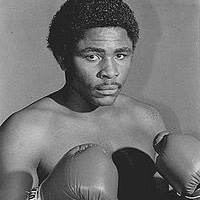
WBA Champion
Greg Page won the WBA heavyweight championship in 1984, adding his name to Louisville's distinguished boxing history. A gifted boxer with fast hands and an accomplished amateur background, he defeated Gerrie Coetzee to claim the title but lost it in his first defence.
His professional record was 58-17-1 (48 KOs). The later tragedy of his career—a catastrophic brain injury in a 2001 fight—also made his name central to efforts to improve boxing safety in Kentucky.
Page was born in Louisville, Kentucky, on October 25, 1958. Growing up in the city associated with Muhammad Ali brought comparisons and expectations that followed him into professional boxing.
His amateur achievements justified attention in their own right. He won national AAU heavyweight championships in 1977 and 1978 and the National Golden Gloves heavyweight title in 1978.
Page turned professional in 1979. His movement, quick combinations and ability to box at range distinguished him from heavyweights whose success depended mainly on physical pressure. Talent, however, did not always translate into consistent performances.
Page established himself as a leading contender, with victories over opponents including Renaldo Snipes. In March 1984, he faced Tim Witherspoon for the vacant WBC heavyweight title.
Witherspoon won a majority decision over twelve rounds. Page then lost to David Bey later that year, leaving his championship prospects uncertain.
Despite those setbacks, he received a WBA opportunity against Coetzee, who had taken that organisation's title from Michael Dokes in 1983. Page's route to the belt was therefore not an uninterrupted sequence of victories; his championship success followed two defeats in the same year.
On December 1, 1984, Page challenged Coetzee at Sun City in South Africa. The fight involved heavy exchanges, and Page knocked the champion out in the eighth round.
The finish became controversial because of an apparent timekeeping error that allowed the round to run beyond its normal three-minute duration. Contemporary reports differed over the precise extra time, but the WBA allowed the knockout result to stand.
Page was world champion, holding the WBA title in a division with separate WBC and IBF champions. The victory was his greatest professional achievement, even though the circumstances of the final round remain part of its history.
Page's first defence took place against Tony Tubbs on April 29, 1985, in Buffalo, New York. They had met repeatedly as amateurs, but this contest carried different stakes and a fifteen-round distance.
Tubbs won a unanimous decision. Page's championship reign ended after less than five months, and he never regained a major world heavyweight title.
He continued facing established opposition in later years. Results varied, with meaningful victories alongside defeats that kept him from building another sustained championship campaign.
Page remained active through much of the 1990s, including a period away from the ring followed by another return. His skills and experience could still produce wins, but the prospect of a long title reign had disappeared.
He also worked as a sparring partner for Mike Tyson and knocked Tyson down during training before the 1990 Buster Douglas fight. That was a sparring incident, not an official professional victory, and should be kept separate from his recorded results.
By 2001, Page was forty-two and still competing on smaller shows. His final fight would change both his life and the discussion of ringside medical protection.
On March 9, 2001, Page fought Dale Crowe in Erlanger, Kentucky. He was knocked out in the tenth round and suffered a severe brain injury. A stroke during subsequent treatment left him with permanent disabilities.
The absence of sufficient medical support at the event became the subject of a legal case. A 2007 settlement with Kentucky boxing officials provided financial compensation and commitments connected to stronger medical oversight.
The resulting safety measures became associated with Page's name. His experience showed that the responsibility for protecting a boxer extends beyond the referee and includes medical planning and regulatory supervision.
Page died at his Louisville home in April 2009, aged fifty. His final years were shaped by the consequences of the injury, but they should not eclipse his earlier achievements.
He was an outstanding amateur, a legitimate WBA heavyweight champion and a talented professional whose results were often uneven. His legacy also carries a lasting demand for better protection of fighters. Both the championship accomplishment and the safety history belong in a full account of Greg Page.

Top Heavyweight Boxing covers the past, present and future of boxing's premier division. Copyright© 2026
Powered by Digital Dynasty Design