October 16, 2024
via
via
The Life and Legacy of Hasim Rahman
The Life and Legacy of Hasim Rahman
Hasim Rahman was born on November 7, 1972, in Baltimore, Maryland, and grew up in one of the city's most challenging neighborhoods.
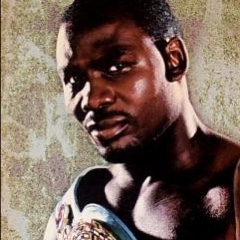
Unified Champion
Hasim Rahman changed heavyweight boxing with one right hand in April 2001. His fifth-round knockout of Lennox Lewis in South Africa made him the WBC and IBF heavyweight champion and produced one of the division's defining upsets. The result remains his most famous achievement, but his career also included a second WBC reign and years of competition against leading heavyweights.
Known as “The Rock,” Rahman recorded 50 wins, nine losses and two draws, with one no contest and 41 knockout victories. His professional career ran from 1994 to 2014. The record reflects both his ability to deliver a decisive punch and the uneven results that accompanied a long stay in the heavyweight ranks.
Born in Baltimore on November 7, 1972, Rahman entered professional boxing in 1994. He developed into a powerful heavyweight with a useful jab and a dangerous right hand, building an unbeaten run of 29 victories before his first defeat.
The transition from prospect to leading contender was demanding. David Tua stopped him in the tenth round in December 1998, in a contest affected by controversy over a punch after the ninth-round bell. Oleg Maskaev then knocked him out in the eighth round in November 1999.
Those setbacks did not end his ambitions. In May 2000, Rahman stopped Corrie Sanders in seven rounds. The victory helped him move back towards the championship picture and showed that he could prevail in a dangerous contest against another heavy puncher.
On April 22, 2001, Rahman challenged Lewis at Carnival City in Brakpan, South Africa. Lewis entered as the established heavyweight champion and a strong favourite. Rahman entered with the losses to Tua and Maskaev still part of the recent assessment of his ability.
In the fifth round, Rahman landed the right hand that ended the fight. Lewis was counted out, and the challenger became the unified WBC and IBF heavyweight champion, also taking the IBO belt. It was a world championship victory rather than a win for a secondary heavyweight title.
The upset illustrated the stakes of heavyweight boxing. A favourite's reputation and previous achievements offer no protection once a challenger creates a clean opportunity to land. Rahman's punch was not merely a surprising moment; it transferred the championship and forced the division to respond.
Lewis and Rahman met again on November 17, 2001, at Mandalay Bay in Las Vegas. Lewis regained the titles by knocking Rahman out in the fourth round.
The two fights need to be considered together. Rahman's first victory was legitimate and remains a major achievement. Lewis's emphatic response showed the quality of the champion he had beaten and prevented Rahman from turning the upset into an extended reign.
For Rahman, the challenge then became establishing a career beyond the result that would always define his public identity. He remained relevant enough to receive further significant fights rather than disappearing after the rematch.
Rahman's subsequent career included a technical-decision defeat to Evander Holyfield in 2002, a draw with Tua in their 2003 rematch and a points loss to John Ruiz later that year. These results complicated his return to the championship level.
In August 2005, he defeated Monte Barrett by unanimous decision to win the interim WBC heavyweight title. When Vitali Klitschko retired that November, the WBC elevated Rahman to full champion.
The distinction is important. His second reign did not begin by defeating Klitschko in a title fight. Rahman earned the interim belt against Barrett and subsequently became the recognised WBC champion after the titleholder's retirement.
Rahman defended against James Toney in March 2006. Their draw allowed him to retain the WBC title, but it did not establish a clear victory over the challenger.
In August 2006, Maskaev stopped him in the twelfth round and took the championship. It was Rahman's second stoppage defeat against the same opponent, bringing his second world title reign to an end.
He continued boxing and challenged Wladimir Klitschko in 2008, losing by stoppage in the seventh round. A later contest with Alexander Povetkin was for the WBA's secondary “Regular” belt, rather than the division's primary world championship. His final recorded professional appearance came in 2014.
Rahman's career is memorable because he achieved what many challengers never manage: he knocked out an established elite champion to win the world heavyweight title. His second reign added substance to a record often remembered for a single night.
He was also a fighter with limitations, as the Lewis rematch and the Maskaev defeats demonstrated. Both facts belong in the account. Rahman was a dangerous, accomplished heavyweight whose greatest victory remains a reminder that a well-delivered right hand can overturn the assumptions surrounding an entire division.

Top Heavyweight Boxing covers the past, present and future of boxing's premier division. Copyright© 2026
Powered by Digital Dynasty Design