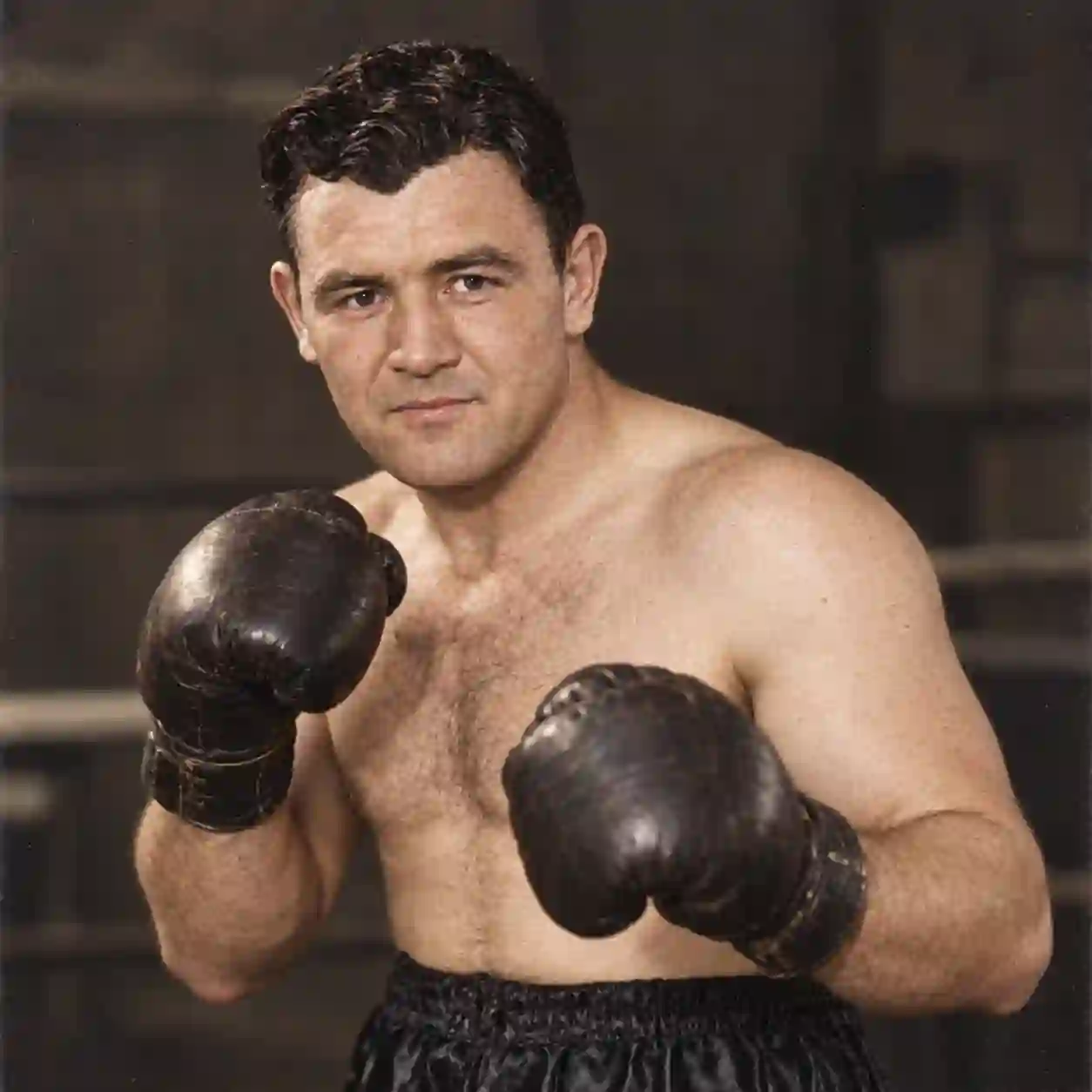
New York City, NY, USA - James J. Braddock’s rise from an injured, impoverished fighter to heavyweight champion of the world remains one of boxing’s great stories of perseverance. Known forever as the “Cinderella Man,” Braddock became a symbol of hope during the Great Depression—a working-class father who appeared finished, fought his way back from obscurity and defeated one of the most feared champions of his time.
The story of James J. Braddock is one of the greatest tales in boxing history, a story of hardship, determination, family and an extraordinary comeback - The Irish Abroad
His unlikely triumph over Max Baer made him famous, but Braddock was more than the hero of a single upset. He was a dangerous light heavyweight contender, an intelligent and resilient professional, and a heavyweight champion whose finest performances came when almost nobody believed he could win.
From Hell’s Kitchen to New Jersey
James Walter Braddock was born on June 7, 1905, in the Hell’s Kitchen neighbourhood of Manhattan. One of seven children born to Irish immigrant parents, he spent much of his youth in Hudson County, New Jersey, where he developed the strength and toughness that would later define him in the ring.
Braddock left school early and worked a succession of physically demanding jobs. Like many fighters of his generation, boxing offered him a possible route out of economic insecurity. He turned professional in 1926 and quickly established himself as a powerful light heavyweight with a hard right hand, a strong chin and a willingness to fight anyone placed in front of him.
He was not the fastest or most technically polished fighter of his era, but he was physically strong, difficult to discourage and capable of ending a contest with one clean punch. Victories over established opponents such as Pete Latzo, Tuffy Griffiths and Jimmy Slattery carried him into world-title contention.
The first championship opportunity
On July 18, 1929, Braddock challenged Tommy Loughran for the world light heavyweight championship at Yankee Stadium. Loughran was one of the most accomplished pure boxers of his generation, and his speed and movement allowed him to outpoint Braddock over 15 rounds.
The defeat was disappointing, but it did not appear to mark the end of Braddock’s championship ambitions. What followed, however, was a prolonged and damaging decline.
Recurring injuries to his right hand robbed him of his most important weapon. Braddock continued fighting because his family needed the money, often entering the ring when his hand had not properly healed. Losses accumulated, his confidence suffered and the opportunities that had once appeared plentiful began to disappear.
At the same time, the Wall Street Crash and the Great Depression devastated the American economy. Braddock lost his savings and struggled to support his wife, Mae, and their children. With boxing no longer providing a dependable income, he took whatever employment he could find, including work as a longshoreman on the docks.
Eventually, the Braddock family was forced to accept public assistance. For a man who had once fought for a world championship, the fall was profound. Yet the experience did not break him. The dock work kept him physically strong, while the reduced use of his injured right hand forced him to rely more heavily on his left. Without realising it, Braddock was rebuilding himself.
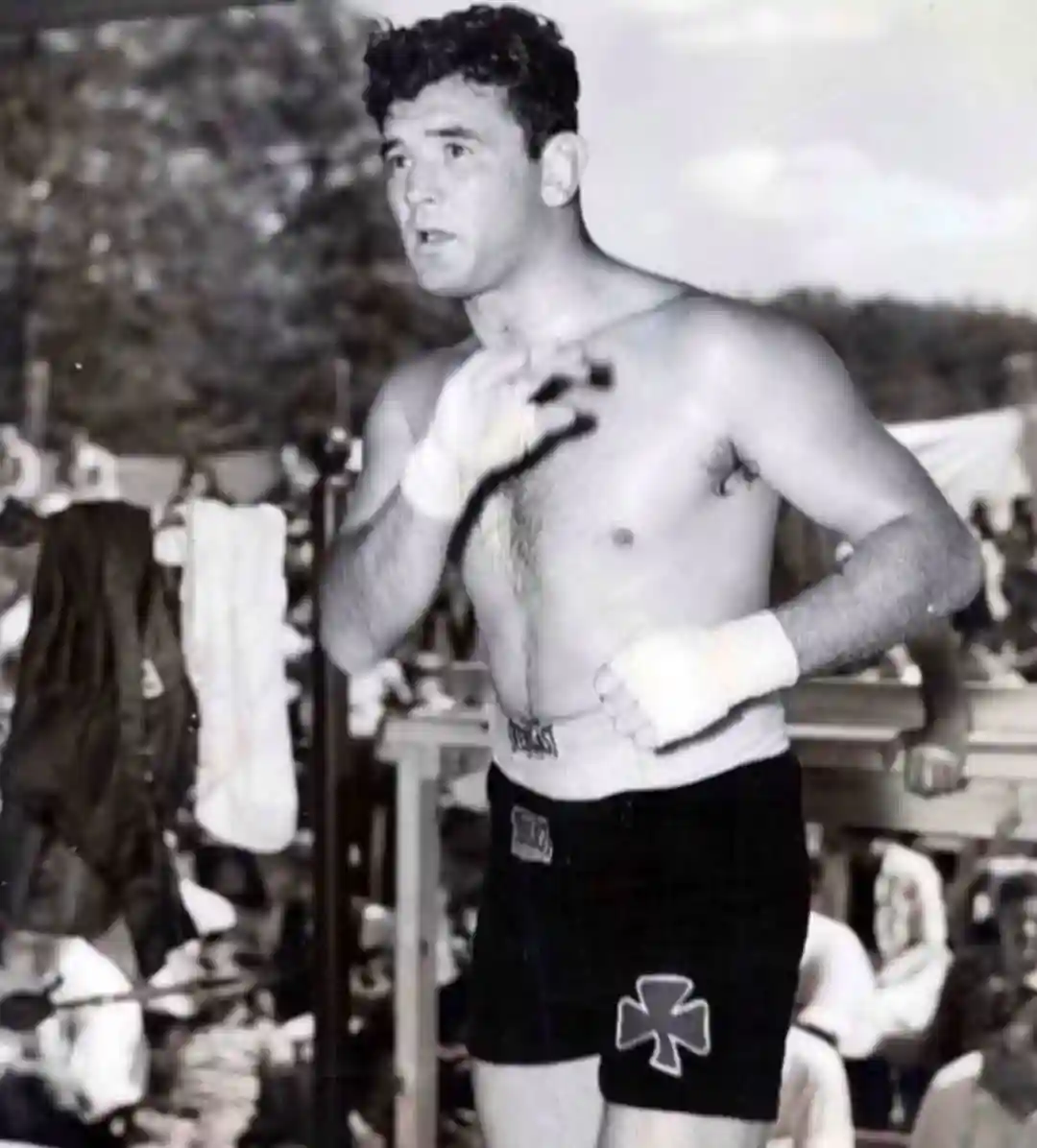
James J. Braddock, heavyweight champion in 1935. After a difficult period marked by injuries and financial struggles, he returned to the ring and defeated Max Baer to claim the world title. During his career, he was known for his durability, strong chin and ability to overcome adversity - James J. Braddock
The comeback nobody expected
In June 1934, Braddock was offered a bout against highly regarded heavyweight contender John “Corn” Griffin. He entered as a late substitute on the undercard of the world heavyweight championship fight between Max Baer and Primo Carnera.
Braddock was supposed to be a manageable opponent for Griffin. Instead, he overwhelmed the contender and stopped him in the third round.
The victory earned Braddock another opportunity, this time against John Henry Lewis, a gifted boxer who would later become world light heavyweight champion. Once again, Braddock entered as the underdog. Once again, he won.
His remarkable revival continued against Art Lasky in March 1935. Braddock produced one of the strongest performances of his career, defeating Lasky over 15 rounds and earning a shot at Max Baer’s heavyweight championship.
In less than a year, a fighter who had been dismissed as finished had beaten three leading contenders. Braddock’s comeback was no longer a curiosity. He was going to fight for the greatest prize in sport.
The night the Cinderella Man became champion
Max Baer was everything Braddock was not. He was younger, more explosive, more flamboyant and regarded as one of the most destructive punchers in boxing. Baer had won the championship by battering Primo Carnera and entered his first defence as an overwhelming favourite.
Few gave Braddock a realistic chance when the two met at the Madison Square Garden Bowl in Long Island City on June 13, 1935. Braddock, however, understood exactly what was required.
Rather than attempting to match Baer’s power, he fought with patience and discipline. He kept his defence compact, disrupted the champion’s rhythm and repeatedly landed his right hand. As the rounds passed, Baer’s confidence gave way to frustration while Braddock continued to work with remarkable composure.
After 15 rounds, Braddock was awarded a unanimous decision and crowned heavyweight champion of the world.
Sportswriter Damon Runyon compared his extraordinary rise to the story of Cinderella, giving Braddock the nickname that would follow him for the rest of his life. The name was fitting, but it could also obscure the substance behind the achievement. Braddock had not won through luck. He had outthought, outworked and outlasted the heavyweight champion over 15 demanding rounds.
90 years ago, James J. Braddock defeated Max Baer by UD15 to win the world heavyweight title. One of the biggest championship upsets. pic.twitter.com/C7NlUdFtQC
Braddock’s victory resonated far beyond boxing. At a time when millions of Americans were unemployed and families were struggling to survive, his story represented the possibility of recovery. He had stood in relief lines, worked on the docks and worried about feeding his children. Now he was heavyweight champion of the world.
After winning the title, Braddock repaid the government assistance his family had received during its hardest period. The gesture strengthened his bond with the public and reinforced his reputation as a modest, honourable champion who had not forgotten where he came from.
Braddock’s appeal was rooted in his ordinariness. He did not present himself as a conquering hero or larger-than-life celebrity. He was a husband and father who had endured many of the same humiliations and fears as the people who supported him. His championship belonged, in a sense, to everyone who had been knocked down by the Depression and was trying to stand again.
The Joe Louis fight
Braddock’s reign became entangled in promotional disputes and negotiations, leaving him inactive for almost two years. He finally defended the championship against the brilliant young Joe Louis at Comiskey Park in Chicago on June 22, 1937.
Louis entered as a heavy favourite, but Braddock immediately demonstrated that he had not come merely to surrender his title. In the opening round, he caught the challenger with a right uppercut and sent him to the canvas.
Louis recovered and gradually took control. Younger, faster and one of the most precise punchers heavyweight boxing had seen, he began breaking through Braddock’s defence with increasingly damaging combinations. In the eighth round, Louis landed a devastating right hand that knocked the champion out.
Braddock had lost the title, but he had fought with the same courage that had carried him from the docks to the championship. Louis reportedly retained enormous respect for him, and the financial agreement connected to the fight helped provide Braddock and his family with lasting security.
Joe Louis winning the world heavyweight title with an 8th round KAYO of James J. Braddock. Louis would reign for 11 years & 8 months and make a record 25 successful title defences. June 22, 1937. pic.twitter.com/TAFNIa1iUY
Seven months after losing to Louis, Braddock returned to face Welsh contender Tommy Farr at Madison Square Garden. Farr had recently pushed Louis through a competitive 15-round championship fight and remained one of the leading heavyweights in the world.
Braddock defeated him by split decision over ten rounds on January 21, 1938. It was the final appearance of his professional career.
He retired with an official record of 46-24-4 (26 KOs), although records from boxing’s newspaper-decision era can vary. The numbers alone do not adequately explain his career. Many of Braddock’s defeats came while he was struggling with damaged hands, fighting for small purses and accepting bouts because his family needed the money. At his best, he defeated elite contenders and earned the heavyweight championship inside the ring.
Life beyond boxing
During the Second World War, Braddock served in the United States Army and helped train servicemen in hand-to-hand combat. Afterward, he entered the marine equipment business and remained a respected figure in New Jersey and throughout the boxing community.
Braddock died on November 29, 1974, at the age of 69. He was inducted into the International Boxing Hall of Fame in 2001.
His life reached a new generation through the 2005 film Cinderella Man, in which Russell Crowe portrayed Braddock. Although the film dramatised parts of the story, its central message was true: James J. Braddock had lost his money, his place among the contenders and almost every advantage a fighter could possess, yet somehow found his way back to the heavyweight championship.
James J. Braddock was not a long-reigning champion, nor was he the most naturally gifted heavyweight of his time. His greatness lies somewhere more human.
He endured injury, poverty, professional humiliation and the pressure of providing for a young family. When an unexpected opportunity arrived, he was ready for it. He defeated three respected contenders in succession and then outboxed Max Baer in one of the greatest heavyweight upsets ever witnessed.
Braddock’s championship was won through intelligence, conditioning, courage and an extraordinary refusal to accept that his best days were behind him. That is why his story has survived long after the Depression ended and why the name “Cinderella Man” still carries meaning throughout the boxing world.
He was the champion who came back from nothing—and made an entire generation believe it could do the same.