Jerry Quarry
Legendary Contender
Jerry Quarry was one of the strongest heavyweight contenders of the late 1960s and early 1970s. He never won a world championship, but his victories over Floyd Patterson, Mac Foster, Ron Lyle and Earnie Shavers give his career a substance that the familiar label of “nearly man” cannot convey. A skilled counterpuncher with a punishing left hook, he could dismantle dangerous opponents. Against the finest champions of his era, he encountered limits that courage alone could not overcome.
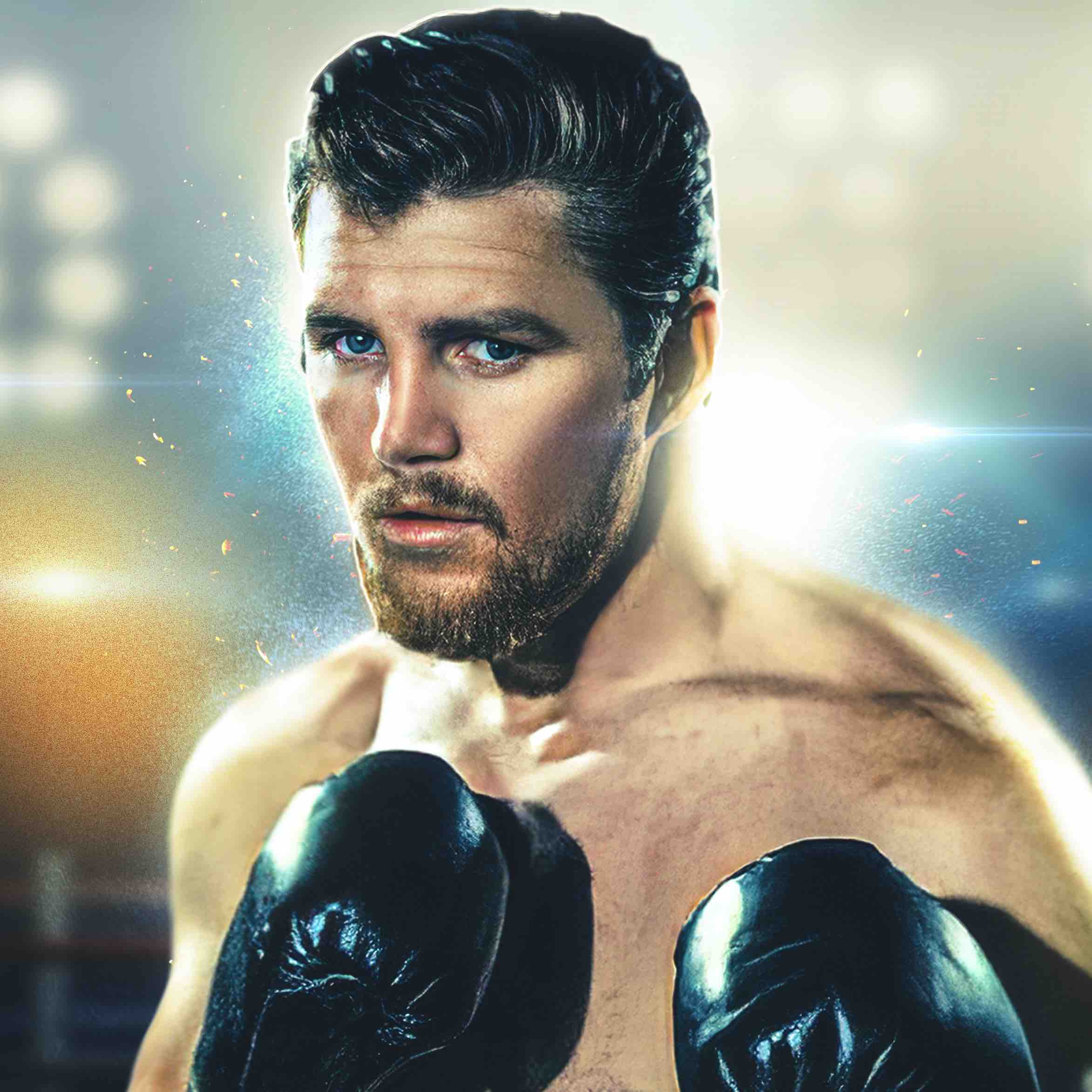
Existing stylised portrait representing Jerry Quarry with raised gloves; an illustration rather than an archival fight photograph.
A California heavyweight with an amateur foundation
Born in Bakersfield, California, on May 15, 1945, Quarry became known as “Irish” Jerry Quarry and the Bellflower Bomber. He won the National Golden Gloves heavyweight championship in 1965 and turned professional that year. The amateur achievement matters because his later reputation for toughness sometimes overshadows the boxing skill behind it.
Quarry was an orthodox fighter who could slip an incoming attack and answer with compact, damaging punches. His left hook worked to both head and body, while his right hand punished opponents who advanced without sufficient care. He was not simply a man who absorbed punishment until something happened; his best victories came from making the other fighter pay for mistakes.
He also competed in a period when the heavyweight ranks were unusually deep. An accomplished contender might defeat several dangerous men and still face a formidable barrier at championship level. Quarry’s record is best assessed through the quality and variety of his opposition.
Patterson, Spencer and a route to the WBA final
Quarry fought Floyd Patterson twice in 1967. Their first meeting ended in a ten-round draw. In October, Quarry won a twelve-round majority decision in the opening round of the WBA’s championship elimination tournament.
The tournament followed the stripping of Muhammad Ali’s title during his dispute over military induction. Quarry then stopped Thad Spencer in the twelfth round of their semifinal, earning a place in the final against Jimmy Ellis.
On April 27, 1968, Ellis won a fifteen-round majority decision in Oakland and took the vacant WBA heavyweight championship. Quarry had reached the final through meaningful wins, but he could not impose himself sufficiently against Ellis. The result should be identified correctly as a majority decision, rather than converted into a split decision or an assumed robbery.
Joe Frazier and the first championship setback
Quarry returned to contention with a clear points victory over Buster Mathis in 1969. He then challenged Joe Frazier at Madison Square Garden on June 23. Frazier held the championship recognised by New York and several other jurisdictions; Ellis still held the WBA belt. The division had not yet been unified.
The opening exchanges were fierce, but Frazier’s sustained pressure gradually deprived Quarry of room to work. A cut beneath Quarry’s right eye became a serious problem, and the contest was stopped after seven rounds. The fight earned The Ring’s Fight of the Year award for 1969.
It showed both sides of Quarry’s competitive character. He was willing and able to engage an exceptional champion, yet that willingness could pull him into the kind of prolonged close-range contest that favoured Frazier. Toughness made him dangerous; it did not make him immune to the consequences of the matchup.
Mac Foster: skill against an unbeaten puncher
One of Quarry’s finest victories came against Mac Foster at Madison Square Garden on June 17, 1970. Foster arrived with 24 wins, all by knockout. Quarry stopped him in the sixth round.
The result was more than a contender exchanging punches with another contender. Quarry’s body attack helped break Foster down, and his combinations turned the contest decisively in his favour. He showed that a frightening knockout record did not automatically defeat a fighter who could read the attack and respond effectively.
That win is central to his heavyweight standing. His losses to famous champions are replayed more often, but Foster was a serious, unbeaten opponent whom Quarry beat through his own skill and power.
Meeting Muhammad Ali’s comeback
On October 26, 1970, Quarry faced Muhammad Ali in Atlanta. It was Ali’s first fight since 1967 and a major sporting event in its own right. Quarry was an established contender, giving the returning former champion a meaningful opponent.
A cut over Quarry’s left eye brought the contest to an end after the third round. The stoppage was not a knockout that left him unconscious, but it was still a defeat: Ali’s speed and accurate punching had created the damage that prevented him from continuing.
The rematch took place in Las Vegas on June 27, 1972. Ali dominated and stopped Quarry in the seventh round. On the same card, Quarry’s younger brother Mike challenged light-heavyweight champion Bob Foster and lost by a fourth-round knockout. The brothers’ ambition brought them onto a major stage, but neither could overcome the champion in front of him.
Ron Lyle and Earnie Shavers: two defining wins
Quarry’s victory over Ron Lyle on February 9, 1973, was an important demonstration of his boxing intelligence. Over twelve rounds at Madison Square Garden, he outpointed the previously unbeaten heavyweight by unanimous decision.
Against a larger, powerful opponent, Quarry used movement and timely counters rather than treating every exchange as a test of endurance. He could hurt Lyle and control stretches of the action without needing to finish the fight by knockout.
On December 14 that year, he stopped Earnie Shavers in the first round at the same venue. These two results illustrate the range of Quarry’s ability: he could manage a long contest against one dangerous puncher and decisively finish another. They are strong evidence that he belonged among the leading contenders, even without a world title.
Later defeats and a career that continued too long
Frazier stopped Quarry in the fifth round of their June 1974 rematch. Ken Norton also stopped him in five rounds in March 1975. The defeats underlined the difficulty of repeatedly returning to elite competition after a demanding series of fights.
Quarry retired and returned at intervals, with his final professional bout taking place in 1992. He finished with 53 wins, nine losses and four draws, including 32 knockout victories. The later appearances added little to a reputation already established through his best years.
Remembering the fighter and the human cost
Quarry developed severe boxing-related dementia in later life and required family care. He died on January 3, 1999, aged 53. That decline is a necessary part of an honest biography, but it should be described with dignity rather than used as spectacle.
His legacy has two connected parts. In the ring, he was a resourceful, powerful contender whose major victories deserve attention alongside his championship defeats. Beyond it, his later condition remains a sobering reminder that the punishment sustained in a boxing career can outlast the final bell.
Quarry did not need an invented title or a romantic claim that he could have beaten everyone in another era to merit respect. The record he actually built—against champions, future champions and feared punchers—is strong enough. At his best, he combined anticipation, counterpunching and determination in a way that made him a genuine obstacle for the division’s leading heavyweights.

