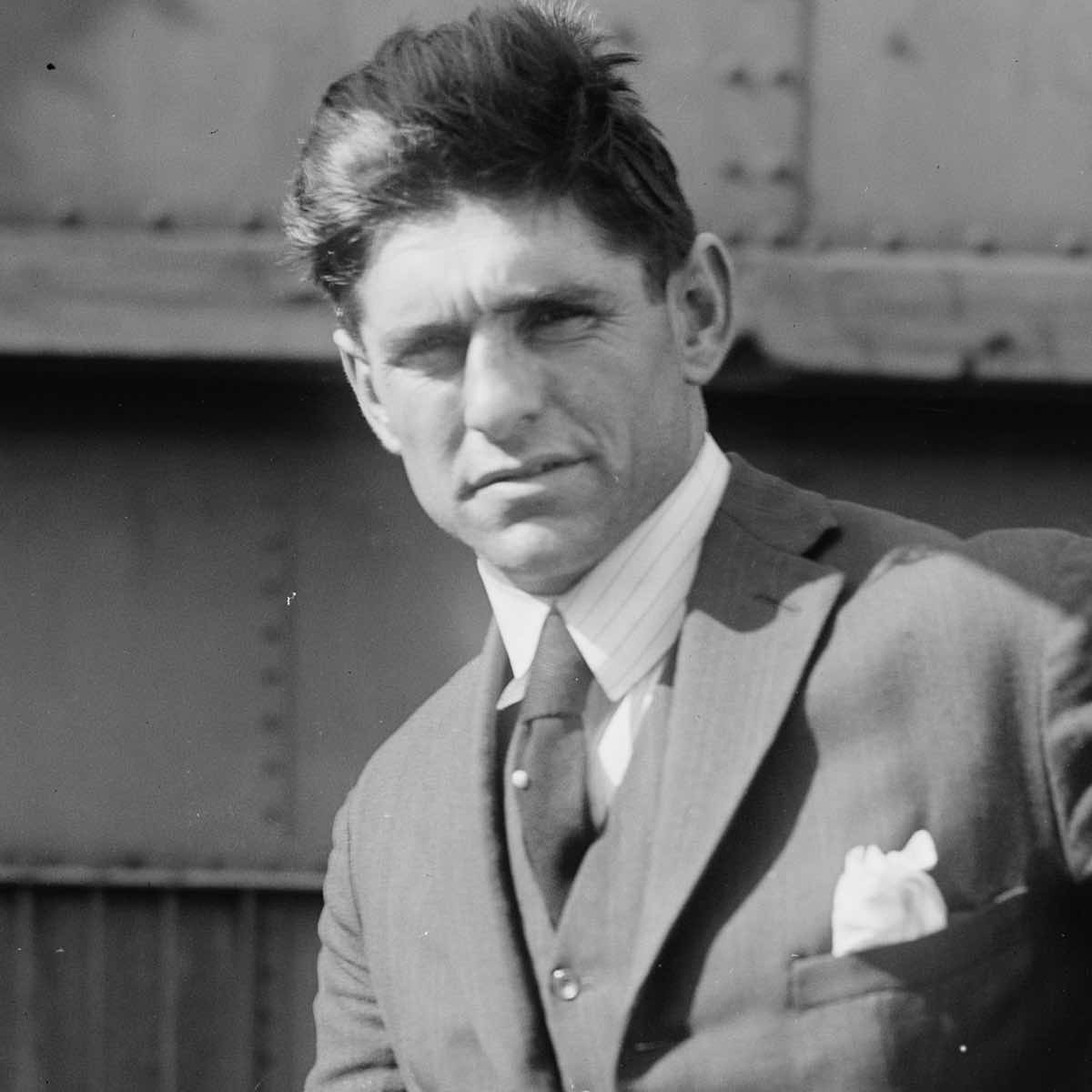
Luis Ángel Firpo became an international boxing figure in 1923 when he challenged Jack Dempsey for the world heavyweight championship. During a chaotic first round, the Argentine challenger knocked Dempsey through the ropes and into the ringside press area.
Dempsey recovered and won, but the image of the champion falling out of the ring gave Firpo an enduring place in sporting history. Known as “The Wild Bull of the Pampas,” he was a powerful contender whose influence in Argentina extended beyond his championship defeat.
From Argentina to International Contention
Firpo was born on October 1, 1894, in Junín, Buenos Aires Province. He began his professional career in South America, where contests against Dave Mills helped establish his regional standing.
His size and right-hand power attracted attention when he took his career to the United States in 1922. American promotion brought a larger audience, but Firpo also needed results against recognisable opponents to justify a world title challenge.
He was a forceful attacker rather than an accomplished defensive technician. His approach could overwhelm an opponent, while leaving openings that a quicker and more experienced heavyweight could exploit.
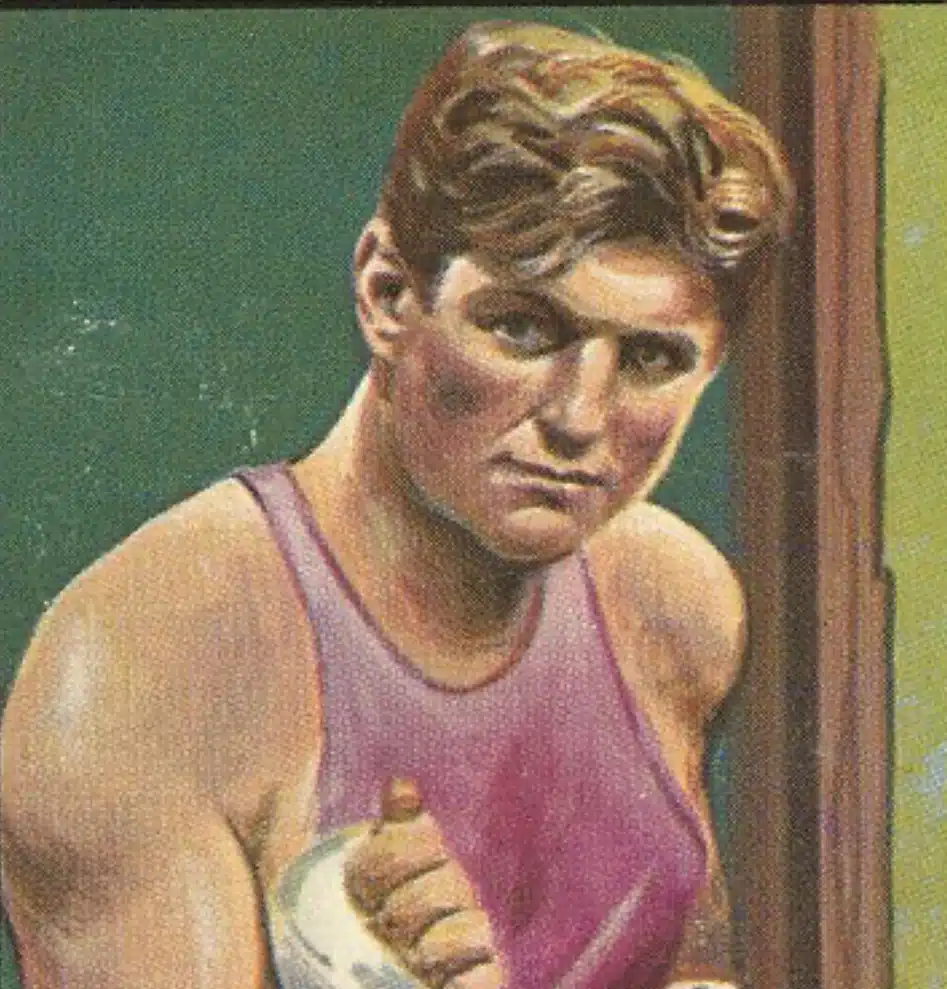
Luis Ángel Firpo in a colourised boxing portrait.
The Victories That Led to Dempsey
Firpo's important 1923 results included a twelfth-round knockout of former title challenger Bill Brennan and a victory over Jack McAuliffe II.
On July 12, he met former world champion Jess Willard at Boyle's Thirty Acres in Jersey City, New Jersey. Willard was attempting a comeback and was well beyond the prime that had carried him to the championship.
Firpo stopped him in the eighth round. The result increased interest in a Dempsey fight and gave the challenger a victory over a former heavyweight champion, although Willard's age and inactivity are important context.
A knockout of Charley Weinert followed before Firpo received his chance at the world's leading heavyweight prize.
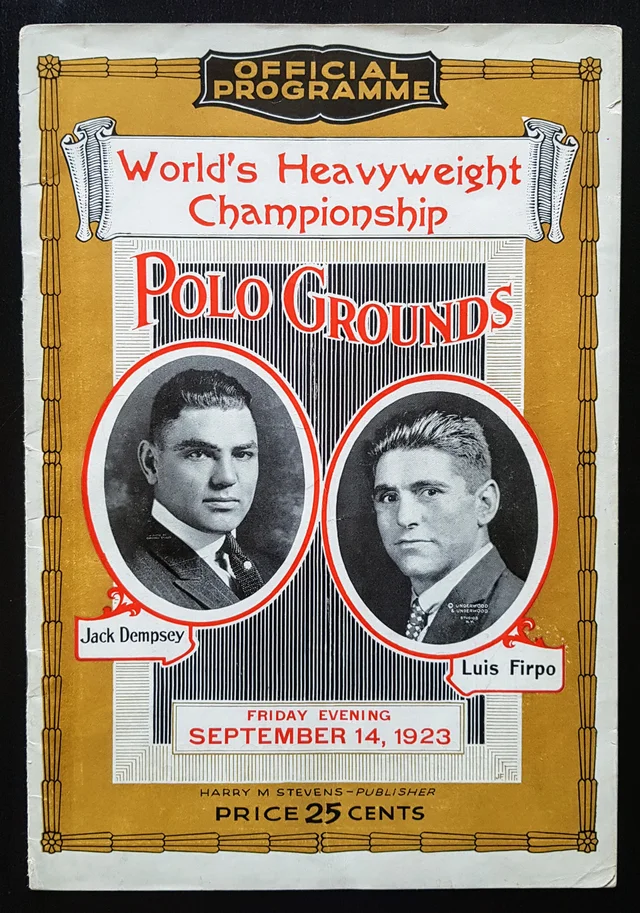
Official programme for Dempsey–Firpo at the Polo Grounds, September 14, 1923.
The Polo Grounds Championship Fight
Dempsey and Firpo met on September 14, 1923, at the Polo Grounds in New York. The fight immediately became an exchange of heavy punches and repeated knockdowns.
Dempsey put Firpo down seven times in the first round. Firpo continued rising and remained dangerous enough to produce the contest's defining reversal: a heavy right sent the champion through the ropes.
Dempsey landed among the ringside press and received assistance as he returned to the ring. The circumstances prompted controversy, particularly over the help he received and the time taken to get back. Estimates of that interval differ, so a disputed timing claim should not be presented as an established alternative result.
The official outcome was decisive. After surviving the first round, Dempsey knocked Firpo out fifty-seven seconds into the second and retained the championship.
A Defeat That Became a Sporting Landmark
Firpo's challenge lasted less than four minutes, but its most dramatic moment outlived many much longer championship contests. George Bellows's painting Dempsey and Firpo preserved the scene of the champion tumbling into the crowd.
The painting and surviving fight footage helped keep the event visible to later generations. For Firpo, the result was a defeat; for boxing history, the contest became a lasting example of how a heavyweight fight can change direction with one punch.
In Argentina, his challenge strengthened boxing's public profile and helped establish him as a national sporting figure. September 14 became associated with the country's celebration of Boxer's Day.
Harry Wills and the Later Career
Firpo returned to major American competition against Harry Wills in September 1924. Wills had the better of their twelve-round contest in Jersey City. Because the local rules prohibited an official points verdict, the result is recorded as a newspaper decision for Wills.
Firpo also met Weinert again and later concentrated increasingly on life outside boxing. A comeback in the 1930s ended in 1936 after a defeat by Arturo Godoy.
He became involved in business and ranching after his main fighting years. Firpo died on August 7, 1960, aged sixty-five.
Firpo's Heavyweight Legacy
Firpo never won the world heavyweight championship. His strongest results earned the opportunity to challenge Dempsey, while his dramatic resistance in that fight made him internationally memorable.
His legacy rests on both achievement and impact: an Argentine contender reaching heavyweight boxing's largest stage, threatening its champion and leaving an image that became part of the sport's cultural history. The official defeat and the enduring significance of the performance belong together.