WORLD Heavyweight Boxing

Month
Date
,
Year

WBC Champion
Chicago, IL, USA - Oliver “The Atomic Bull” McCall owns one of the most remarkable and unpredictable stories in heavyweight boxing history. A former sparring partner who rose from relative obscurity to stop Lennox Lewis for the WBC heavyweight championship, McCall combined formidable punching power with a chin that became the stuff of legend.
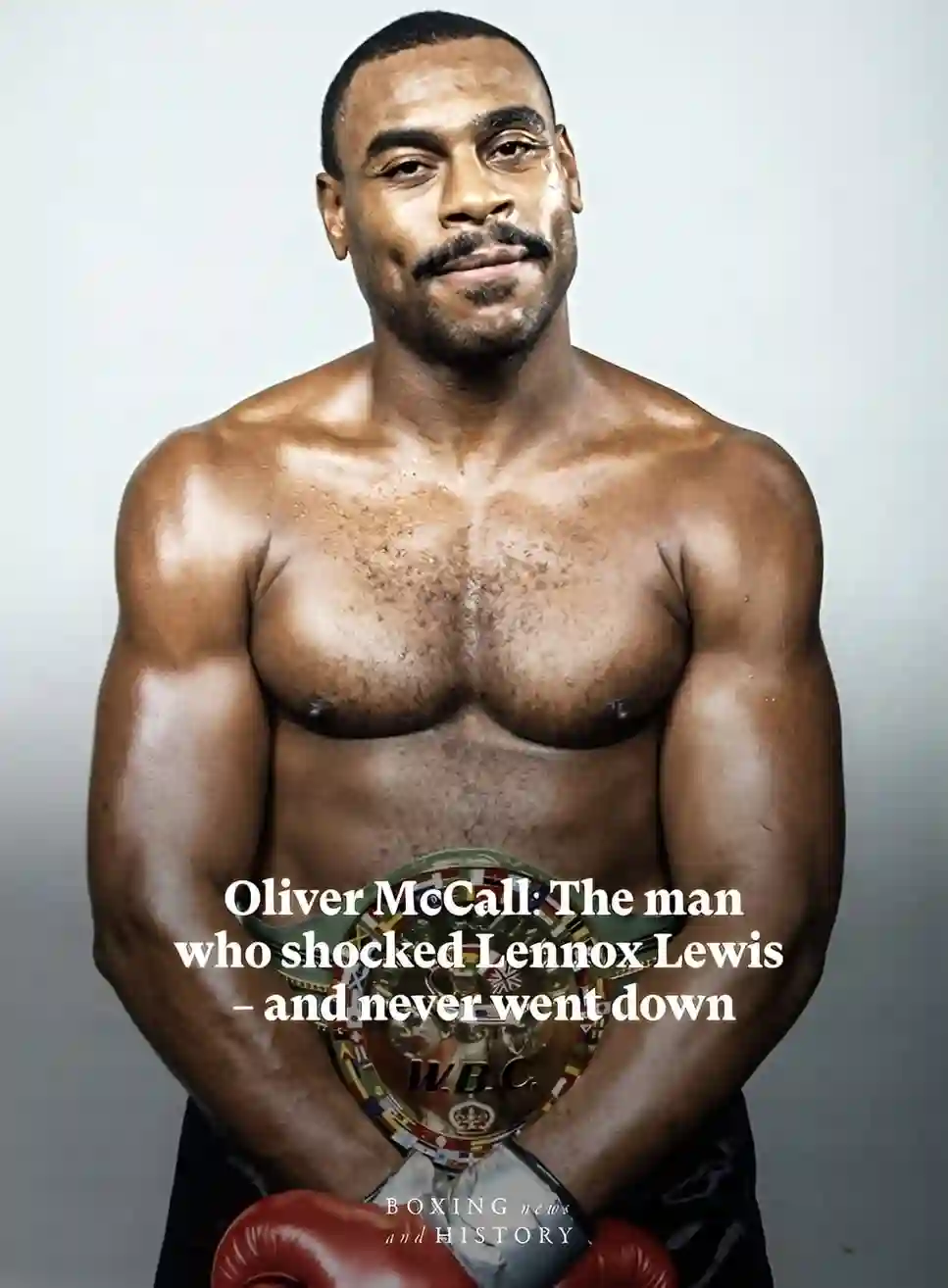
His career also included painful personal struggles, periods of inactivity and one of the most disturbing scenes ever witnessed in a heavyweight title fight. Yet McCall repeatedly returned, compiling notable victories across several generations and continuing to compete long after most of his contemporaries had retired.
Born on April 21, 1965, in Chicago, Illinois, McCall turned professional in 1985. His early career did not follow the carefully managed route normally associated with a future heavyweight champion.
McCall suffered decision losses while still developing and frequently worked as a sparring partner for established heavyweights. Most famously, he spent hundreds of rounds helping Mike Tyson prepare for fights during Tyson’s destructive championship years. He also sparred with Tim Witherspoon, Michael Spinks, Pinklon Thomas and Frank Bruno.
The experience hardened McCall and established his reputation within boxing gyms. He possessed exceptional physical strength, a dangerous right hand and almost unbelievable punch resistance. He was not always consistent, but his best performances revealed a fighter capable of competing with leading heavyweights.
McCall scored an important breakthrough in April 1991 when he stopped the unbeaten Bruce Seldon in the ninth round. He later pushed former IBF champion Tony Tucker through a closely contested 12-round fight, losing by split decision in June 1992.
Victories over Francesco Damiani and Jesse Ferguson helped McCall remain in contention. With Emanuel Steward in his corner, he eventually secured the opportunity that transformed his career.
McCall challenged unbeaten WBC heavyweight champion Lennox Lewis on September 24, 1994, at Wembley Arena in London. Lewis was already regarded as one of the division’s leading figures and entered the contest as a substantial favourite.
Steward and McCall believed Lewis could be caught when committing to his right hand. Early in the second round, their strategy produced one of the defining punches of the decade.
As Lewis moved forward, McCall connected with a powerful right hand that sent the champion crashing to the canvas. Lewis regained his feet but remained unsteady, prompting referee Lupe Garcia to stop the fight just 31 seconds into the round.
Lewis protested the decision, but McCall had delivered the first defeat of his professional career and captured the WBC heavyweight championship. The fighter once known primarily as Tyson’s sparring partner had become a world champion in one of the biggest heavyweight upsets of the 1990s.
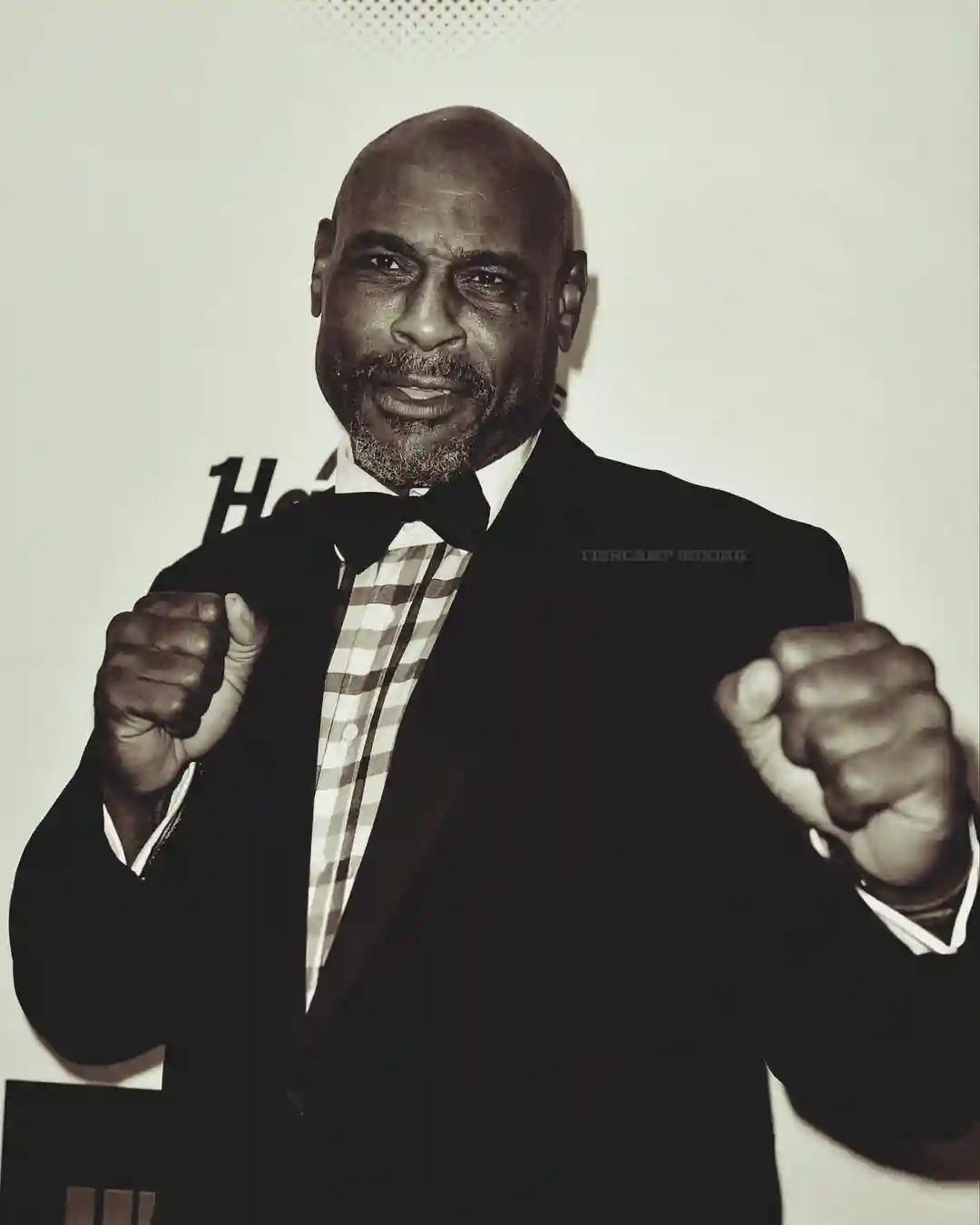
McCall made his first title defence against former champion Larry Holmes on April 8, 1995, in Las Vegas. Although Holmes was 45 years old, his jab, experience and ring intelligence allowed him to remain highly competitive.
The veteran forced McCall to work throughout the 12 rounds, but the champion did enough to retain his title by unanimous decision. It was a close, tactical contest that gave McCall a victory over one of the greatest heavyweight champions in boxing history.
Five months later, McCall returned to London to defend against Frank Bruno at Wembley Stadium. Bruno built an early lead behind his jab and disciplined boxing, while McCall appeared to conserve energy for a late attack.
McCall increased the pressure during the closing rounds, but Bruno survived and won a unanimous decision. The loss ended McCall’s championship reign and finally gave the popular British contender a world title in his fourth attempt.
McCall rebuilt with victories over Oleg Maskaev and other contenders, placing himself in position to fight Lewis again. Their rematch took place on February 7, 1997, in Las Vegas, with the vacant WBC heavyweight championship at stake.
The contest became one of the most unsettling events in heavyweight history. During the fourth round, McCall stopped defending himself and began walking around the ring with his hands lowered. Between rounds, he openly wept and resisted attempts from his corner to engage him.
McCall continued to absorb punches without properly fighting back. Referee Mills Lane stopped the contest 55 seconds into the fifth round, awarding Lewis a technical-knockout victory.
It was clear that McCall was experiencing a serious emotional crisis rather than suffering a conventional boxing defeat. The scene overshadowed the sporting result and became an enduring reminder of the personal difficulties that affected his career.
McCall’s professional and personal problems might have ended the career of another fighter, but “The Atomic Bull” repeatedly returned to the ring. He remained a dangerous heavyweight into his late thirties and forties, scoring several significant victories after his second fight with Lewis.
In November 2001, McCall knocked out former WBO champion Henry Akinwande in the tenth round. The victory revitalized his career and demonstrated that he could still compete with highly ranked opposition.
McCall later defeated experienced contenders including Przemyslaw Saleta, Sinan Samil Sam, Fres Oquendo and Lance Whitaker. Those results extended his relevance well beyond the era in which he first became champion.
His career took him across the United States and throughout Europe, where his durability and recognizable name continued to produce opportunities. Even as his speed declined, McCall remained physically strong, patient and difficult to discourage.
McCall’s defining physical attribute was his extraordinary ability to absorb punches. Despite facing Lewis twice and sharing the ring with heavyweight punchers such as Bruno, Tucker, Seldon, Maskaev and Akinwande, he has never officially been knocked down as a professional.
That distinction becomes even more remarkable when combined with his extensive history as a sparring partner. McCall claimed that he was never floored during his amateur career or in the gym, despite working hundreds of rounds with a prime Tyson and numerous other world-class heavyweights.
His only official stoppage defeat remains the second Lewis fight, which ended because McCall was no longer defending himself rather than because he had been physically knocked down or incapacitated.
McCall was more than a strong chin, however. At his best, he possessed a heavy overhand right, an effective jab and considerable counterpunching ability. His performances could be uneven, but his strength and unpredictability made him dangerous against almost any opponent.
McCall’s professional career has stretched across more than four decades. He fought during the eras of Tyson, Holyfield and Lewis, remained competitive during the rise of the Klitschko brothers and continued appearing in sanctioned contests into his late fifties and early sixties.
In May 2025, the 60-year-old McCall boxed to a six-round draw with Carlos Reyes. The result brought his record to 61-14-1 (40 KOs), with two no contests, and reinforced the astonishing length of his career.
His continued participation has understandably raised concerns about age and fighter safety. Nevertheless, it reflects the same stubbornness and resilience that defined McCall throughout his life in boxing.
Oliver McCall’s legacy cannot be reduced to either his stunning victory over Lewis or the painful events of their rematch. His story encompasses both: the magnificent upset that made him a champion and the personal struggles that prevented his career from following a conventional path.
At his peak, McCall proved capable of beating an elite heavyweight in his prime. His knockout of Lewis became even more significant as Lewis went on to establish himself as the dominant heavyweight of his generation.
McCall also defeated Larry Holmes, Bruce Seldon, Oleg Maskaev and Henry Akinwande, while his remarkable durability earned him a permanent place in discussions of boxing’s greatest chins.
“The Atomic Bull” remains one of the heavyweight division’s most compelling figures—a world champion, perennial survivor and deeply complicated fighter whose career has been as unforgettable as it has been unconventional.

Top Heavyweight Boxing covers the past, present and future of boxing's premier division. Copyright© 2026
Powered by Digital Dynasty Design