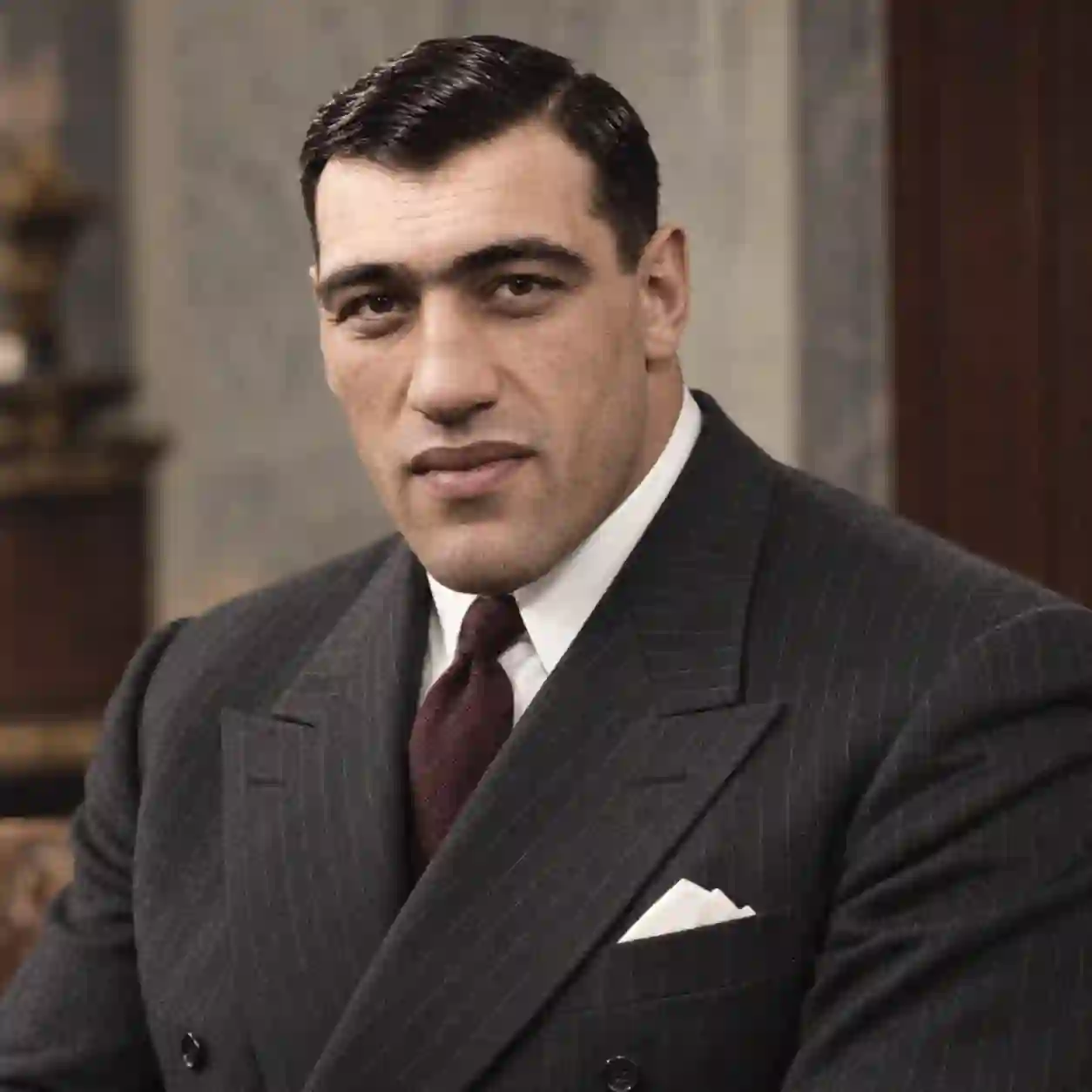
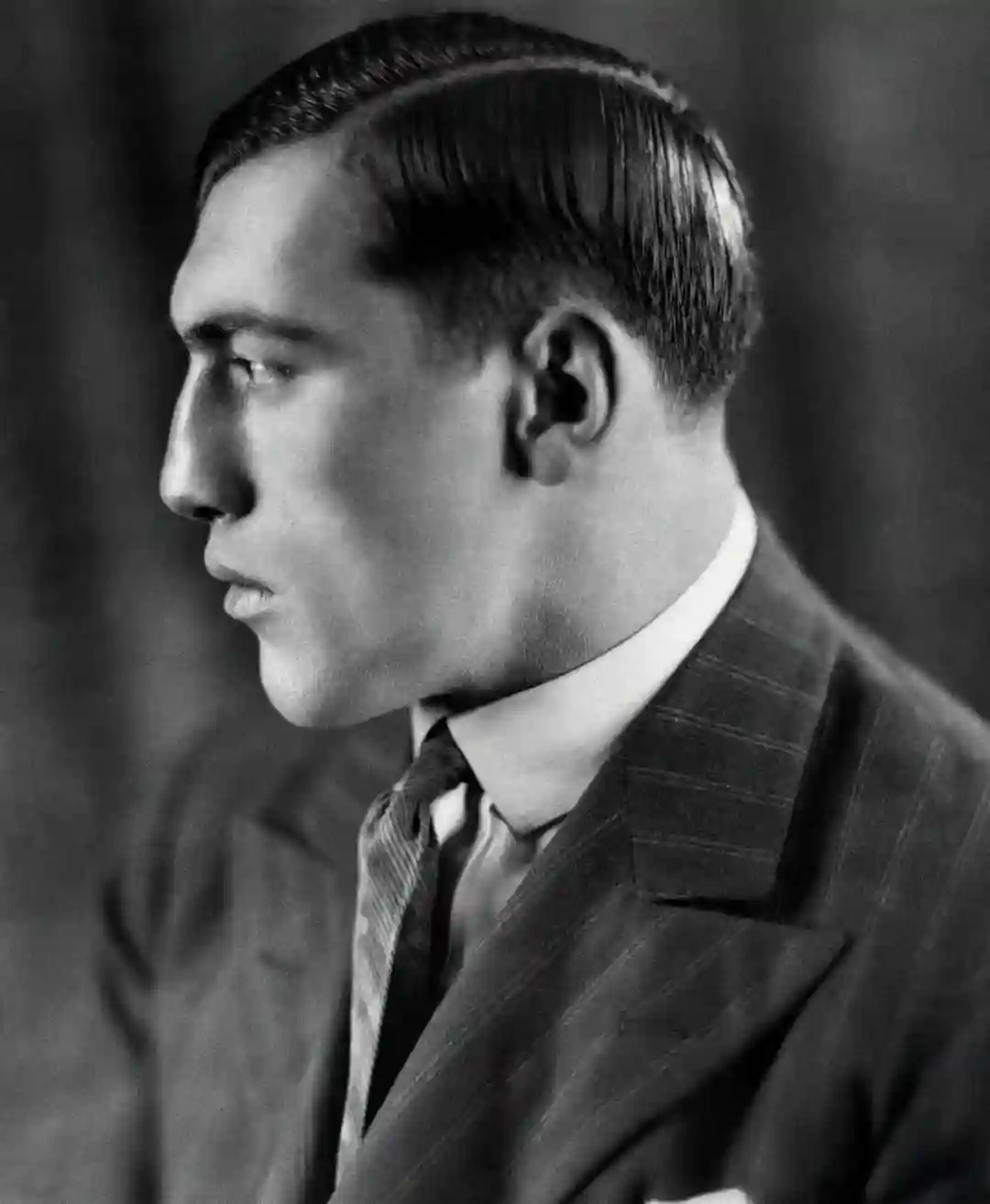
Sequals, Italy - Primo Carnera was one of the most recognisable and misunderstood heavyweight champions in boxing history. Standing more than 6-foot-5 and weighing approximately 265 pounds during an era when many heavyweights entered the ring below 200, the Italian giant appeared almost unreal to Depression-era audiences.
Primo Carnera rose from poverty and the travelling circus to become Italy’s first heavyweight champion, a courageous giant whose complex career remains one of boxing’s most debated - Primo Carnera
His enormous size made him an international attraction, but it also turned him into a commodity. Carnera’s early career was controlled by questionable managers and underworld figures, and several of his fights were surrounded by legitimate suspicion. Those circumstances followed him forever, eventually producing the popular image of a helpless giant carried to the championship entirely through deception.
The truth was more complicated.
Carnera was exploited, protected and sometimes placed in dubious contests, but he also developed into a capable professional. He defeated legitimate contenders, knocked out Jack Sharkey to win the heavyweight championship and successfully defended the title twice. Whatever was manufactured around him, the courage he displayed inside the ring was real.
From rural Italy to the circus
Primo Carnera was born on October 26, 1906, in Sequals, a small community in northeastern Italy. He grew up in poverty and became unusually large from an early age.
Carnera left Italy as a teenager and travelled to France in search of work. His extraordinary dimensions made conventional employment difficult, but they also attracted attention. He eventually found work with a travelling circus, where he performed as a strongman.
At a time when the average European man was considerably smaller, Carnera was a spectacle. He possessed enormous hands, a thick frame and exceptional natural strength. Former French heavyweight Paul Journée saw his potential and encouraged him to enter boxing.
Carnera was introduced to promoter Léon Sée, who recognised the commercial possibilities immediately. The giant Italian had little formal boxing experience, but he looked unlike any other heavyweight in Europe.
He made his professional debut in Paris on September 12, 1928, stopping Léon Sebilo in the second round.
Building the Italian giant
Carnera fought with astonishing frequency. He travelled throughout Europe, facing opponents in France, Germany, Spain and Britain while learning his profession in public.
His early boxing was crude. He stood upright, moved stiffly and often relied on his size to wear opponents down. Yet he was not simply an immobile strongman. Carnera worked diligently, developed a heavy jab and learned to use his reach more effectively.
His enormous frame became the centre of his promotion. He was billed as “The Ambling Alp,” “The Italian Giant” and “The Monster.” Reports sometimes exaggerated his height, weight and physical strength, adding to the mythology.
By 1929, Carnera was facing recognised heavyweights such as Young Stribling. Their two bouts ended in unusual disqualifications, with Stribling losing the first and Carnera losing the rematch. The endings contributed to growing suspicion that something improper surrounded Carnera’s career.
Those suspicions intensified after he travelled to the United States.
New World Heavyweight Champion Primo Carnera lets rip with a musical number after winning the crown #OnThisDay in 1933. The image was captured during a party at the Delmonico Hotel in New York a couple of hours after "Da Preem" KO'd "Boston Gob" Jack Sharkey at the Madison Square… pic.twitter.com/60bxgZUeUM
Carnera arrived in America in 1930 and became an immediate attraction. Crowds wanted to see the enormous European, and promoters understood that even limited opposition could be sold as a confrontation with a giant.
His American career became connected to figures associated with organised crime, including Owney Madden and manager Bill Duffy. Carnera appears to have had little understanding of the financial and political arrangements being made around him. He spoke limited English, trusted his handlers and received only a fraction of the money his fights generated.
Several early American opponents produced suspicious performances. Some were disqualified under questionable circumstances, while others collapsed from punches that did not appear especially damaging. Boxing commissions investigated certain contests, and journalists openly questioned whether opponents had been paid to lose.
It would be dishonest to ignore that history. Carnera was unquestionably surrounded by manipulation, and some of his victories deserve serious scepticism.
It would be equally misleading, however, to dismiss every victory as fraudulent. Carnera also fought opponents who tried to beat him—and sometimes succeeded. He lost decisions to men such as Jim Maloney, Jack Sharkey, Larry Gains and Stanley Poreda. Those defeats exposed his limitations but also forced him to improve.
By the early 1930s, Carnera was more balanced, better conditioned and increasingly effective behind his long left jab. He would never become a graceful boxer, but he was no longer merely a circus strongman wearing gloves.
The tragedy of Ernie Schaaf
On February 10, 1933, Carnera faced leading contender Ernie Schaaf at Madison Square Garden. The winner was expected to receive a shot at heavyweight champion Jack Sharkey.
The fight ended in the thirteenth round when Carnera knocked Schaaf unconscious. Schaaf never recovered and died four days later.
The tragedy haunted Carnera. Accounts describe him as deeply distressed by Schaaf’s death, and there is no reason to believe that he had intended anything beyond winning the fight.
Schaaf had entered the contest in poor health and had recently suffered from influenza. He had also endured a damaging knockout against Max Baer several months earlier. An autopsy reportedly identified meningitis and swelling of the brain, making it impossible to attribute his death to one punch or one fight alone.
Nevertheless, Carnera had delivered the final blow. His victory secured a championship opportunity, but it came under the darkest possible circumstances.
World Heavyweight Champion Primo Carnera (left) looks on as grinning challenger Max Baer gets his ticker checked #OnThisDay in 1934 during a preliminary medical examination prior to their upcoming title clash. The physician with the stethoscope at the offices of the New York… pic.twitter.com/ax6jwLmP7k
Carnera challenged Jack Sharkey for the world heavyweight championship at the Madison Square Garden Bowl in Long Island City on June 29, 1933.
Sharkey had already defeated Carnera by decision in 1931 and entered the rematch as the more accomplished boxer. Early in the fight, he again appeared faster and more polished.
Carnera continued pressing forward behind his jab. In the sixth round, he caught Sharkey with a powerful right uppercut that sent the champion to the canvas. Sharkey was counted out, making Carnera heavyweight champion of the world.
Questions were inevitably raised about the result because of Carnera’s associations and the suspicious fights earlier in his career. Yet no conclusive evidence established that Sharkey had taken a dive. The finishing uppercut was a legitimate, forceful punch, and film of the contest shows Carnera delivering it cleanly.
On the evidence available, Carnera won the championship inside the ring.
He became the first Italian to hold the world heavyweight title and only the third European-born champion after Bob Fitzsimmons and Max Schmeling. For impoverished Italian communities at home and abroad, his victory carried enormous symbolic importance.
Champion of Fascist Italy
Carnera’s championship was quickly embraced by Benito Mussolini’s Fascist government. His immense size and international success were used to promote an image of Italian strength and masculine power.
Carnera was not the architect of that propaganda. Like his boxing managers, the regime saw value in controlling his image. He became a national symbol whose body, championship and public appearances served political purposes larger than himself.
His first title defence took place against Spain’s Paulino Uzcudun in Rome on October 22, 1933. Tens of thousands of spectators attended the first world heavyweight championship fight staged in Italy.
Uzcudun was durable and experienced, but Carnera controlled much of the contest with his reach and physical strength, winning a 15-round decision.
Carnera made a second successful defence against former light heavyweight champion Tommy Loughran in Miami on March 1, 1934. Loughran was a far more polished boxer but conceded approximately 80 pounds to the champion.
Carnera used his size, jab and steady pressure to win another 15-round decision. The victory over a skilled former champion demonstrated that he had progressed considerably from his earliest professional appearances.
He had now won the title by knockout and defended it twice over the full championship distance.
Former World Heavyweight Champion Primo Carnera, aka "Da Preem" and "The Ambling Alp", died in Italy of liver disease #OnThisDay in 1967, aged 60. His death came 34 years to the day after he won the title. pic.twitter.com/ZGYnJhDsn8
Carnera defended the championship against Max Baer at the Madison Square Garden Bowl on June 14, 1934.
Baer was smaller but far quicker, more explosive and equipped with a devastating right hand. He also possessed the confidence and personality to turn Carnera’s intimidating size against him.
The fight became a prolonged beating. Baer knocked Carnera down repeatedly, although the exact total varies because several incidents involved slips, tangles and the loose application of knockdown rules.
Carnera injured his ankle early in the contest but continued fighting. He repeatedly dragged himself upright and attempted to resist Baer’s attacks, even as the challenger mocked him and loaded up with heavy punches.
The referee finally stopped the fight in the eleventh round, giving Baer the championship.
The loss exposed Carnera’s lack of speed and defensive flexibility, but it also revealed the quality most consistently overlooked in accounts of his career: courage. He absorbed extraordinary punishment and continued rising when surrender would have been understandable.
Whatever else could be said about Primo Carnera, he was not a coward.
Facing Joe Louis
Carnera continued fighting after losing the title. On June 25, 1935, he met the rising Joe Louis at Yankee Stadium.
The bout carried political and racial significance. Mussolini’s Italy was preparing to invade Ethiopia, and Carnera was still publicly associated with the Fascist regime. For many Black Americans, Louis represented something far greater than another heavyweight contender.
Inside the ring, the difference in ability was decisive. Louis was faster, sharper and far more accurate. He attacked Carnera’s body, moved beneath the giant’s jab and landed combinations with mechanical precision.
Louis dropped Carnera three times in the sixth round before the fight was stopped.
It was Carnera’s final appearance as a leading world contender. Louis continued toward the heavyweight championship and became one of the greatest fighters in boxing history.
Heavyweight king Max Baer fools around with Primo Carnera while visiting the deposed champion in hospital #OnThisDay in 1934. "The Ambling Alp" was bedridden at Columbus Hospital in New York after sustaining a fractured right ankle and ligament damage when he lost his title to… pic.twitter.com/dxjop7L4yJ
Carnera remained active but began suffering from serious health problems. He lost twice to Leroy Haynes in 1936 and later underwent surgery to remove a kidney.
After several years away, he returned to boxing in Europe during the 1940s. By then, his championship days were far behind him. He fought his final bout in May 1946, losing a decision to Luigi Musina in Italy.
Modern records list Carnera’s professional record as 88-14 (71 KOs), although older tabulations sometimes credit him with one additional victory and knockout.
The numbers reflect an extraordinary workload. Carnera fought more than 100 professional bouts in less than 18 years, often travelling internationally and competing with little recovery time.
Questions surrounding some early fights will always remain part of that record. So will genuine victories over Sharkey, Loughran, Uzcudun, King Levinsky and other respected heavyweights.
A second career in professional wrestling
Boxing had taken much from Carnera, and his handlers had reportedly taken much of what he earned. Professional wrestling offered him an opportunity to use his size and celebrity on more favourable terms.
Carnera began wrestling professionally in 1946 and became an immediate attraction. His enormous frame, recognisable name and natural showmanship made him ideally suited to the industry.
He was promoted as an almost unbeatable giant and reportedly went 119-0-1 before suffering his first wrestling defeat. He appeared in major arenas, challenged leading wrestlers such as Lou Thesz and remained a popular attraction for years.
The wrestling career helped Carnera achieve greater financial security and allowed audiences to see more of his personality. Away from boxing’s underworld, he was widely described as warm, gentle and good-humoured—the opposite of the monster presented in promotional posters.
Carnera also appeared in films, including The Prizefighter and the Lady, Mighty Joe Young and Hercules Unchained. His imposing appearance made him a natural screen presence.
The shadow of The Harder They Fall
Carnera’s reputation suffered another blow with the publication of Budd Schulberg’s novel The Harder They Fall and its 1956 film adaptation starring Humphrey Bogart.
The story follows an enormous but limited foreign heavyweight whose career is manufactured through fixed fights while corrupt managers steal his earnings. Although the character was fictional, the similarities to Carnera were unmistakable.
Carnera sued the film studio, arguing that the story had exploited and defamed his life, but he was unsuccessful.
The film powerfully shaped the way later generations viewed him. Carnera became remembered not as a man but as a symbol: the innocent giant propped up by criminals and destroyed when he finally faced a legitimate opponent.
There was truth inside that image, but it was not the whole truth. Carnera was exploited, yet he also learned to fight. He benefited from suspicious matchmaking, yet he defeated credible opponents. He was limited, but he was not helpless.
Final years and death
Carnera eventually settled in the United States with his wife, Giuseppina, and their two children. He became an American citizen while maintaining a powerful connection to Italy and his hometown of Sequals.
His health declined during the 1960s. Suffering from diabetes and liver disease, Carnera returned to Sequals, where he died on June 29, 1967, at the age of 60.
The date carried a remarkable historical symmetry: Carnera died exactly 34 years after defeating Jack Sharkey for the heavyweight championship.
The legacy of Primo Carnera
Primo Carnera’s career cannot be reduced to either extreme.
He was not the dominant super-fighter imagined by promoters and Fascist propagandists. His balance could be poor, his movements mechanical and his defence vulnerable against fast, explosive punchers.
Nor was he simply a fraudulent champion who had never learned to box.
Carnera possessed an effective jab, exceptional stamina for a man of his size and the discipline to improve throughout an exhausting career. He defeated Jack Sharkey with a legitimate knockout punch, defended the championship twice and completed 15 rounds against skilled opponents.
Most importantly, he endured. He survived poverty, exploitation, public ridicule, physical illness and the collapse of his boxing career. He then reinvented himself as an internationally successful wrestler and entertainer.
Carnera’s size made him famous, but it also prevented many people from seeing the human being beneath the spectacle. Behind “The Ambling Alp” was a hardworking, trusting and remarkably resilient man whose life revealed both the cruelty and the possibility of professional sport.
Primo Carnera was neither a monster nor a myth. He was a world heavyweight champion—and a far better fighter than history often allows.