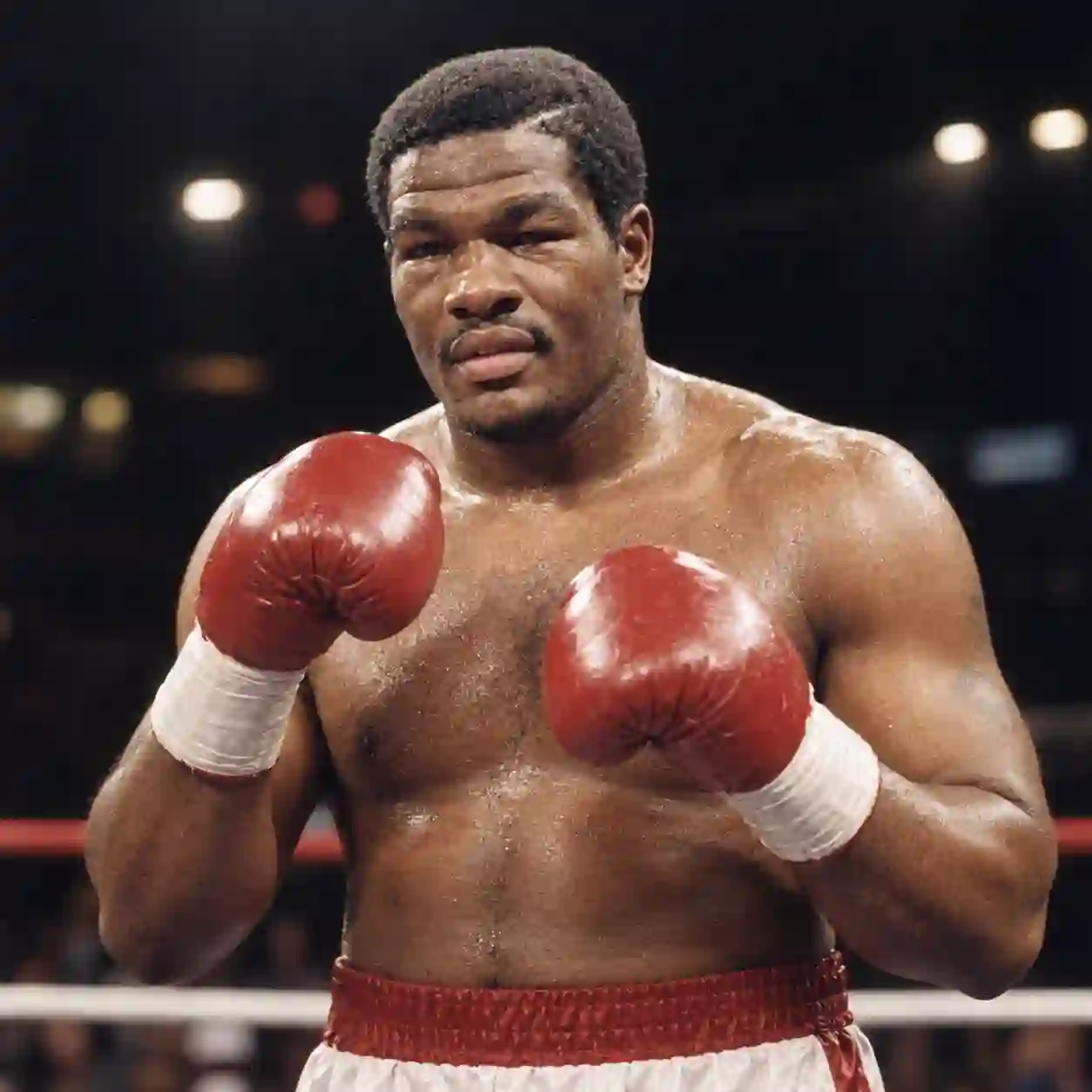
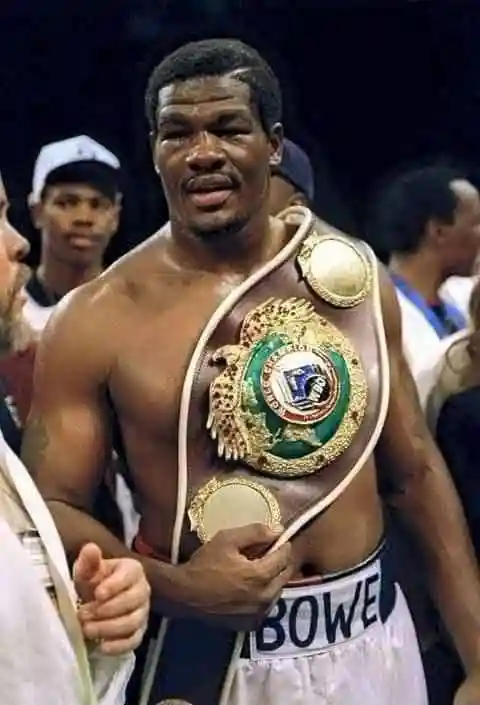
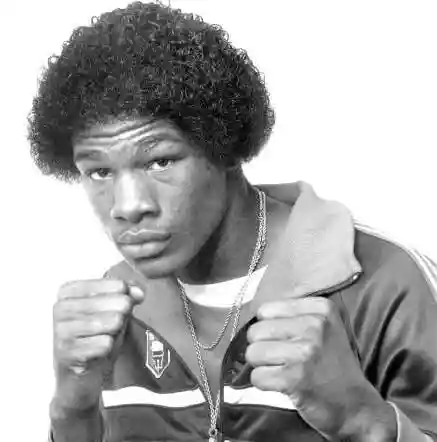
Brooklyn, NY, USA - Riddick “Big Daddy” Bowe was one of the most naturally gifted heavyweights of his generation—a towering boxer-puncher who could dominate behind a long jab, exchange with frightening power and fight at close quarters with the skill of a much smaller man. At his best, Bowe combined size, technique and aggression in a way few heavyweights have ever matched.
Riddick "Big Daddy" Bowe emerged as one of the most physically imposing and athletically gifted heavyweights of his generation - Brain Boxing
His victory over Evander Holyfield in 1992 made him the undisputed heavyweight champion of the world, while their unforgettable trilogy secured his place in boxing history. Yet Bowe’s career is also remembered for unrealized potential, inconsistent conditioning and the long-awaited fight with Lennox Lewis that never happened.
Bowe retired with a professional record of 43-1 (33 KOs), with one no contest. His only official defeat came against Holyfield—a loss he later avenged—and his brief but spectacular peak remains the subject of endless debate among heavyweight historians.
Growing Up in Brownsville
Riddick Lamont Bowe was born on August 10, 1967, and raised in Brownsville, Brooklyn, one of New York City’s most demanding neighborhoods. One of 13 children, he grew up surrounded by poverty, violence and limited opportunities.
Boxing offered structure and a possible route to a different life. Bowe developed into an outstanding amateur, learning to use the physical advantages that would later make him such a formidable professional. Although he would eventually stand 6 feet 5 inches and compete at well over 230 pounds, he was never merely a large man who relied on strength.
Even as an amateur, Bowe possessed coordination, quick hands and an instinctive understanding of distance. He could work behind a heavy jab from the outside, but he was equally comfortable shortening his punches and attacking the body when an opponent moved close.
His amateur career culminated at the 1988 Olympic Games in Seoul, where he represented the United States in the super-heavyweight division. Bowe advanced to the gold-medal contest but was stopped in the second round by Canada’s Lennox Lewis.
The referee’s decision was controversial, and Bowe believed the contest had been halted prematurely. The result gave him an Olympic silver medal, but it also began a rivalry that would follow both men throughout their professional careers.
Turning Professional
Bowe made his professional debut in March 1989 and quickly established himself as one of the most exciting heavyweight prospects in the world. He was guided by manager Rock Newman and trained by the respected Eddie Futch, whose influence became central to Bowe’s development.
Futch had already worked with elite fighters including Joe Frazier, Ken Norton and Larry Holmes. He recognized that Bowe’s greatest strength was not simply his size or punching power, but the range of skills he could bring into the ring.
Under Futch, Bowe refined his jab, balance and combination punching. He learned to disguise his right hand behind straight punches and became an unusually effective infighter for such a tall heavyweight. Rather than holding whenever an opponent moved inside, Bowe could generate short uppercuts, hooks and punishing body shots.
He progressed rapidly through the heavyweight rankings, defeating experienced opponents such as Pinklon Thomas, Bert Cooper, Tyrell Biggs, Tony Tubbs, Bruce Seldon and Pierre Coetzer. Some performances were more convincing than others, but the overall direction was clear: Bowe was becoming a serious challenger in an increasingly competitive division.
By 1992, he was undefeated and ready to challenge the undisputed heavyweight champion.
'Tyson told me he got to the point he thought he was so important that if he was on a street corner and a rat came out of the sewer he would think that rat came out because of him and who he was. I’ll never get like that. I’ll always just be Riddick Bowe.' - The Loneliest Sport
Bowe vs. Holyfield I
On November 13, 1992, Bowe faced Evander Holyfield at the Thomas & Mack Center in Las Vegas. Holyfield entered as the reigning WBA, WBC and IBF heavyweight champion, but Bowe held significant advantages in height, reach and natural size.
What followed was one of the greatest heavyweight championship fights of the modern era.
Bowe established his jab early and repeatedly forced Holyfield to work at an uncomfortable distance. When Holyfield moved inside, however, Bowe did not retreat. He met the champion with uppercuts, hooks and combinations, proving that he could compete with Holyfield in the exchanges as well as outbox him from range.
Peak Riddick Bowe was no joke, it’s just a shame that we didn’t see it for very long.
The Bowe that beat Holyfield to become the undisputed champion had all the attributes for a great heavyweight and would have taken some beating!#boxingpic.twitter.com/tE6wNv4181
The tenth round became the defining passage of the fight. Bowe badly hurt Holyfield and appeared close to forcing a stoppage, but the champion responded with a remarkable attack of his own. Both men absorbed tremendous punishment as momentum moved back and forth during three unforgettable minutes.
Bowe finished strongly and won a unanimous decision after 12 rounds. At 25 years old, he was the undisputed heavyweight champion of the world.
It was the finest performance of his career. Bowe had not merely defeated an established champion; he had outboxed and outfought one of the most complete competitors in heavyweight history.
The Fight with Lennox Lewis That Never Happened
Bowe’s championship victory should have led directly to a professional showdown with Lennox Lewis. Lewis had defeated Donovan “Razor” Ruddock in a WBC eliminator and was positioned as the organization’s mandatory challenger.
The fight carried an obvious story. Lewis had stopped Bowe in the Olympic final, and both had developed into leading professional heavyweights. A rematch would have settled their rivalry while determining the dominant heavyweight of the new era.
Negotiations instead deteriorated amid disagreements over money, promotional control and the terms of the proposed contest. In December 1992, Bowe appeared at a press conference and dropped his WBC championship belt into a trash can rather than comply with the organization’s order to face Lewis.
The stunt was theatrical, but its effect on Bowe’s legacy was permanent. The WBC withdrew its recognition of Bowe, awarded the title to Lewis and brought Bowe’s undisputed reign to an abrupt end.
The full story involved promoters, managers and competing business interests, but the essential criticism has never disappeared: Bowe surrendered a world championship rather than fight his leading challenger.
Lewis and Bowe never met as professionals. Because both became elite heavyweight champions, their missing encounter remains one of the most frustrating unmade fights in boxing history.
Wow, if Riddick Bowe had this level of admiration for Foreman, that tells you everything about Foreman.
Bowe retained the WBA and IBF championships and made two successful defenses in 1993. He demolished former champion Michael Dokes in the first round before stopping Jesse Ferguson in the second.
The victories were emphatic, but neither challenger was considered a leading threat. After Bowe had reached such extraordinary heights against Holyfield, the quality of his opposition—and his fluctuating physical condition—raised questions about the direction of his reign.
A rematch with Holyfield was arranged for November 6, 1993. Bowe entered considerably heavier than he had for their first meeting, while Holyfield arrived with a more disciplined tactical plan.
The contest became famous for an incident in the seventh round, when parachutist James Miller descended into the outdoor arena and became entangled near the ring. The ensuing disorder produced a delay of more than 20 minutes and gave the bizarre episode its enduring “Fan Man” nickname.
Once the fight resumed, Holyfield continued to use movement, combinations and carefully timed attacks. He won a majority decision, handing Bowe the first—and ultimately only—official defeat of his professional career.
Rebuilding and Winning Another Championship
Bowe began rebuilding in 1994, although his return included another controversial incident. Against the unbeaten Buster Mathis Jr., Bowe struck his crouching opponent while Mathis was down. The contest was eventually recorded as a no contest.
He then produced a more controlled performance against Larry Donald, winning a wide decision over 12 rounds.
In March 1995, Bowe challenged Herbie Hide for the WBO heavyweight championship. The WBO title did not yet possess the universal recognition it would gain in later years, but the fight placed Bowe back in a major championship contest.
Hide was fast, athletic and dangerous, but Bowe’s size and power steadily overwhelmed him. Bowe repeatedly knocked the champion down before securing a sixth-round stoppage. He followed that victory by knocking out former amateur rival Jorge Luis González in the sixth round.
Those performances earned Bowe a third meeting with Holyfield.
Riddick”Big Daddy” Bowe vs South African Pierre Coetzer, WBA Heavyweight Eliminator, 1992 Las Vegas TKO7 #Boxingpic.twitter.com/EnpJMIyBfC
Bowe and Holyfield completed their trilogy on November 4, 1995. Neither man held one of the three traditionally recognized major heavyweight championships, but their rivalry was important enough that the contest required no title to make it significant.
For the first time in his professional career, Bowe was knocked down when Holyfield landed a tremendous left hook in the sixth round. Bowe rose, survived the attack and gradually regained control.
Holyfield began to fade, and Bowe’s strength became decisive. In the eighth round, a series of powerful combinations forced the stoppage. Bowe had become the first boxer to stop Holyfield as a professional.
The victory gave Bowe a 2-1 advantage in their trilogy. Across three fights, the pair shared 30 punishing rounds and produced one of the defining heavyweight rivalries of the 1990s.
At his best against Holyfield, Bowe displayed everything that made him special: composure, technical ability, physical strength, resilience and the capacity to produce his finest work under pressure.
The Andrew Golota Fights
Bowe’s final two major appearances came against Andrew Golota in 1996. Officially, Bowe won both contests by disqualification. In reality, they were deeply damaging fights that revealed how far he had declined from his championship peak.
Their first meeting took place at Madison Square Garden on July 11. Bowe entered at 252 pounds and appeared slow, poorly conditioned and unusually vulnerable. Golota repeatedly beat him to the punch, controlling long stretches with his jab and combinations.
Golota also committed persistent low blows. Despite warnings and point deductions, he continued fouling until he was disqualified in the seventh round.
The ending triggered a notorious riot inside Madison Square Garden. Members of the fighters’ entourages clashed in the ring as fighting spread into the surrounding crowd. The disorder overshadowed the official result, but Bowe’s performance was equally concerning. Although declared the winner, he had absorbed a sustained beating.
A rematch was staged on December 14 in Atlantic City. Bowe arrived in better physical condition and fought with greater urgency, but Golota again landed the cleaner and more frequent punches. Bowe showed tremendous courage while taking another alarming amount of punishment.
Once again, Golota repeatedly struck below the belt and was disqualified, this time in the ninth round. Bowe had earned a second official victory, but the two fights had taken an unmistakable physical toll.
Following the rematch, Bowe announced his retirement at just 29 years old.
Bowe’s initial retirement did not mark his final appearance in a professional ring. He returned in 2004 after nearly eight years away, stopping Marcus Rhode in two rounds. He then defeated Billy Zumbrun by split decision in 2005 and Gene Pukall on points in 2008.
The comeback victories added to his record but did not restore the fighter who had defeated Holyfield. By then, Bowe’s speech and physical condition had prompted concern among many observers, and there was little appetite to see him matched against leading heavyweights.
His life outside the ring was frequently troubled. An extremely brief attempt to join the United States Marine Corps attracted widespread attention, while serious domestic and legal problems later resulted in imprisonment. Those episodes complicated the public image of a former champion whose transition away from boxing proved difficult.
Bowe nevertheless remained a recognizable and often engaging figure within the sport. In 2015, he was inducted into the International Boxing Hall of Fame, formalizing his place among the leading heavyweights of his era.
Fighting Style
Bowe was far more technically accomplished than the stereotype of the oversized heavyweight. His long, forceful jab could control an opponent from distance, while his right hand carried legitimate knockout power.
His most unusual quality was his infighting. Despite his height and reach, Bowe was comfortable working at close range. He could shorten his punches without sacrificing power, attacking with compact uppercuts and hooks to both the head and body.
He also possessed fast hands for a heavyweight of his dimensions. At his peak, his combinations flowed naturally, and he could move from patient boxing to sustained aggression without appearing mechanical.
Bowe’s chin and recuperative powers were exceptional. He absorbed enormous punches from Holyfield and survived prolonged punishment against Golota. His willingness to exchange made him thrilling to watch, although it also contributed to the damage he accumulated.
The persistent weakness was conditioning. Bowe’s weight varied dramatically, and his defensive reactions declined when he entered the ring out of shape. The discipline required to sustain a long championship reign never consistently matched his natural ability.
Legacy
Riddick Bowe’s legacy is built around a magnificent peak and the lingering question of what might have been.
The first Holyfield fight established that Bowe, at his absolute best, was an extraordinary heavyweight. He defeated a great champion through a complete performance, demonstrating skill, power, endurance and courage. His eventual 2-1 victory in the Holyfield trilogy remains an accomplishment few heavyweights of any era could have matched.
His final professional record—43-1 (33 KOs), with one no contest—is remarkable. He became the undisputed heavyweight champion, later captured the WBO title and avenged the only defeat of his career.
Yet his reign at the summit was brief. The weak early defenses, inconsistent preparation, damaging Golota fights and failure to face Lennox Lewis prevent his résumé from matching the full scale of his talent.
For some, the discarded WBC belt will always symbolize an opportunity abandoned. For others, the brilliance of the 1992 Holyfield victory offers the clearest evidence of what Bowe could do when properly prepared.
Both interpretations belong to his story.
Riddick Bowe was not the most consistent heavyweight champion, nor did he rule the division for an extended period. But on the night he became undisputed champion, he looked capable of beating almost any heavyweight who had ever lived. That extraordinary version of “Big Daddy” Bowe ensures his place among the most gifted—and most fascinating—heavyweights in boxing history.