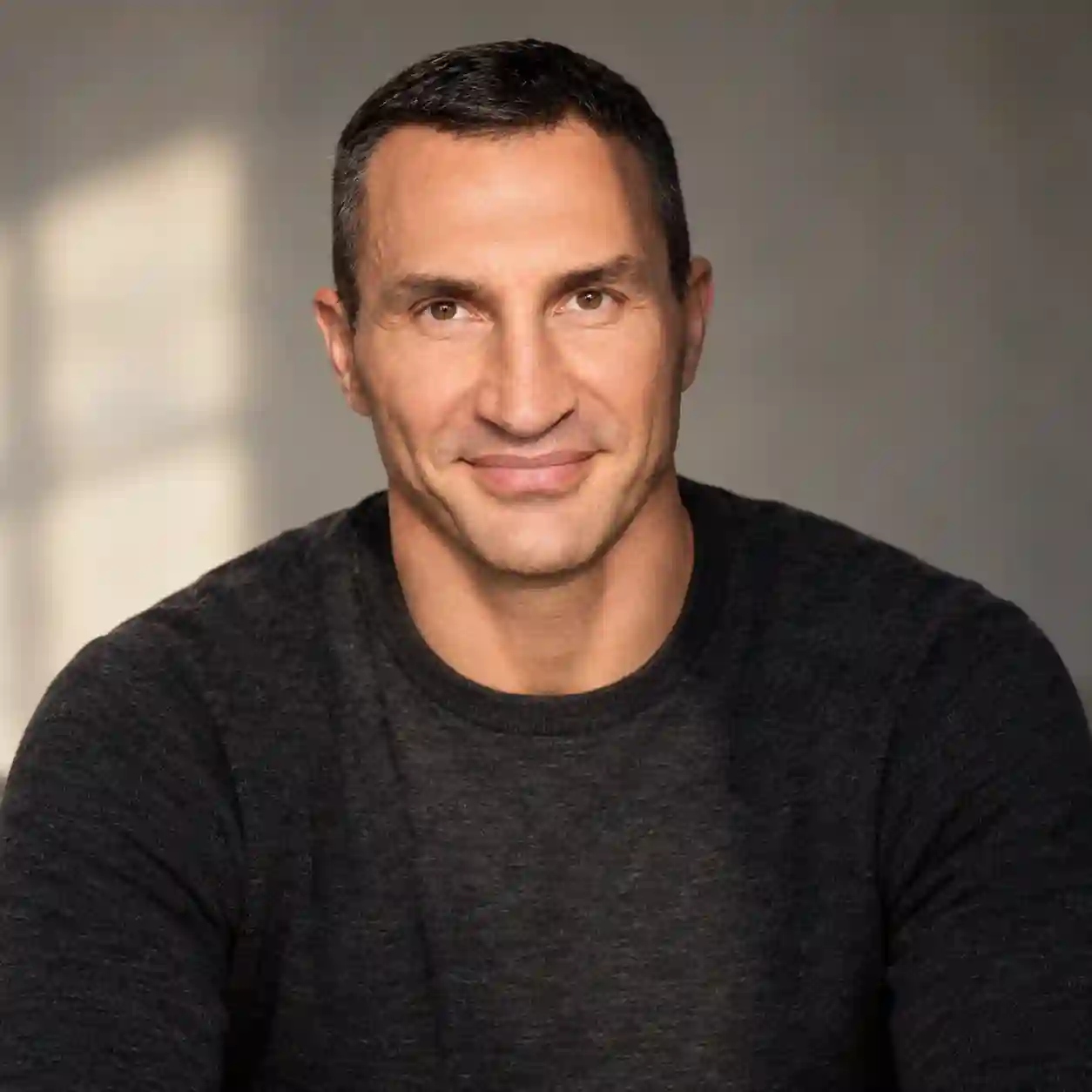
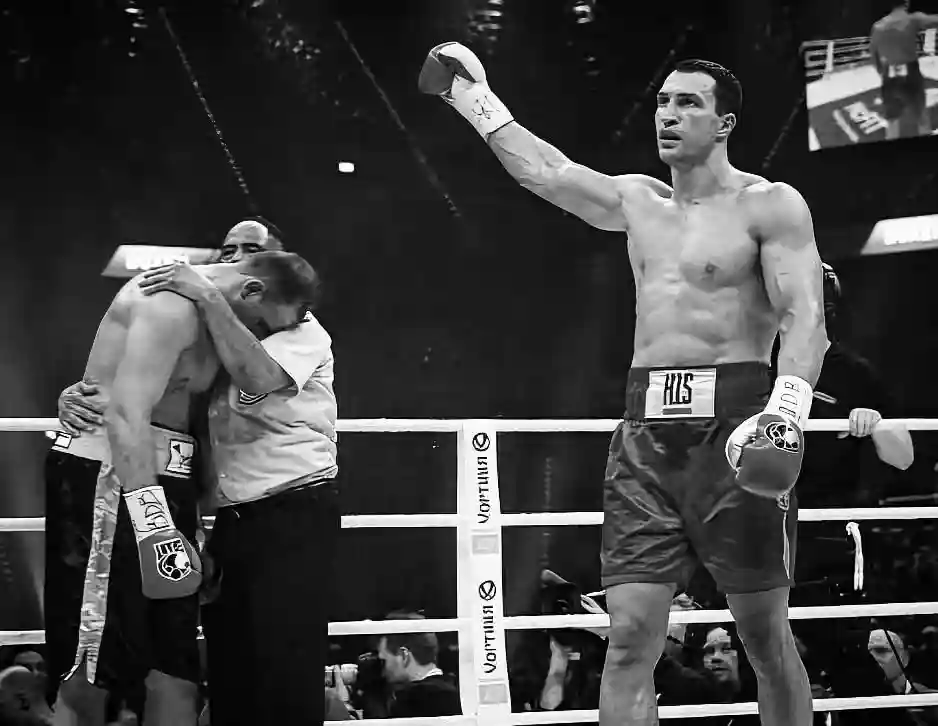
Kyiv, Ukraine - Wladimir Klitschko was one of the most dominant heavyweight champions in boxing history. Standing 6 feet 6 inches with an authoritative jab, crushing right hand and exceptional athleticism, the Ukrainian ruled most of the division for nearly a decade and retired with a professional record of 64-5 (53 KOs).
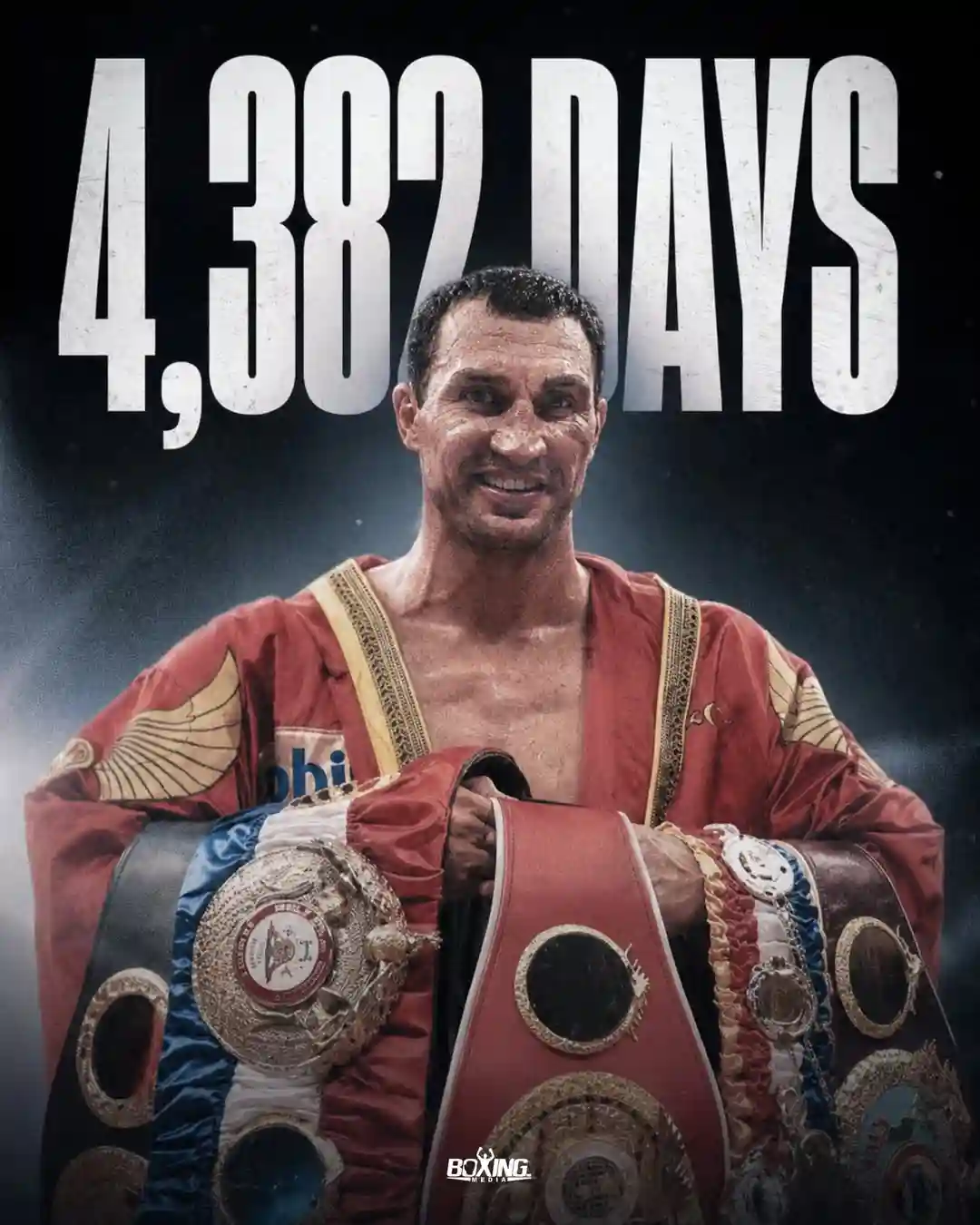
Wladimir Klitschko held the heavyweight championship for 4,382 days, the longest reign of any heavyweight champion in boxing history - Boxing.media
His path to greatness was far from straightforward. Klitschko suffered three damaging stoppage defeats during the first half of his career, raising serious questions about his stamina, chin and ability to perform under pressure. Working with legendary trainer Emanuel Steward, he reconstructed his style, regained the heavyweight championship and went unbeaten for more than 11 years.
Klitschko made 18 consecutive successful defenses during his second championship reign and defeated 23 different opponents in heavyweight title fights. His disciplined approach was frequently criticized as overly cautious, but its effectiveness—and the length of his dominance—cannot be disputed.
A Military Childhood
Wladimir Wladimirovich Klitschko was born on March 25, 1976, in Semipalatinsk, in what was then the Kazakh Soviet Socialist Republic. His father was an officer in the Soviet Air Force, and the family moved frequently during Wladimir’s childhood.
His older brother, Vitali Klitschko, also became an elite heavyweight and world champion. Together, they would eventually control the division for much of the late 2000s and early 2010s.
The brothers were extremely close but possessed noticeably different personalities and fighting styles. Vitali was the more instinctive and unconventional competitor, while Wladimir approached boxing with the precision and discipline of a technical exercise.
Wladimir began boxing as a youngster and quickly emerged as an exceptional amateur. He combined unusual coordination with his imposing height, long reach and developing punching power.
His amateur career culminated at the 1996 Olympic Games in Atlanta, where he represented Ukraine in the super-heavyweight division. Klitschko defeated Paea Wolfgramm of Tonga in the final to win the gold medal.
The victory introduced him internationally and positioned him as one of the most promising heavyweight prospects in the world.
Turning Professional in Germany
Klitschko turned professional in November 1996 and based his career primarily in Germany, where both brothers developed large and loyal followings.
He progressed quickly through the heavyweight ranks. His size was immediately apparent, but Klitschko was far more than a stationary giant. He moved smoothly, possessed excellent balance and could deliver straight punches with impressive speed.
Klitschko’s left jab became the foundation of his offense. He used it to measure distance, disrupt an opponent’s rhythm and create openings for a powerful straight right hand. His left hook was also dangerous, particularly when opponents attempted to move around his lead hand.
He won his first 24 professional contests before facing the durable Ross Puritty in December 1998. Klitschko dominated much of the fight but expended too much energy while attempting to force a stoppage. As he became exhausted, Puritty began attacking with increasing confidence.
Klitschko’s corner stopped the contest in the 11th round.
The loss exposed problems with pacing and stamina, but it did not stop his progress. He returned five months later and began another winning streak, gradually moving toward his first world championship.
With something bad, there is also something good. It is much more fun to solve a challenge than to have a problem.'- Wladimir Klitschko - The Loneliest Sport
Winning the WBO Championship
On October 14, 2000, Klitschko challenged Chris Byrd for the WBO heavyweight title in Cologne, Germany.
Byrd had won the championship from Vitali Klitschko after the older brother withdrew with a shoulder injury despite leading on the scorecards. Wladimir therefore entered the contest with both a championship and a measure of family revenge at stake.
Klitschko controlled the fight with his jab, reach and straight right hand. He knocked Byrd down twice and won a wide unanimous decision after 12 rounds.
At 24, Wladimir Klitschko was a heavyweight world champion.
23 years ago, Corrie Sanders defeated Wladimir Klitschko by TKO in round 2 of 12 to win the WBO heavyweight title. pic.twitter.com/ADBKSdatE3
He successfully defended the WBO title against Derrick Jefferson, Charles Shufford, Francois Botha, Ray Mercer and Jameel McCline. The performances established Klitschko as one of the leading heavyweights of the post-Lennox Lewis era.
Mercer, a former Olympic gold medalist and respected veteran, was stopped in six rounds. McCline, a 6-foot-6 contender with significant power, retired after the tenth.
Klitschko appeared to possess every physical quality required for a long championship reign. That impression changed abruptly in 2003.
The Corrie Sanders Defeat
Klitschko defended the WBO title against South African southpaw Corrie Sanders on March 8, 2003, in Hanover, Germany.
Sanders was fast, powerful and dangerous, but he was considered a considerable underdog. Klitschko appeared relaxed before the contest and was expected to retain without great difficulty.
Instead, Sanders produced one of the most dramatic heavyweight upsets of the era.
He caught Klitschko with fast left hands and repeatedly drove him to the canvas. Klitschko was knocked down four times before the fight was stopped in the second round.
The defeat was more damaging than the earlier loss to Puritty. Klitschko had not simply tired; he had been overwhelmed almost immediately by an opponent whose speed and aggression exposed serious defensive vulnerabilities.
Questions about his chin followed him for the remainder of his career.
When Wladimir Klitschko put on a heavy-hitting masterclass vs Charles Shufford 😤 pic.twitter.com/lYNY6UGo4W
Klitschko began working with Emanuel Steward, the celebrated trainer associated with Detroit’s Kronk Gym. Steward had previously guided Lennox Lewis and believed Klitschko possessed the ability to become the division’s dominant heavyweight.
Their partnership began under difficult circumstances.
On April 10, 2004, Klitschko faced Lamon Brewster for the vacant WBO championship in Las Vegas. Klitschko controlled the opening rounds, knocked Brewster down and appeared close to ending the fight.
He then began to fade dramatically.
Brewster survived the early punishment and attacked as Klitschko’s energy disappeared. By the end of the fifth round, Klitschko could barely remain upright. He collapsed after returning toward his corner, and the fight was stopped.
The circumstances surrounding Klitschko’s exhaustion generated considerable speculation, but the official result remained another stoppage defeat.
He had now lost three fights, each revealing a different concern. Against Puritty, he had exhausted himself. Against Sanders, he had been overwhelmed by power and speed. Against Brewster, he had suddenly collapsed after dominating.
Many observers believed Klitschko’s championship potential had been exhausted.
Steward disagreed.
Rebuilding the Fighter
Steward did not attempt to transform Klitschko into a reckless puncher. He recognized that his fighter’s vulnerabilities had to be managed through distance, balance, patience and control.
Klitschko began relying more heavily on his jab. He kept his right hand higher, reduced unnecessary exchanges and learned to clinch whenever opponents moved inside his preferred punching range.
The changes were practical rather than crowd-pleasing. Klitschko would no longer take avoidable risks simply to entertain an audience.
His most important rebuilding fight came against Samuel Peter in September 2005. Peter was undefeated, physically powerful and regarded as one of the division’s most dangerous young contenders.
Klitschko was knocked down three times, although some of the incidents included punches to the back of the head. He nevertheless recovered, continued boxing and won a unanimous decision after 12 rounds.
The victory demonstrated that Klitschko could survive adversity without losing tactical control. It also placed him in position to challenge Chris Byrd for a second time.
10 years ago, Wladimir Klitschko defeated Kubrat Pulev by KO in round 5 of 12 to retain the WBA, IBF, WBO, Ring & lineal heavyweight titles. This being Dr. Steelhammers seventeenth consecutive IBF title defense. pic.twitter.com/gmB46z700r
Klitschko faced Byrd for the IBF heavyweight championship on April 22, 2006, in Mannheim, Germany.
Byrd was again unable to overcome Klitschko’s advantages in size, power and distance. This time, Klitschko was more patient and defensively responsible than he had been during his first championship reign.
He dropped Byrd and stopped him in the seventh round.
The victory began one of the longest and most dominant heavyweight championship reigns in history.
Klitschko defended against Calvin Brock at Madison Square Garden, scoring a seventh-round knockout, and then required only two rounds to stop mandatory challenger Ray Austin.
In July 2007, he avenged his loss to Lamon Brewster. Klitschko controlled the rematch so completely that Brewster’s corner stopped the fight after six rounds.
The vulnerable former champion had become an extraordinarily difficult man to reach.
Unifying the Heavyweight Division
On February 23, 2008, Klitschko faced unbeaten WBO champion Sultan Ibragimov at Madison Square Garden.
The contest was the first heavyweight title unification fight in nearly a decade. Klitschko dominated behind his jab and won a wide decision, adding the WBO championship to his IBF and IBO titles.
The performance was effective but cautious, reinforcing both sides of Klitschko’s reputation. He was clearly the superior fighter, yet remained unwilling to take unnecessary risks even against an opponent he had under control.
Klitschko continued defending against a succession of leading challengers. He stopped Tony Thompson in 2008, former champion Hasim Rahman later that year and Ruslan Chagaev in 2009.
The Chagaev victory earned Klitschko recognition from The Ring and strengthened his claim as the division’s leading champion. Chagaev had never previously been defeated.
Klitschko then knocked out Eddie Chambers with only seconds remaining in the 12th round and stopped Samuel Peter in their 2010 rematch.
By this point, his style had become remarkably consistent. Klitschko dictated nearly every fight with the jab, punished opponents with the right hand and clinched whenever they entered close range.
Opponents often appeared defeated before taking serious physical punishment. They could not reach him safely, could not establish combinations and gradually became reluctant to attack.
#OnThisDay - In 2010, Wladimir Klitschko defeated Eddie Chambers by KO in round 12 of 12 to retain the IBF, WBO, Ring & Lineal heavyweight titles. pic.twitter.com/UvT5v5TLao
Klitschko faced WBA champion David Haye on July 2, 2011, before a large crowd in Hamburg.
Haye had spent years criticizing both Klitschko brothers and promised to bring speed, aggression and knockout power into the division. The buildup created one of the most anticipated heavyweight fights since the retirement of Lennox Lewis.
Klitschko remained disciplined throughout. Haye attempted to launch explosive attacks from outside but struggled to move past the champion’s jab and reach. Klitschko controlled the distance and won a clear unanimous decision.
The victory added the WBA championship to his collection. Klitschko now held the WBA, IBF, WBO and IBO titles, while also receiving recognition from The Ring.
The only major belt missing was the WBC championship, held by Vitali. The brothers had promised their mother they would never fight one another, making a contest for complete family unification impossible.
Together, however, Wladimir and Vitali controlled every major heavyweight championship.
The Klitschko Era
Klitschko’s dominance continued against Jean-Marc Mormeck, Tony Thompson, Mariusz Wach and Francesco Pianeta.
In October 2013, he faced undefeated mandatory challenger Alexander Povetkin in Moscow. Povetkin was an Olympic gold medalist and one of the most accomplished heavyweights Klitschko had encountered during his reign.
Klitschko knocked him down four times and won a wide unanimous decision. The champion’s excessive holding and leaning drew heavy criticism, and he was penalized one point, but the result itself was decisive.
He stopped Alex Leapai in five rounds before facing unbeaten Kubrat Pulev in November 2014. Pulev entered as a confident and legitimate challenger, but Klitschko delivered one of the most destructive performances of his later career.
He dropped Pulev repeatedly and ended the fight with a powerful left hook in the fifth round.
In April 2015, Klitschko returned to Madison Square Garden to face Bryant Jennings. The challenger’s movement and body punching made the fight more competitive than expected, but Klitschko retained by unanimous decision.
At 39, however, the champion appeared slower and less willing to release his right hand. The first signs of decline were becoming visible.
Tyson Fury Ends the Reign
Klitschko defended his unified championships against Tyson Fury on November 28, 2015, in Düsseldorf, Germany.
Fury was younger, taller and far more mobile than Klitschko’s recent challengers. He constantly changed stance, moved unpredictably and refused to remain at the distance where Klitschko could control him with the jab.
For years, Klitschko had forced smaller opponents to solve his height and reach. Against Fury, he confronted a man who was even larger and who denied him a stationary target.
Klitschko appeared hesitant throughout the contest. He threw too few punches, struggled to establish his jab and waited for openings that rarely appeared.
Fury won a unanimous decision, ending Klitschko’s championship reign after more than nine years and 18 consecutive successful defenses.
A contracted rematch was scheduled but repeatedly postponed as Fury experienced serious personal and mental-health difficulties. Klitschko remained inactive while waiting for the fight to be rearranged.
Eventually, he turned toward a new champion.
The Final Fight with Anthony Joshua
Klitschko challenged the undefeated Anthony Joshua on April 29, 2017, before approximately 90,000 spectators at Wembley Stadium in London.
He entered at 41 years old and had not fought in 17 months. Joshua was 27, held the IBF championship and had stopped all 18 of his professional opponents.
Despite the age difference, Klitschko produced one of the most courageous and memorable performances of his career.
Joshua knocked him down in the fifth round and appeared close to securing an early victory. Klitschko recovered as the younger champion exhausted himself trying to finish.
#OnThisDay in 2017 - Anthony Joshua defeated Wladimir Klitschko by TKO in round 11 of 12 to retain the IBF heavyweight title & win the vacant WBA heavyweight title. The fight was awarded Ring Magazine Fight of the Year. pic.twitter.com/qRWEYWsrbC
In the sixth round, Klitschko landed a tremendous right hand and dropped Joshua heavily. For the first time in his professional career, Joshua appeared physically depleted and uncertain.
Klitschko regained control but fought with his familiar patience rather than forcing the attack. Joshua gradually recovered, and the contest remained competitive entering the championship rounds.
In the 11th, Joshua dropped Klitschko twice and launched another sustained attack. The referee stopped the fight with Klitschko still standing.
The defeat became one of the defining performances of Klitschko’s career. After years of criticism for safety-first boxing, he ended his career in a dramatic battle that displayed courage, recovery and a willingness to exchange with a younger champion.
Klitschko considered exercising his rematch clause but announced his retirement in August 2017.
Fighting Style
At his peak, Klitschko was an exceptionally athletic heavyweight with a carefully constructed and highly effective style.
His jab was the central weapon. It was fast, accurate and powerful enough to disrupt opponents physically. Klitschko used it both offensively and defensively, preventing challengers from establishing their preferred range.
His straight right hand was one of the most powerful punches of his era. Delivered behind the jab, it travelled directly down the center and could end a fight instantly. His left hook was equally dangerous and produced memorable knockouts against fighters including Ray Austin and Kubrat Pulev.
Klitschko moved unusually well for a man of his size. He maintained balance, controlled distance and rarely crossed his feet. His footwork allowed him to dictate where exchanges occurred without relying on constant movement around the perimeter.
The clinch became the most controversial part of his style. When opponents moved inside, Klitschko frequently tied them up or leaned his upper-body weight onto them. This prevented shorter fighters from working at close range but often made his contests repetitive.
His defensive caution developed from experience. Klitschko knew he could be hurt and understood the stamina problems that had undermined his early career. Rather than pretending those weaknesses did not exist, he developed a system that minimized them.
Under Steward, vulnerability became discipline.
Life Beyond the Ring
Klitschko’s nickname, “Dr. Steelhammer,” reflected both his punching power and education. He earned a doctorate in sports science and became known for an analytical, highly professional approach to training.
Outside the ring, he built an international profile extending beyond boxing. Alongside Vitali, he supported educational, charitable and civic initiatives connected to Ukraine.
The brothers became enduring national figures, with Vitali moving directly into politics while Wladimir remained involved in business, education and public advocacy.
Wladimir was selected for induction into the International Boxing Hall of Fame following his retirement, confirming his position among the leading heavyweights of the modern era.
Legacy
Wladimir Klitschko’s legacy was debated throughout his reign and has grown stronger with time.
Critics point to the quality of his era, the absence of an American heavyweight superstar and the cautious style he adopted after his early defeats. Many of his title defenses lacked drama because opponents were unable—or unwilling—to take the risks required to challenge him.
Those criticisms contain some truth. Klitschko did not compete in a heavyweight era as deep as the 1970s or 1990s, and his reliance on clinching sometimes made dominant performances difficult to enjoy.
Longevity, however, cannot be dismissed simply because it appeared routine.
Klitschko went unbeaten for more than 11 years, made 18 consecutive successful title defenses and defeated 23 different opponents in heavyweight championship contests. He unified three major titles and remained the division’s central figure from 2006 until 2015.
He also transformed himself after repeated failure. The fighter stopped by Puritty, Sanders and Brewster did not disappear; he studied those defeats, accepted his vulnerabilities and built a style capable of sustaining one of the longest championship reigns in boxing history.
His final performance against Joshua added something his dominant years often lacked in the public imagination. Klitschko was knocked down, recovered, returned the knockdown and continued fighting until the contest was stopped in the 11th round.
It revealed the competitive courage that had always existed beneath the controlled exterior.
Wladimir Klitschko retired with a record of 64-5 (53 KOs), an Olympic gold medal and one of the most statistically accomplished heavyweight careers ever recorded. His reign may not always have been thrilling, but it was disciplined, dominant and historically significant.