WORLD Heavyweight Boxing

Month
Date
,
Year
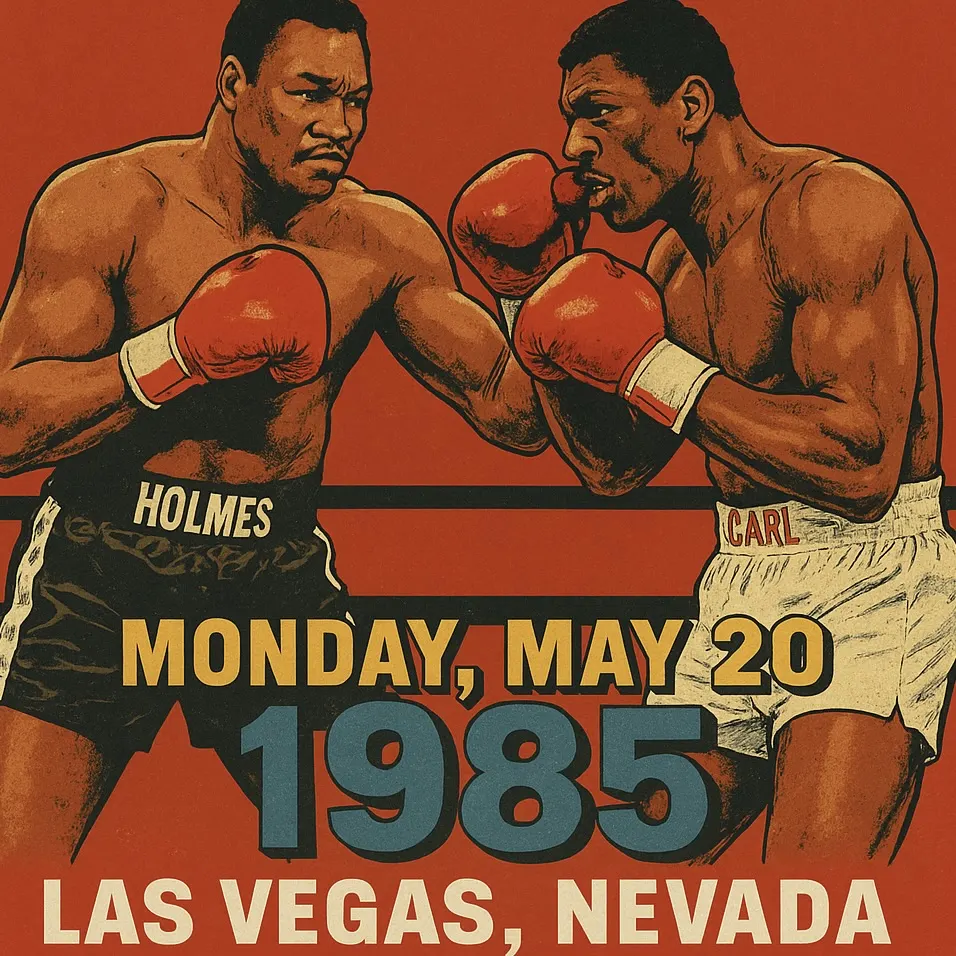
Las Vegas, NV, USA - “Programs regularly scheduled at this time will not be seen tonight…” With that one line, NBC announced it was still capable of halting prime time for a fight. The anthem was sung by Jose Feliciano, the sponsor slate was beer and blue-collar, and Dick Enberg handed off to Marv Albert and Dr. Ferdie Pacheco. The presentation felt grand, polished, familiar—right up until you noticed the seams: budget stretch, human-interest packages doing too much lifting, and a challenger the public didn’t really know.

Larry Holmes, 35 and unbeaten at 47-0, defended the IBF title against Carl “The Truth” Williams, 25 and just 16 fights into his career. It would be the last time a U.S. network carried a heavyweight championship fight live, free-to-air, in prime time.
From the 1950s through Ali’s final acts, heavyweight championship nights were broadcast events. Network television didn’t just show the fights; it curated their meaning. Gillette’s Cavalcade of Sports, ABC’s Wide World—these were the places a champion’s aura was minted. Then came cable, closed-circuit, and later PPV. By the mid-80s, promoters could earn more from a smaller, paying audience than from a giant free one—without the squeamishness of household advertisers or affiliates.
Yet pockets of the “old guard” lingered in network sports divisions—producers who’d built their careers on turning prizefights into national rites. The Holmes–Williams telecast felt like their last stand: one more big Saturday-night picture before the trucks stopped rolling.
NBC’s broadcast told two stories at once.
1) Holmes vs. History.
A lovingly produced Rocky Marciano segment—Brockton streets, family voices, the Walcott KO—reframed the night as a record chase. If the challenger lacked mainstream gravitas, the past would supply it. It was good television and hedging: sell “48-0” to casual viewers who might not buy “Carl Williams.”
2) Engineering “The Truth.”
A Lake Tahoe profile worked hard to myth-build: the bottomless lake, the “young heir to the throne,” the 85-inch reach. It was earnest, even poetic in places, but the fit wasn’t snug. Williams was talented and composed, just not a readymade prime-time archetype. The package revealed what networks had done so well during the Ali years—shape narrative—but also how brittle that method became without a cultural colossus at the center.
Live television can’t sand down reality. Referee Mills Lane repeatedly warned both men to “close your gloves” as thumbing complaints mounted. Coagulant build-up in the Williams corner was on camera; Pacheco quipped about a “Boulder Dam.” You could hear the booth negotiating the line between necessary detail and dinner-time optics. Prime-time boxing was always a negotiation with sensibility. Without Ali’s charisma as balm, the violence read starker, more clinical.
In the ring, Williams boxed beautifully through the early and middle rounds, out-jabbing the jab master and testing Holmes’ legs. Holmes, like the broadcast itself, leaned on craft and stubbornness. He absorbed, adjusted, and surged late—body work, right hands, champion’s pride—to snatch back the story in the championship rounds. He kept the title by unanimous decision. The scorecards were wide; the experience felt closer. Viewers getting their last network title fight also got a tutorial in reputation, resilience, and judging in close quarters.
NBC said out loud what cable didn’t have to: the money math. Holmes’ purse dwarfed the challenger’s. Production costs for a full network compound were heavy. The audience was skewing male and older. Household brands—beer, autos, razors—still bought the night, but they weren’t thrilled by the blood, the thumbing replays, or the uneasy tempo of a bout that could turn gruesome in a heartbeat. Premium cable and PPV solved that mismatch by taking the household veto out of the loop. If you wanted the violence, you paid for it.
Within a year, heavyweight championship storylines would belong to HBO, Showtime, and pay-per-view. Mike Tyson’s entire surge into global myth would live off network air. The business model flipped from “maximize households” to “maximize yield,” with promoters leveraging subscriptions and event fees over mass reach. The sport survived just fine. Network boxing, as a rite where America gathered, did not.
When the decision was read—Holmes still champion at 48-0—the ring filled with the usual bustle. But the larger departure was off-camera. Network television had shown it could still do a heavyweight night with style and intelligence. It just couldn’t justify doing it again. The engineers rolled up the cables, the trucks pulled away, and the last great free-to-air heavyweight title broadcast became what it was always destined to be: a superb, self-aware farewell.


Top Heavyweight Boxing covers the past, present and future of boxing's premier division. Copyright© 2026
Powered by Digital Dynasty Design