WORLD Heavyweight Boxing

Month
Date
,
Year
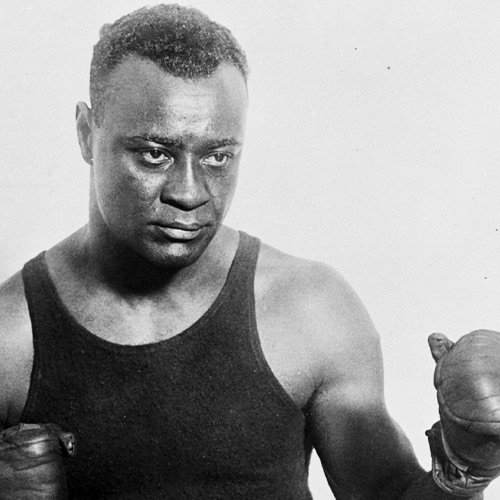
Legendary Contender
Harry Wills was one of the leading heavyweight contenders of the 1910s and 1920s. Known as the “Black Panther,” he built his reputation against outstanding opponents, yet never received an opportunity to fight Jack Dempsey for the world heavyweight championship.
Wills's career is central to understanding boxing's colour line. His exclusion was not simply the story of a promising fighter who failed to secure a big match. He had established a substantial competitive claim, but racial barriers and failed promotional arrangements kept the championship contest from taking place.
Wills was born in New Orleans, Louisiana, on May 15, 1889, and began boxing professionally in 1911. His size, reach and strength helped him develop into a formidable heavyweight.
His early career brought him into the circle of highly accomplished Black fighters who repeatedly faced one another while access to the world title remained restricted. Sam Langford, Sam McVey and Joe Jeannette were important opponents in that competitive environment.
Wills also served as a sparring partner for Jack Johnson. That association was training work, not a professional fight between them. Wills did not begin his professional career with a knockout defeat to Johnson.
Wills's long rivalry with Langford was a major part of his development. Langford was an exceptional puncher and highly experienced fighter, and their repeated meetings provided a demanding test.
Langford won some of their earlier contests, while Wills became increasingly successful as their careers progressed. That change needs context: Wills was developing towards his strongest years while Langford was growing older. Their rivalry cannot be understood through a bare total alone.
Wills held the World Colored Heavyweight Championship, the historical segregated title contested by Black heavyweights denied equal access to the main championship. It represented high-level competition, but it did not make him the universally recognised world heavyweight champion.
Cigarette card of the great Harry Wills, aka "The Black Panther," circa 1923. One of the great uncrowned champions. Wins over Joe Jeannette, Jeff Clark, Sam McVea, Gunboat Smith, Luis Firpo and Sam Langford. Official record: 89-10-4. #Heavyweight #History #Boxing #Legend pic.twitter.com/z95Q6Kjsby
— Heavyweight History (@HVYWeightHeroes) August 20, 2023
Dempsey won the world heavyweight title from Jess Willard in 1919. During his reign, Wills emerged as a leading potential challenger and a persistent subject of debate about who deserved the next championship opportunity.
Wills strengthened his standing against established opponents. In September 1924, he outperformed Luis Ángel Firpo over twelve rounds in Jersey City, New Jersey. The bout took place under rules that did not permit an official points verdict, so it is recorded as a newspaper decision for Wills rather than an ordinary judges' decision.
A second-round knockout of Charley Weinert in July 1925 added another convincing result. These performances gave substance to the demand for a Dempsey contest: Wills was demonstrating his quality against prominent opposition.
Proposals, announcements and contractual arrangements for Dempsey versus Wills appeared over several years. Pressure from the New York State Athletic Commission also failed to produce the fight.
The barriers included racist opposition to another major interracial heavyweight championship contest, resistance within the promotional establishment and the collapse of financial arrangements. Later accounts differed over responsibility, but the outcome is clear: Wills never received the title opportunity.
Dempsey and Wills signed for a proposed 1926 contest with promoter Floyd Fitzsimmons, but that arrangement also fell apart. There was no official or unofficial fifteen-round fight between them. Their names belong together in the history of an unmade championship match.
Dempsey lost his championship to Gene Tunney in September 1926. The following month, Wills lost to Jack Sharkey by disqualification in the thirteenth round.
In July 1927, Paolino Uzcudun knocked Wills out in the fourth round. These defeats ended his standing as a leading championship threat, although he continued boxing until 1932.
The later losses do not erase the stronger claim he had made during Dempsey's reign. By the time the opportunity disappeared, years had passed in which a championship contest might have tested that claim directly.
After retirement, Wills invested his earnings in real estate and became a successful businessman in New York. He died on December 21, 1958, aged sixty-nine, and was inducted into the International Boxing Hall of Fame in 1992.
His career totals vary across historical record compilations, particularly in the treatment of no-decision contests and newspaper verdicts. His legacy is clearer than a single disputed tally: victories over accomplished opposition, prominence among the division's contenders and exclusion from its most important championship opportunity.
Wills should be remembered for the fighter he proved himself to be, as well as the fight he was denied. The missing Dempsey contest remains one of heavyweight boxing's most consequential omissions.

Top Heavyweight Boxing covers the past, present and future of boxing's premier division. Copyright© 2026
Powered by Digital Dynasty Design