March 5, 2024
via
via
The Unyielding Legacy of Pinklon Thomas
The Unyielding Legacy of Pinklon Thomas
Despite facing formidable opponents and enduring personal trials, Pinklon Thomas has carved out a legacy that endures beyond the ring.
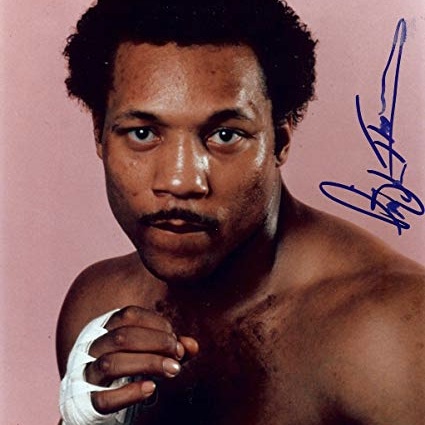
WBC Champion
Pinklon Thomas was a WBC heavyweight champion whose powerful jab gave him a distinctive place in the 1980s division. He defeated Tim Witherspoon to win the title in 1984 and knocked out Mike Weaver in his successful defence the following year. His professional career ended with a record of 43-7-1 (34 KOs).
Thomas's story extends beyond the championship. He experienced addiction, a difficult decline in the ring and a recovery that he later discussed publicly. His work with young people became a meaningful second part of a life that cannot fairly be reduced to either his best victories or his hardest setbacks.
Born on February 10, 1958, in Pontiac, Michigan, Thomas turned professional in 1978 after only three amateur fights. That limited amateur background makes his development into an accomplished championship boxer particularly notable.
Working with Angelo Dundee, he built his offence around a firm, authoritative left jab. The punch was more than a way to measure distance. It disrupted an opponent's rhythm, forced reactions and created openings for the rest of his attack. His pink trunks helped make him recognisable, but the jab was the essential feature of his boxing.
Thomas's rise included victories over James Tillis and Alfonzo Ratliff. In January 1983, he fought a ten-round draw with Gerrie Coetzee, who would win the WBA heavyweight title later that year.
The Coetzee result is worth stating accurately: Thomas did not defeat him. The draw nevertheless demonstrated that Thomas could compete with a heavyweight of championship quality. By the time his own title opportunity arrived, his unbeaten record reflected a sustained rise rather than a single breakthrough performance.
On August 31, 1984, Thomas challenged Tim Witherspoon for the WBC heavyweight championship in Las Vegas. He won a twelve-round majority decision. His jab and composure helped him establish control against an opponent who had already troubled Larry Holmes and won the vacant title against Greg Page.
This was the defining achievement of Thomas's professional career. It placed him among the major heavyweight titleholders during an era when the championship was divided across different organisations. He held the WBC belt; he was not the undisputed heavyweight champion.
Thomas defended the title against former WBA champion Mike Weaver on June 15, 1985. He won by knockout in the eighth round, ending the fight with a decisive right hand.
The result matters in understanding his style. Thomas is remembered primarily for the jab, but he could also deliver a championship-level finish. Weaver was an experienced and dangerous heavyweight, and stopping him gave Thomas a significant victory to accompany his title-winning decision over Witherspoon.
It was Thomas's only successful defence of the WBC championship and one of the most important performances of his career.
On March 22, 1986, Trevor Berbick defeated Thomas by unanimous decision and took the WBC title. It was Thomas's first professional loss. Berbick then lost the belt to Mike Tyson, setting the context for Thomas's next major championship opportunity.
Thomas challenged Tyson in May 1987 and was stopped in the sixth round. The former champion's jab and experience were not enough to hold off Tyson's explosive combinations. The defeat marked the distance between Thomas's championship period and the emerging heavyweight order.
He later faced Evander Holyfield, Riddick Bowe and Tommy Morrison. Those difficult assignments contributed to his later record, but they should not replace his title-winning years as the measure of what he had achieved at his best. His professional career continued until 1993.
Thomas has spoken openly about substance abuse and his recovery. Rather than treating those struggles as a colourful footnote, they belong in the account as serious challenges that affected his life and career.
He founded Project P.I.N.K., short for Pride In Neighborhood Kids, to support youth mentorship. That work gave a practical direction to the experience he had gained outside the ring. His story became one of helping young people avoid some of the choices and difficulties he had encountered himself.
Thomas earned his place in heavyweight history through a major championship, a strong title defence and a style built around one of the era's most respected jabs. His best boxing showed that control of distance and a reliable lead hand could shape a contest against powerful opponents.
His later life adds another dimension to that legacy. The former champion who rebuilt his own life and devoted attention to young people deserves to be remembered alongside the fighter who defeated Witherspoon and stopped Weaver.

Top Heavyweight Boxing covers the past, present and future of boxing's premier division. Copyright© 2026
Powered by Digital Dynasty Design