February 23, 2024
via
via
Ranking The 10 Greatest Champions
Ranking The 10 Greatest Champions
When it comes to assessing the greatest heavyweight champions in boxing history, the task is not for the faint of heart.

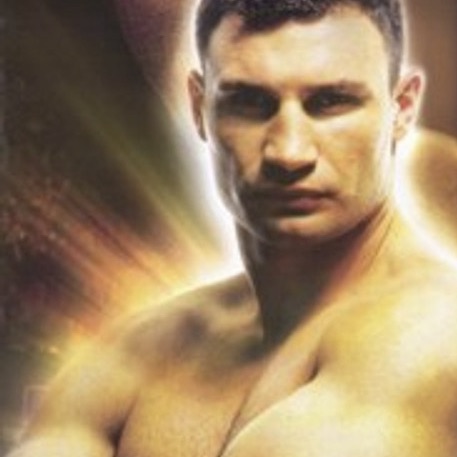
WBC Champion
Vitali Klitschko finished his professional boxing career with a record of 45-2 (41 KOs), winning the WBO heavyweight title and holding the WBC championship in two separate periods. The older of the Klitschko brothers, he combined exceptional size with durability, persistent offence and an unusual ability to control distance without relying on textbook technique.
His two defeats came through a shoulder injury against Chris Byrd and a stoppage on cuts against Lennox Lewis. Both are official losses, but their circumstances are important to understanding a career in which no opponent defeated him on the scorecards over the full distance.
Born on July 19, 1971, in what is now Kyrgyzstan, Klitschko developed his sporting career in Ukraine. His background included boxing and kickboxing before he turned professional in 1996.
He and his younger brother Wladimir emerged from the same sporting environment but developed distinct approaches. Vitali often carried his hands low, leaned away from attacks and returned fire from awkward angles. His size and judgement of distance allowed that unconventional style to work.
Where Wladimir became associated with a more structured jab-and-right-hand system, Vitali could sustain a varied, persistent attack that accumulated damage. The brothers' success eventually defined a long period of heavyweight boxing, although they never fought each other.
In June 1999, Klitschko knocked out Herbie Hide in the second round to win the WBO heavyweight championship. His rise had been built on stoppage victories, and the Hide result demonstrated the force of his attack against an established titleholder.
He lost the belt to Chris Byrd in April 2000. Ahead on the scorecards, Klitschko retired after nine rounds because of a shoulder injury. Byrd's official victory ended Klitschko's unbeaten record and generated criticism of the champion's decision to stop.
The later Lewis fight would change much of that public assessment. Klitschko's willingness to exchange through severe facial damage was difficult to reconcile with the earlier doubts about his resolve.
On June 21, 2003, Klitschko challenged Lennox Lewis in Los Angeles. He gave the champion a demanding fight, using his size, activity and willingness to trade to make a strong impression.
After six rounds, Klitschko led on all three scorecards. However, cuts around his left eye were severe enough for the fight to be stopped. Lewis won by technical knockout.
The lead on points did not make Klitschko the winner, nor did the stoppage diminish the competitiveness of his performance. The fight demonstrated that he could trouble the division's leading champion. It also left an unresolved sporting question because Lewis retired without a rematch.
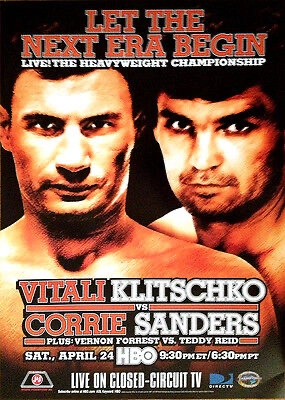
After Lewis's retirement, Klitschko faced Corrie Sanders for the vacant WBC heavyweight title in April 2004. Sanders had stopped Wladimir the previous year, giving the matchup an additional family significance.
Vitali stopped Sanders in the eighth round. He then defended against Danny Williams that December, also winning by an eighth-round stoppage.
Injuries interrupted the reign. Klitschko retired in 2005 without completing a planned defence against Hasim Rahman, who was subsequently elevated to WBC champion. At that point, the possibility of another sustained championship run was uncertain.
Klitschko returned in October 2008 and immediately challenged WBC champion Samuel Peter. Peter did not come out for the ninth round, and Klitschko regained the championship after almost four years away from competition.
The victory began the longest and most stable championship period of his career. His size, conditioning and practical command of distance remained effective despite the lengthy absence. He could force opponents into a pattern in which they took punishment while struggling to reach him consistently.
Successful defences included victories over Juan Carlos Gomez, Chris Arreola, Kevin Johnson, Shannon Briggs, Tomasz Adamek and Dereck Chisora. Different challengers presented different styles, but none took the WBC title from him in the ring.
His final professional fight was a fourth-round stoppage of Manuel Charr in September 2012. He stepped away from the championship in 2013 as his public life increasingly centred on Ukrainian politics. His later election as mayor of Kyiv formed a separate chapter from his boxing career.
Klitschko's record reflects an unusually effective heavyweight: 41 stoppage victories in 45 wins, two WBC championship periods and a successful comeback after a long absence. His legacy also includes the competitive loss to Lewis, a performance that established his standing even without delivering the title.
He was not a conventional stylist. He made an unconventional approach work through size, stamina, durability and an accurate sense of when an opponent was within range. Alongside Wladimir, he became a central figure in the division's history after the Lewis era.

Top Heavyweight Boxing covers the past, present and future of boxing's premier division. Copyright© 2026
Powered by Digital Dynasty Design