The Evolution of Boxing Gloves: How Modern Design Transformed Training
Philadelphia, PA, USA - Walk into any boxing gym a few minutes before training begins and you'll notice a familiar ritual. Fighters unwrap well-worn gloves from their gym bags, tighten their hand wraps, and begin preparing for another session. Some gloves look almost brand new, while others carry the marks of years of hard work—creased leather, faded stitching and the unmistakable signs of thousands of punches thrown. To an outsider, they're simply another piece of sports equipment. To a boxer, they represent countless hours of learning, discipline, and improvement.
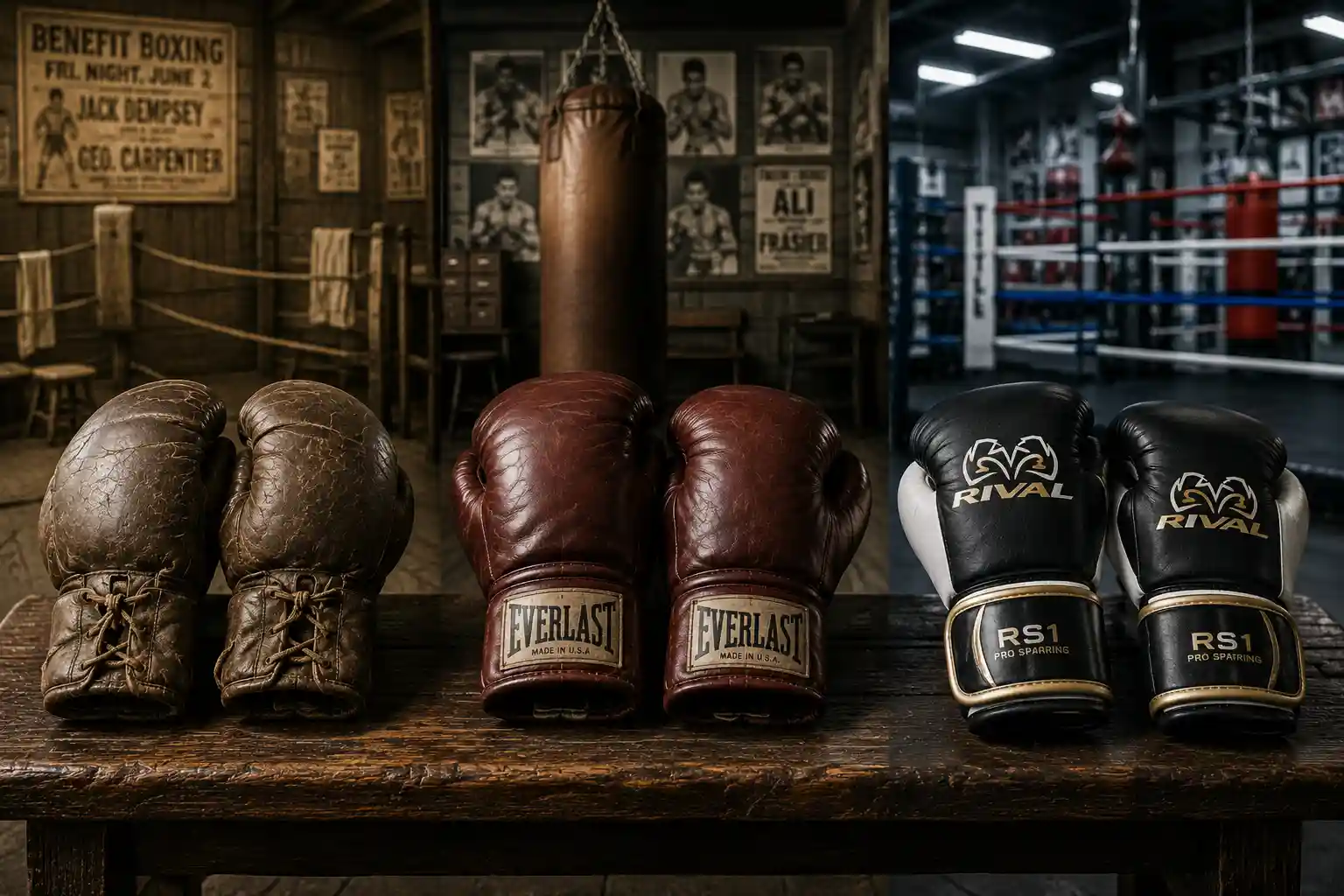
Every pair of gloves tells a story. They witness the first awkward jab of a beginner, the confidence that comes from landing a clean combination for the first time, and the countless hours spent chasing improvement long before anyone steps into a ring under bright lights. Gloves are present for every lesson, every mistake, every breakthrough, and every milestone.
That's why boxing gloves deserve far more attention than they usually receive.
While conversations about boxing often revolve around legendary fighters, unforgettable bouts, or championship victories, far less attention is paid to the equipment that quietly made many of those moments possible. Modern boxing gloves have transformed how athletes train, recover, and develop their skills. Their evolution has shaped not only the equipment itself but also the way the sport is practiced around the world.
The story of boxing gloves is, in many ways, the story of boxing's own evolution.
Boxing Before Modern Gloves
Long before today's carefully built gloves existed, boxing demanded an entirely different approach.
Early bare-knuckle contests placed enormous demands on the human body. Every punch carried consequences for both fighters. A perfectly timed strike might end a contest, but a poorly landed punch could just as easily damage the hand that threw it. That reality influenced the sport in ways that are difficult to imagine today.
Fighters couldn't afford to throw combinations carelessly. Accuracy often mattered more than volume because preserving the hands was essential. Every exchange required careful judgment, technical precision, and remarkable self-control.
As organized boxing gradually adopted formal rules during the nineteenth century, gloves began appearing more consistently in competition. The introduction of the Marquess of Queensberry Rules helped standardize their use, marking one of the most significant turning points in the sport's history. Those early gloves, however, looked nothing like the equipment hanging in gyms today.
Padding was relatively simple, wrist support was minimal, and consistency from one pair to another varied considerably. Their primary purpose was to reduce visible facial injuries and make contests safer than bare-knuckle fighting, rather than providing the sophisticated hand protection modern fighters now expect. Even so, they represented the beginning of a remarkable journey.

Training Changed Faster Than Equipment
As boxing grew in popularity throughout the twentieth century, the biggest changes didn't happen on fight night—they happened inside the gym.
Training evolved from occasional preparation into a year-round process. Coaches introduced more structured routines. Heavy bags became central to conditioning. Focus mitts helped refine timing and accuracy. Controlled sparring allowed fighters to practice techniques under realistic conditions without the pressure of competition.
Suddenly, a boxer wasn't throwing punches only during contests. They were throwing thousands of punches every single week. That increase exposed weaknesses that earlier glove designs had never been expected to handle.
Anyone who has spent time in a boxing gym knows that improvement rarely comes from one extraordinary workout. It comes from showing up consistently, even on the days when motivation is low and progress feels slow. Fighters improve because they repeat the fundamentals over and over again, gradually turning technique into instinct. Consistency, however, depends on staying healthy.
When sore knuckles, strained wrists, or worn-out equipment interrupt training, progress slows. Coaches quickly realized that protecting the hands wasn't simply about avoiding injury—it was about preserving the ability to return the next day and continue improving. Manufacturers noticed the same pattern.
Gloves designed primarily for competition weren't always capable of surviving months of demanding daily use. Padding compressed unevenly, stitching loosened, and wrist support deteriorated after repeated impact. Equipment had to evolve if it was going to support the increasingly demanding routines of modern fighters. That realization fundamentally changed the philosophy behind glove design.
Instead of asking, "Can these gloves survive one contest?" manufacturers began asking a much more important question:
"Can these gloves help a fighter train safely, comfortably, and consistently throughout an entire season?"
That shift in thinking laid the foundation for nearly every major innovation that followed.
Why Better Protection Meant Better Boxers
It's tempting to think of glove evolution simply as a story about safety. In reality, it was a story about opportunity. Every improvement in protection created another opportunity to train.
More rounds on the heavy bag meant better conditioning. More technical drills sharpened punching mechanics. More controlled sparring improved timing, distance management, and defensive awareness. Instead of losing valuable weeks to preventable hand injuries, fighters could spend more time developing the skills that actually decided contests.
Experienced coaches often say that championships are rarely won during spectacular moments. They're won through the ordinary training sessions that nobody else ever sees.
Modern boxing gloves quietly support those ordinary moments every single day. They allow fighters to focus less on discomfort and more on learning. They encourage consistency instead of interruption. And perhaps most importantly, they give athletes the confidence to keep returning to the gym, knowing their equipment is helping rather than hindering their progress.
The next major chapter in that evolution would come through advances in design and materials—innovations that fundamentally changed how boxing gloves absorbed impact, supported the wrist, and performed through thousands of rounds of training.
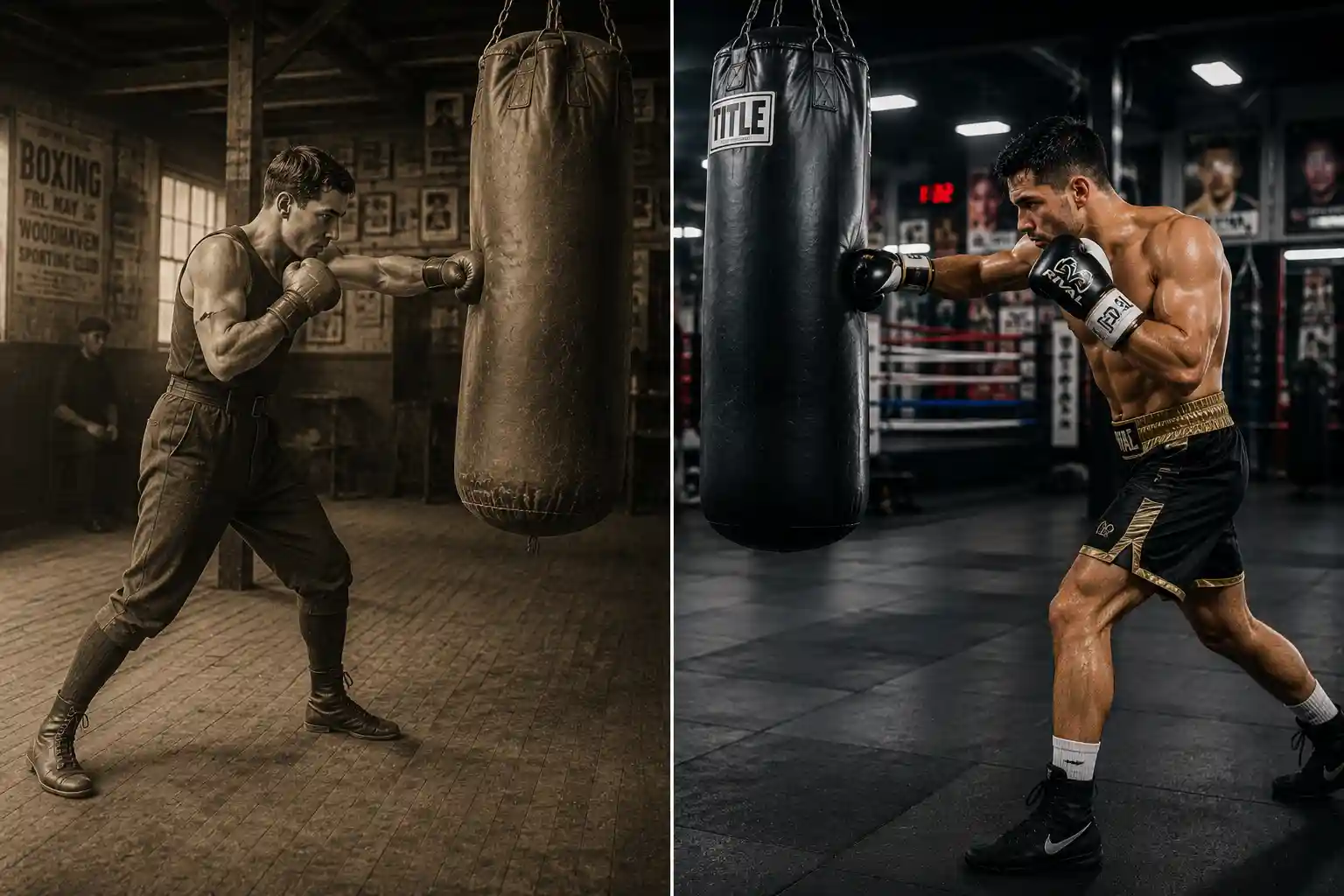
Engineering the Modern Boxing Glove
The first major breakthroughs in boxing glove design weren't driven by appearance or branding. They were driven by necessity.
Coaches noticed the same pattern year after year. Fighters were becoming more disciplined, training sessions were becoming longer, yet equipment often struggled to keep pace. Gloves that performed well during the first few weeks of training gradually lost their shape. Padding compressed, wrists felt less stable, and discomfort slowly became part of the routine.
The problem wasn't that fighters lacked determination. The problem was that boxing had outgrown the equipment available at the time. Manufacturers gradually shifted their focus from simply making gloves that looked durable to creating gloves that could withstand the demands of modern boxing training. Every design decision—from the type of foam inside the glove to the angle of the wrist cuff—began serving one larger purpose: helping fighters train more effectively while reducing unnecessary wear on their bodies. That philosophy still defines glove design today.
Padding Became More Than Protection
Ask ten experienced boxers what they value most in a glove, and you'll likely hear ten slightly different answers. Some will mention wrist support, others comfort or durability. Yet almost everyone agrees on one thing: good padding changes the entire training experience.
Early boxing gloves relied heavily on natural filling materials such as horsehair or cotton. While these materials provided some protection, they gradually compressed under repeated impact. The more the gloves were used, the less consistent they became.
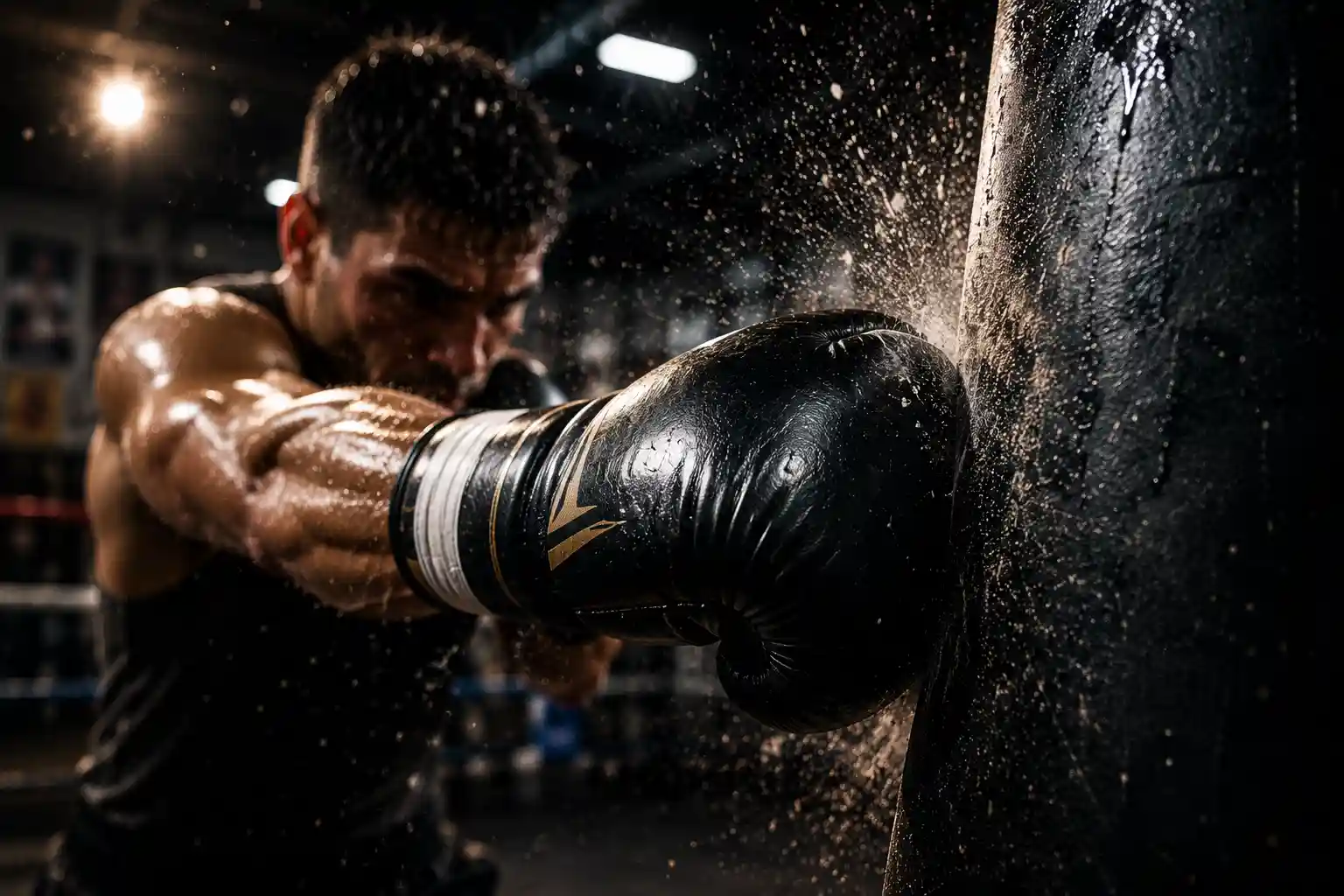
Anyone who has spent time hitting a heavy bag knows how much punishment the hands absorb over the course of a long workout. During the first few rounds everything feels comfortable, but as fatigue sets in, every punch becomes slightly heavier. Small imperfections in technique become more noticeable, and the hands begin feeling the cumulative effects of hundreds of impacts.
Modern padding was developed to address exactly that problem. Instead of relying on a single filling material, many contemporary gloves use carefully layered foam systems that distribute force across a larger surface area. Rather than allowing impact to concentrate directly on the knuckles, the padding helps absorb and disperse energy more evenly.
The difference isn't dramatic after ten punches. It's dramatic after two thousand.
That improvement has allowed fighters to spend longer periods refining combinations, improving endurance, and building confidence without exposing their hands to the same level of repetitive stress experienced by earlier generations. Just as importantly, better padding has transformed sparring.
Well-designed gloves create a training environment where partners can practice timing, distance, and defensive reactions with greater confidence. While boxing will always involve physical contact, modern glove design has helped make technical sparring both more productive and more sustainable over the long term.
Why Wrist Support Quietly Changed Everything
If padding protects the knuckles, wrist support protects the punch itself. Every strike begins from the ground, travels through the legs and hips, rotates through the shoulders, and finally reaches the fist. Along that chain of movement, the wrist acts as the bridge between power and precision. A strong punch with poor wrist alignment is rarely a good combination.
Older glove designs often offered only modest support, leaving fighters heavily dependent on hand wraps to stabilize the joint. While proper wrapping remains essential today, modern gloves now play a much greater role in maintaining alignment throughout training.
Designers began paying closer attention to cuff length, internal structure, and closure systems. Whether using traditional lace-up gloves or hook-and-loop designs for daily workouts, the objective remained the same: keep the wrist secure without restricting natural movement.
Fighters wearing gloves with dependable wrist support often throw combinations with greater confidence. Hesitation disappears because the equipment feels stable. Instead of subconsciously protecting sore wrists, the boxer can commit fully to every punch while maintaining proper technique. It's one of those improvements that often goes unnoticed until someone trains with equipment that lacks it.
Comfort Became a Performance Advantage
There was a time when uncomfortable gloves were simply accepted as part of boxing. If a pair felt stiff, awkward, or difficult to close, fighters assumed they would eventually "break in." Sometimes they did. Sometimes they never truly became comfortable.
Modern glove design takes a very different approach. Today's manufacturers understand that comfort directly affects performance. A glove that naturally follows the shape of the hand reduces unnecessary muscle tension and allows the boxer to focus entirely on movement rather than equipment.
This is where ergonomics entered the conversation. Instead of treating every hand as identical, designers began studying how the human hand naturally forms a fist. Thumb positioning, finger compartments, palm curvature, and interior shape were gradually refined to create gloves that feel more intuitive during training.
When equipment fits naturally, it almost disappears from conscious thought. That's exactly what good design should accomplish. A fighter shouldn't spend an hour adjusting their gloves. They should spend an hour thinking about footwork, head movement, timing, and combinations. The best equipment quietly gets out of the way.
Durability Became Essential for Serious Training
Modern boxing isn't built around occasional workouts. It's built around consistency. For someone training four or five days each week, gloves become one of the hardest-working pieces of equipment they own. Every session exposes them to sweat, repeated impact, friction, and constant movement.
Manufacturers responded by improving far more than just exterior materials. Reinforced stitching, stronger wrist construction, better internal linings, and improved manufacturing precision all contributed to gloves that retained their shape and performance over much longer periods.
Durability isn't simply about saving money by replacing gloves less often. Reliable equipment creates uninterrupted training. Instead of worrying about loose stitching, flattened padding, or failing wrist support halfway through a training cycle, fighters can concentrate entirely on improving their skills. That's ultimately what every advancement in glove design has aimed to achieve.
The evolution of boxing gloves has never been about making equipment more complicated. It's been about removing obstacles that stand between fighters and meaningful progress.
As these technical improvements became standard, another interesting shift began taking place. Gloves were no longer valued solely for how they performed—they also started reflecting the personalities, preferences, and identities of the people wearing them. That next stage of their evolution would take boxing equipment in an entirely new direction.
Boxing Gloves Become Part of a Fighter's Identity
As boxing gloves continued evolving through better materials, smarter engineering, and improved ergonomics, something unexpected began to happen. They stopped being viewed as purely functional equipment and became part of a fighter's identity.
Walk into almost any boxing gym today and you'll immediately notice the variety. Some fighters prefer gloves with softer padding for longer sparring sessions, while others gravitate toward a firmer feel for heavy bag work. Coaches often recommend different gloves depending on experience level, training objectives, and even personal punching style. These preferences go beyond comfort. They reflect the simple reality that no two fighters train exactly alike.
Just as every boxer develops a unique rhythm inside the ring, every athlete gradually discovers what kind of equipment allows them to perform at their best. Some prioritize wrist stability. Others value balance or hand compartment shape. Experienced fighters often recognize these differences within a single training session, even when two pairs of gloves appear almost identical from the outside.
Beyond performance, gloves have also become a form of personal expression. Many boxing clubs now train in coordinated colors that reinforce a sense of team identity, while competitive fighters often choose equipment that reflects their personality, national colors, or the gym that helped shape their careers. As customization has become more accessible, some manufacturers now allow fighters to personalize colors, logos, names, and other design elements without compromising functionality. One example is Fiest's range of custom boxing gloves, which combines personalization with modern training-focused design.
These choices don't make someone punch harder or move faster. What they do create is a stronger connection between the athlete and the countless hours spent training. Anyone who has boxed for several years knows that certain gloves become associated with particular memories—the first amateur contest, a difficult training camp, or the coach who helped refine a new technique.
Equipment gradually becomes part of the story. That's one reason experienced fighters are often reluctant to retire an old pair of gloves, even after they've reached the end of their useful life. The leather may be worn, the stitching faded, and the padding softened by thousands of punches, yet those gloves represent years of commitment that can't easily be replaced.
Innovation Is Far From Finished
Looking at the history of boxing gloves makes one thing clear: innovation has never stopped. Each generation has identified new ways to improve protection, comfort, durability, and the overall boxing training experience.
Future developments will likely focus on lighter materials, improved ventilation, longer-lasting construction, and even more ergonomic designs. Sustainability is also becoming an important consideration, with manufacturers exploring environmentally responsible materials and production methods without sacrificing performance. Technology may continue changing, but the purpose behind every improvement remains remarkably consistent.
The goal has never been to make boxing easier. The goal has always been to help fighters train more effectively while reducing unnecessary wear on the body. That philosophy has guided the evolution of boxing gloves for more than a century and will almost certainly continue shaping their future.
More Than Equipment
Perhaps the most remarkable thing about boxing gloves is that their greatest contribution often goes unnoticed. They don't win fights. They don't replace discipline, conditioning, or technical skill.
Instead, they quietly support the work that happens long before anyone hears the opening bell. Every heavy bag session completed without hand pain, every productive sparring round, every technical drill repeated hundreds of times, and every hour spent refining fundamentals is made possible, in part, by equipment designed to keep fighters training consistently.
The greatest improvements in boxing rarely happen overnight. They are built through repetition, patience, and thousands of small moments that gradually become meaningful progress. Modern boxing gloves help make those moments possible.
The evolution of boxing gloves is about far more than changes in leather, foam, or stitching. It reflects the evolution of boxing itself—a sport that has continually sought better ways to prepare athletes while preserving the qualities that define great fighters: discipline, resilience, precision, and determination.
Final Thoughts
From the simple padded gloves of the past to today's thoughtfully engineered designs, every improvement has served the same purpose: allowing fighters to spend more time learning, improving, and enjoying the sport.
The best boxing gloves are often the ones that fade into the background. They don't demand attention during training because they're doing exactly what they were designed to do—protecting the hands, supporting good technique, and allowing the boxer to focus entirely on the challenge ahead.
Championships may be won under bright lights, but they are built during ordinary training sessions that few people ever witness. And through every one of those sessions, a pair of boxing gloves is there absorbing every punch, every lesson, and every step forward.
Their evolution is still being written, and every new generation of fighters will continue adding another chapter to that story.