WORLD Heavyweight Boxing

Month
Date
,
Year
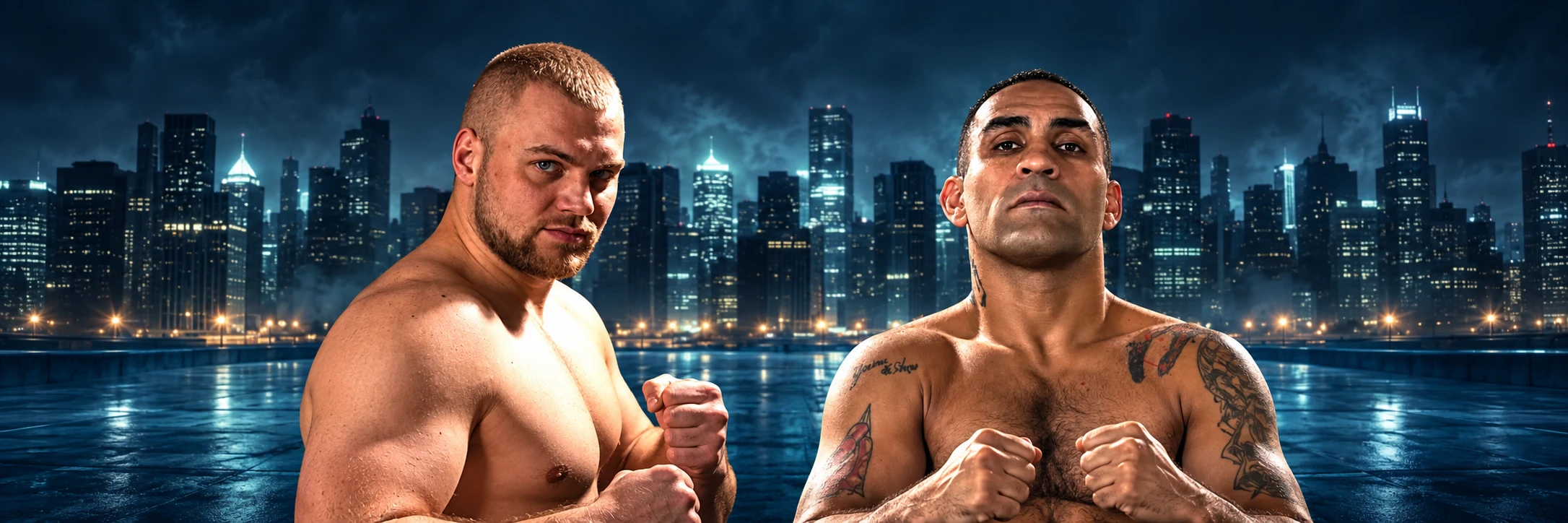
London, England, UK - Tyson Fury returns to the ring this Saturday April 11 at Tottenham Hotspur Stadium in London, facing heavy-handed fringe-contender Arslanbek Makhmudov in a high-profile comeback bout broadcast globally on Netflix. It will be Fury’s first appearance since back-to-back decision losses to Oleksandr Usyk, and while this is not a title fight, it carries real significance for the direction of the heavyweight division.

For Fury, the objective is clear: re-establish control. For Makhmudov, the mission is simpler and more urgent — force a fight before that control can take hold.
Fury 34-2-1 (24 KOs) does not return as champion, but he does return as one of the division’s most proven operators. Even in defeat, his performances against Usyk confirmed that his size, adaptability, and ring intelligence remain at a world-class level.
However, this is not a straightforward reset. Fury enters following a period of inactivity, and his recent history has shown that his level can fluctuate depending on preparation, rhythm, and opponent. At his best, he is one of the most difficult heavyweights in the sport to solve. At his worst, he can appear flat, hittable, and out of sync.
That variability is part of what makes this fight compelling.
Arslanbek Makhmudov 21-2 (19 KOs) represents a very specific type of danger. A physically imposing heavyweight with a high knockout ratio, he is most effective when he can apply early pressure and force exchanges before his opponent settles.
Makhmudov’s strengths are clear:
But so are his limitations:
His recent defeats exposed these weaknesses, particularly when opponents targeted the body and disrupted his forward momentum. Still, his ability to create chaos early makes him a legitimate threat in a comeback scenario.
This fight is likely to be shaped in the opening rounds.
Makhmudov will look to close distance quickly, land with authority, and test Fury before he can establish timing and rhythm. Fury, meanwhile, must resist the temptation to engage too early and instead prioritize control — using his jab, movement, and clinch work to slow the fight down.
If Fury is able to manage distance from the outset, the fight should begin to tilt in his way relatively quickly. If he is slow to settle, or chooses to trade early, the opening rounds could become uncomfortable.
At range, Tyson Fury holds a clear advantage. His ability to control distance, vary tempo, and disrupt offensive rhythm has historically neutralized fighters built around power and pressure. Against a more linear opponent like Makhmudov, those tools should be effective if applied consistently.
Inside the pocket, however, the dynamic becomes more competitive. Makhmudov is strong at close range and capable of landing short, heavy shots. Fury has typically used his size and strength to dominate clinch situations, but against a similarly sized opponent, that advantage may be reduced.
There is also a clear path for Fury offensively. Makhmudov has shown vulnerability to sustained body work, and if Fury chooses to invest there, it could gradually break down the challenger’s resistance.
The most important variable in this fight is not Makhmudov — it is Tyson Fury himself.
If Fury approaches this as a disciplined rebuild, prioritizing control over spectacle, his skill set should allow him to dictate the fight and win clearly. If, however, he attempts to make a statement early — sitting down on shots, engaging in exchanges — the fight becomes more volatile than it needs to be.
Fury has shown throughout his career that he can choose how a fight unfolds. The question is whether he will make the right choice here.
While no titles are on the line, the implications are significant.
A convincing win would reinsert Fury into the upper tier of the heavyweight conversation and open the door to major fights later in the year. A poor performance — even in victory — would raise legitimate questions about his ability to compete at the highest level moving forward.
For Makhmudov, the stakes are even clearer. A win over Fury would instantly elevate him from contender to headline name.
Arslanbek Makhmudov’s power and early pressure should make the opening rounds competitive, particularly if Tyson Fury takes time to settle into the fight. There is a realistic scenario where Fury is tested early, possibly even forced into uncomfortable moments before establishing control.
However, over the course of the fight, Fury’s superior boxing ability, experience, and adaptability are expected to separate him from a more one-dimensional opponent.
Once Fury finds his rhythm, he should be able to manage distance, pick his shots more cleanly, and gradually take control of the contest.
Prediction: Tyson Fury by decision, with the possibility of a late stoppage if the accumulation becomes too much.


Top Heavyweight Boxing covers the past, present and future of boxing's premier division. Copyright© 2026
Powered by Digital Dynasty Design