June 16, 2024
via
via
The Greatest Dads Who Were Heavyweight Champions
The Greatest Dads Who Were Heavyweight Champions
Exploring the Personal Side of Boxing Legends: A Look at Heavyweight Champions and Their Roles as Fathers
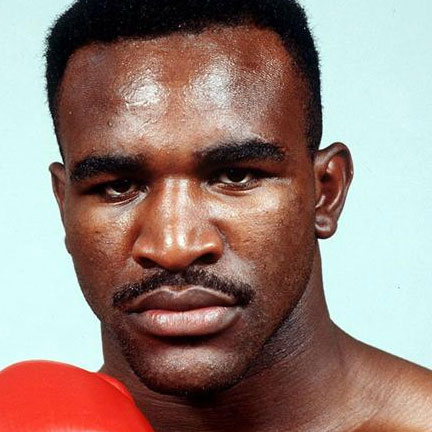
Undisputed Champion
Evander Holyfield became undisputed champion in two weight divisions and won major heavyweight titles in four separate reigns. His victories over Dwight Muhammad Qawi, Buster Douglas, Riddick Bowe, Mike Tyson and Michael Moorer built a record that places him among boxing's most accomplished champions.
Known as “The Real Deal,” Holyfield combined technical skill, conditioning and a fierce willingness to exchange. His official professional record was 44-10-2 (29 KOs), with one no contest. The late defeats on that record are part of his career, but the championship performances provide the strongest measure of his place in heavyweight history.
Born on October 19, 1962, in Atmore, Alabama, and raised in Atlanta, Holyfield represented the United States at the 1984 Los Angeles Olympics. He earned a light-heavyweight bronze medal after a controversial disqualification against New Zealand's Kevin Barry in the semi-finals.
He turned professional in 1984 and developed under George Benton and Lou Duva. His foundations included a reliable jab, fast combinations and the ability to move between boxing at distance and working inside. Those skills would later help him compete successfully against larger heavyweights.
In July 1986, Holyfield defeated Dwight Muhammad Qawi by split decision over fifteen rounds to win the WBA cruiserweight title. The demanding contest showed that his talent was supported by the endurance and resolve needed at championship level.
He added the IBF belt by stopping Ricky Parkey in 1987. In April 1988, he stopped Carlos De Leon in the eighth round and added the WBC championship, becoming the first undisputed cruiserweight champion of the three-belt era.
Holyfield then moved to heavyweight. The transition required more than adding weight: he had to make his combinations and physical strength effective against men with greater natural size while preserving the speed and work rate that had made him exceptional.
Victories over established heavyweights, including Pinklon Thomas and Michael Dokes, demonstrated that Holyfield's cruiserweight success could translate to the larger division. His 1989 contest with Dokes was an especially demanding test, ending with a tenth-round stoppage.
On October 25, 1990, Holyfield knocked out Buster Douglas in the third round in Las Vegas to win the undisputed heavyweight championship. Douglas had taken the title from Tyson earlier that year; Holyfield defeated the reigning champion rather than inheriting a vacant crown.
His first reign included successful defences against George Foreman and Larry Holmes. Both former champions presented experience and distinctive problems, and Holyfield beat each on points. The victories helped establish him as a heavyweight champion in his own right.
In November 1992, Riddick Bowe defeated Holyfield by unanimous decision in a gruelling championship fight. Bowe's size, jab and inside combinations challenged Holyfield's determination to engage.
Holyfield changed the outcome in their November 1993 rematch, winning a majority decision to regain the WBA and IBF titles. The contest was interrupted by the notorious arrival of a motorised paraglider, but its lasting competitive significance was Holyfield's ability to recover the championship from the man who had beaten him.
Their third meeting came in 1995. Holyfield knocked Bowe down, but Bowe recovered and stopped him in the eighth round. Bowe won the series two fights to one. It remains a defining heavyweight trilogy because it tested Holyfield's skill, resolve and physical limits against an elite opponent.
Holyfield's second reign ended with a points loss to Michael Moorer in 1994. A period of medical concern and retirement followed before he returned to boxing.
In November 1996, he challenged Tyson for the WBA heavyweight title and won by stoppage in the eleventh round. Holyfield's composure, strength at close range and effective combinations disrupted Tyson's attack. The victory was a major upset and began his third heavyweight championship reign.
Their June 1997 rematch ended with Tyson's disqualification after biting Holyfield's ears. That incident became one of the sport's most notorious events, but the first fight is the clearer demonstration of Holyfield's competitive achievement against Tyson.
Holyfield avenged the Moorer defeat in November 1997, scoring repeated knockdowns before the fight was stopped after eight rounds. He added the IBF title to his WBA championship.
Two 1999 meetings with Lennox Lewis followed. The first was officially a draw, despite widespread criticism of the verdict. Lewis won their rematch by unanimous decision and became undisputed heavyweight champion.
Holyfield won the vacant WBA title against John Ruiz in 2000, beginning his fourth major heavyweight title reign. Ruiz won their 2001 rematch, and their third contest was drawn. Holyfield's four reigns therefore were not four undisputed championships: his belts and degree of championship recognition differed across those periods.
Holyfield continued competing long after his defining championship years. His final official professional bout was a victory over Brian Nielsen in 2011. A much later exhibition appearance should be separated from that professional record.
He was inducted into the International Boxing Hall of Fame in 2017. His legacy rests on achievement across two divisions, repeated returns to championship level and a remarkable list of leading opponents.
Holyfield could box intelligently, yet his instinct to exchange sometimes made fights harder than they needed to be. That tension is part of what made him compelling. At his best, he combined the craft of a highly trained boxer with a competitor's refusal to concede, producing performances that remain central to the history of both cruiserweight and heavyweight boxing.

Top Heavyweight Boxing covers the past, present and future of boxing's premier division. Copyright© 2026
Powered by Digital Dynasty Design