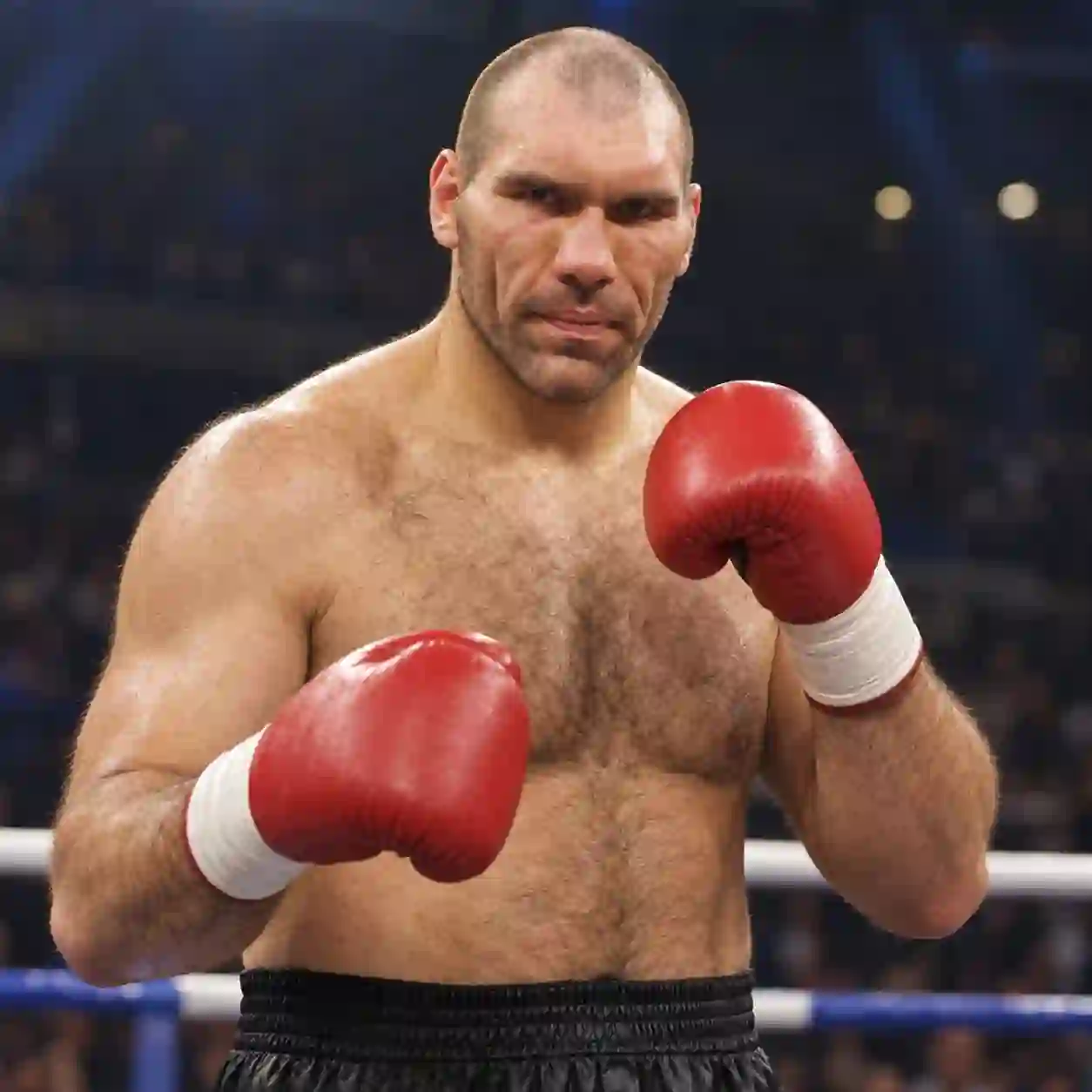
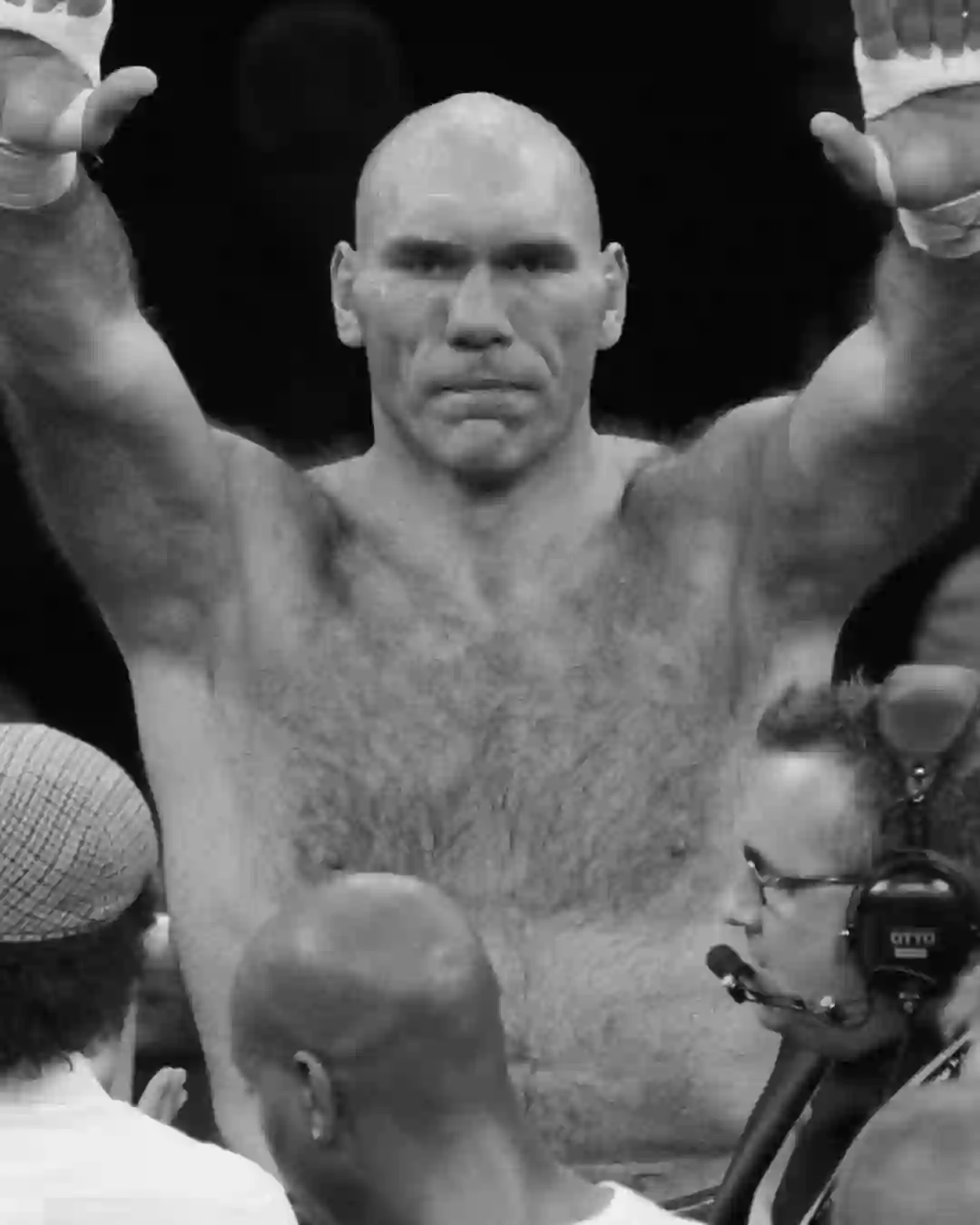
Saint Petersburg, Russia - Nikolai Valuev was the largest heavyweight champion in boxing history. Standing approximately seven feet tall and weighing more than 320 pounds during much of his prime, the Russian giant presented opponents with proportions the division had never previously encountered at championship level.
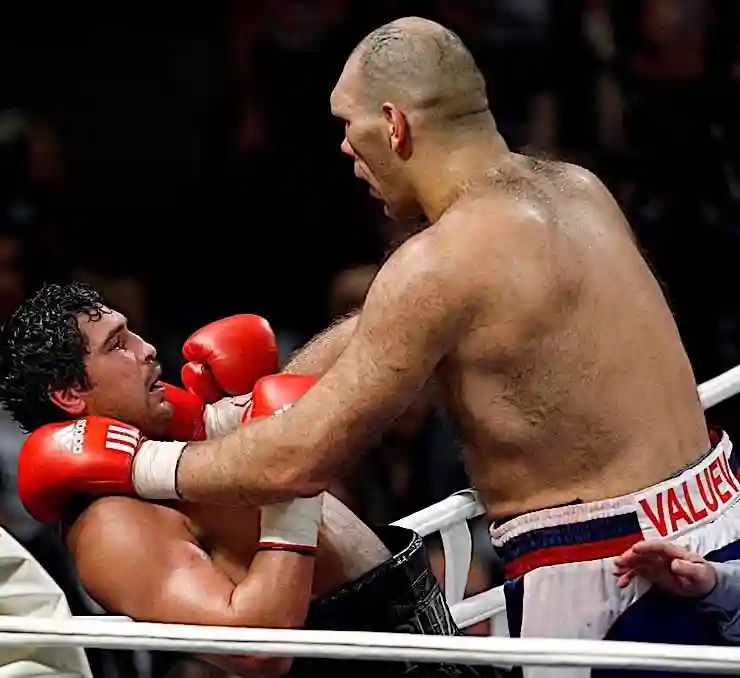
Nikolai Valuev became a two-time WBA heavyweight champ when he won a 12 round unanimous decision over "The Quiet Man" John Ruiz at the Max Schmeling Halle in Berlin, Germany in 2008 - Boxing History
Valuev held the WBA heavyweight title twice between 2005 and 2009, made four successful defences across his two reigns and completed his professional career at 50-2 (34 KOs), with one no contest. He was never stopped, knocked down or clearly overwhelmed, despite facing contenders and former champions across 16 years in the professional ring.
His size made him famous, but it also distorted perceptions of his ability. Valuev was slower and less explosive than many heavyweight champions, yet he possessed an effective jab, considerable stamina and the discipline to use his dimensions over 12 rounds. He was not simply an enormous novelty. He became a durable, patient and difficult heavyweight who knew how to make opponents carry the physical and psychological burden of fighting a man unlike anyone else.
The making of a giant
Nikolai Sergeyevich Valuev was born on August 21, 1973, in Leningrad, Soviet Union, now Saint Petersburg, Russia.
His extraordinary growth began during childhood. Valuev eventually reached approximately seven feet in height, with an enormous frame, long arms and a heavyweight fighting weight that often exceeded 320 pounds. His reach was listed at approximately 85 inches.
Valuev participated in several sports while growing up, including basketball and athletics. His physical dimensions made him a natural curiosity, but adapting such an unusual body to professional boxing presented major challenges. Balance, coordination, endurance and joint stress all become more complicated at extreme size.
Unlike many future champions, Valuev did not enter boxing with a decorated international amateur career. He began learning the sport relatively late and entered the professional ranks while still developing basic technique.
Valuev made his professional debut on October 15, 1993, stopping American John Morton in the second round in Berlin. He was 20 years old.
Learning in the professional ring
Valuev’s development was gradual. His early opposition consisted largely of journeymen and regional heavyweights, allowing him to learn how to control distance, distribute his weight and maintain his conditioning.
His physical advantages were immediately obvious, but his boxing required years of refinement. Valuev was never fast and did not possess the sudden, concussive punching power one might expect from a man of his dimensions. Instead, he learned to impose himself through accumulation.
His long jab became the centre of his style. Valuev used it to obstruct an opponent’s vision, maintain distance and force smaller heavyweights to expend energy simply attempting to enter punching range. His right hand was heavy rather than quick, and his short punches could be effective when opponents moved inside.
Valuev’s immense body also absorbed punishment well. Reaching his head required smaller fighters to punch upward, while attacking his torso meant moving close enough to be leaned upon, tied up or struck by his shorter punches.
The quality of his opposition improved as his unbeaten record expanded. Valuev collected regional titles and fought throughout Russia, Germany, Japan, Australia, England and other international locations. He gradually became associated with the German boxing scene, where his unusual appearance and undefeated record made him a significant attraction.
Born August 21, 1973, in Leningrad, Soviet Union, now Saint Petersburg, Russia, Nikolai Valuev emerged from a background in sports before turning his extraordinary physical dimensions into one of the most unusual careers in heavyweight boxing - Fishcamp Boxing
From attraction to contender
By the early 2000s, Valuev had accumulated more than 30 professional victories. Critics questioned the quality of his record, but he began defeating increasingly credible opposition.
He outpointed Ukrainian heavyweight Taras Bidenko over 12 rounds in 2002 and defeated former Italian Olympian Paolo Vidoz the following year. These performances demonstrated that Valuev could maintain his pace over championship distance.
In May 2005, Valuev faced former world title challenger Clifford Etienne. The American had shared the ring with Mike Tyson, Fres Oquendo, Francois Botha and Lamon Brewster, but Valuev overwhelmed him in three rounds.
The victory moved Valuev closer to a title opportunity, but his decisive eliminator against Larry Donald proved much more difficult.
Donald was an experienced and technically skilled heavyweight who had challenged Riddick Bowe and defeated Evander Holyfield. When he met Valuev in October 2005, Donald used his movement and faster hands to frustrate the larger man over 12 rounds.
Valuev received a majority decision, but the verdict was widely disputed. Many observers believed Donald had done enough to win. The controversy would become a recurring element in Valuev’s career: his steady pressure and physical control often impressed judges even when opponents appeared to land the cleaner punches.
The decision nevertheless made Valuev the leading WBA challenger and secured his first world championship fight.
Winning the heavyweight championship
On December 17, 2005, Valuev challenged John Ruiz for the WBA heavyweight title at the Max-Schmeling-Halle in Berlin.
Ruiz was a tough and experienced champion known for turning fights into awkward physical contests. Against Valuev, however, he encountered an opponent capable of matching and surpassing his strength in the clinches.
The champion boxed effectively in spells and opened a cut beneath Valuev’s left eye. Valuev continued applying pressure, using his jab and enormous reach while producing several of his strongest moments late in the fight.
After 12 rounds, Valuev was awarded a majority decision. Two judges scored the contest for the challenger, while the third had it even.
The verdict was controversial, with Ruiz and many observers believing the champion had deserved to retain his title. Regardless of the debate, Valuev had made history. He became the first Russian to hold a recognized world heavyweight championship and the tallest and heaviest titleholder the division had ever seen.
At 32 years old and 44 fights into his professional career, the giant from Saint Petersburg had reached the top.
Valuev’s first title reign
Valuev made his first defence against Owen Beck in Hanover on June 3, 2006. Beck attempted to move and attack in bursts, but Valuev’s size and steady pressure quickly wore him down. The champion scored a third-round stoppage.
Four months later, Valuev travelled to the United States to defend against Monte Barrett near Chicago. Barrett was mobile and competitive, but the size difference became increasingly difficult to overcome. Valuev gradually broke him down before securing an 11th-round stoppage.
His third defence came against Jameel McCline in Basel, Switzerland, in January 2007. At approximately 6-foot-6 and 268 pounds, McCline was one of the few opponents who could approach Valuev’s physical scale.
McCline boxed with confidence early, but the contest ended unexpectedly after the third round when he suffered a serious knee injury while throwing a punch. Unable to continue, McCline retired in his corner and Valuev retained the title.
The victory moved Valuev’s record to 46-0 with one no contest, placing him within reach of Rocky Marciano’s celebrated 49-0 mark. The comparison generated publicity, although Valuev’s level of competition and championship accomplishments remained far removed from Marciano’s.
His unbeaten run ended in his next appearance.
Chagaev brings down the giant
Valuev defended against undefeated contender Ruslan Chagaev in Stuttgart on April 14, 2007.
Chagaev conceded enormous advantages in height, reach and weight, but he possessed quick hands, southpaw movement and an intelligent understanding of distance. Rather than attacking Valuev recklessly, Chagaev moved in and out of range, countered over the jab and prevented the champion from establishing a comfortable rhythm.
Valuev pursued him throughout the fight but struggled to land combinations. Chagaev repeatedly reached the larger man with sharp left hands and escaped before Valuev could answer effectively.
After 12 rounds, Chagaev received a majority decision and the WBA title. It was Valuev’s first professional defeat after more than 13 years without a loss.
The result established the clearest blueprint for beating him. Opponents needed the movement to avoid prolonged exchanges, the courage to enter his reach and the discipline to score before exiting at an angle. Standing directly in front of Valuev allowed his size to control the contest; forcing him to turn and reset exposed his lack of speed.
An ageing Evander Holyfield struggles to get to grips with the 7-foot Nikolai Valuev during their 2008 heavyweight world title bout. pic.twitter.com/WZDlaYdNgL
Valuev returned five months later with a decision victory over undefeated Canadian Jean-François Bergeron. He then faced former WBO heavyweight champion Siarhei Liakhovich in a WBA eliminator in February 2008.
Valuev controlled Liakhovich with his jab and won a wide unanimous decision, placing himself back in position for another championship opportunity.
A planned rematch with Chagaev became complicated by the champion’s health and availability. The WBA designated Chagaev as a “champion in recess” and ordered Valuev to meet John Ruiz for the vacant title.
The rematch took place in Berlin on August 30, 2008. As in their first encounter, Ruiz attempted to work inside and disrupt Valuev’s rhythm. Valuev relied on his jab, reach and improved patience to keep the former champion at distance for longer stretches.
Valuev won by unanimous decision, although the fight again produced disagreement. He had now defeated Ruiz twice and begun his second reign as WBA heavyweight champion.
The disputed Holyfield defence
Valuev made the first defence of his restored title against Evander Holyfield in Zürich on December 20, 2008.
Holyfield was 46 years old and had lost five of his previous eleven fights, but the former undisputed champion arrived in excellent physical condition. Giving away approximately ten inches in height and nearly 100 pounds, Holyfield declined to engage Valuev in a stationary contest.
He circled, changed direction and attacked selectively, often landing the cleaner punches before moving out of range. Valuev controlled the centre of the ring but remained hesitant, struggling to corner the much smaller challenger or produce sustained offence.
After 12 uneventful rounds, Valuev retained the title by majority decision. One judge scored the fight even, while the other two favoured the champion.
The verdict was heavily criticized. Many ringside observers believed Holyfield had won, and the decision became the most controversial of Valuev’s career. Although Holyfield’s activity was limited, his movement and cleaner punching appeared to have neutralized much of Valuev’s pressure.
Valuev remained champion, but the performance reinforced doubts about how he handled quick opponents who refused to stand within reach.
When Haye rocked the giant! 💪
@mrdavidhaye finished strong and rocked the giant world heavyweight champion Nikolai Valuev
— Sky Sports Boxing (@SkySportsBoxing) May 19, 2020
David Haye and the end of Valuev’s reign
A rematch between Valuev and Chagaev was scheduled for 2009 but cancelled when Chagaev failed to receive medical clearance in Finland. Valuev instead agreed to defend against former cruiserweight champion David Haye.
They met in Nuremberg on November 7, 2009. The physical difference was extraordinary. Valuev weighed 316 pounds, nearly 100 pounds more than Haye, and stood approximately nine inches taller.
Haye approached the fight cautiously. He remained outside Valuev’s reach, moved laterally and attacked only in brief bursts. Valuev followed him around the ring but could not consistently cut off his escape routes.
The fight contained long periods of limited action, with Haye prioritizing movement and accuracy over sustained engagement. In the final round, Haye landed a powerful left hook that visibly staggered Valuev—one of the rare occasions in his career when a punch clearly disrupted his balance.
Haye won by majority decision, with two judges scoring the contest 116-112 and the third returning a 114-114 draw. Valuev’s second championship reign was over.
He never fought again.
Life at extraordinary size
Valuev’s dimensions defined his career, but they also placed enormous strain on his body. Training a man weighing well over 300 pounds for 12-round fights required careful attention to stamina, joints and recovery.
Despite his slow appearance, Valuev was usually well conditioned. He completed the 12-round distance numerous times and rarely appeared exhausted late in fights. Maintaining that endurance at his weight was a significant athletic achievement.
Valuev was later diagnosed with acromegaly, a condition involving excess production of growth hormone. He underwent medical treatment after his final fight and experienced problems involving his bones and joints. Although potential comeback fights were discussed, his health and the physical demands of training made a return increasingly unrealistic.
He left boxing with a record of 50-2 (34 KOs), with one no contest. His only defeats came by decision against Chagaev and Haye, and no opponent ever stopped or knocked him down.
Boxing style
Valuev’s boxing was methodical rather than spectacular. His effectiveness came from scale, patience and attrition.
His jab was his most important punch. It was not exceptionally fast, but it travelled a great distance and forced opponents to begin their attacks from unusually far away. Valuev used it to maintain range, score steadily and guide opponents toward his right hand.
Inside, he could lean his weight onto smaller heavyweights and make them work simply to create punching room. His size also allowed him to absorb shots that might have seriously affected a smaller fighter.
Valuev was not the destructive puncher his appearance suggested. He recorded 34 stoppages in 50 victories, a strong total but not an extraordinary ratio for a heavyweight of his dimensions. His punches were heavy, yet his lack of speed often prevented him from landing cleanly enough to produce sudden knockouts.
Movement was his greatest difficulty. Valuev’s feet were slow, and agile opponents could force him to turn repeatedly. Donald, Chagaev, Holyfield and Haye all found success by avoiding direct exchanges and making him reset his position.
He was therefore less a giant destroyer than a giant problem. Opponents had to box with discipline for every round, knowing that one lapse could leave them trapped beneath his reach and weight.
Russian politician and former heavyweight boxing champion Nikolai Valuev is absolutely massive pic.twitter.com/IF6xgb7GGA
— non aesthetic things (@PicturesFoIder) July 21, 2026
Beyond the ring
Valuev remained a prominent public figure in Russia after his boxing career. He appeared in film and television, including a starring role as a former boxer in the Russian film Stonehead. He also became a presenter on the long-running children’s television program Good Night, Little Ones!
In 2011, Valuev entered national politics and was elected to Russia’s State Duma. He has subsequently remained involved in political, sporting and public activities.
He also supported boxing development programs and established a boxing school bearing his name. His autobiography, My 12 Rounds, examined both his unusual life and his journey through professional boxing.
Legacy
Nikolai Valuev remains one of the most visually unforgettable heavyweight champions in history. His record is also more substantial than the novelty surrounding him sometimes suggests.
He defeated John Ruiz twice, along with Larry Donald, Clifford Etienne, Monte Barrett, Jameel McCline, Paolo Vidoz, Siarhei Liakhovich and Jean-François Bergeron. He held the WBA championship twice and made four successful title defences.
His career also contained legitimate controversy. The decisions over Donald, Ruiz and particularly Holyfield were disputed, and neither of Valuev’s championship reigns established him as the division’s unquestioned leading fighter. During the same period, the Klitschko brothers controlled most of the heavyweight landscape, and a fight between Valuev and either brother never occurred.
Yet Valuev cannot be dismissed as a sideshow. A sideshow does not compile 50 professional victories, remain unbeaten for 13 years, regain a world title after losing it and complete an entire career without being knocked down.
He was not the most skilled or powerful heavyweight champion. He was something boxing had never seen before: a seven-foot, 320-pound champion with the conditioning and composure to compete over 12 rounds.
There may one day be a heavyweight champion taller than Nikolai Valuev. It is difficult to imagine there will ever be another quite like him.