September 2, 2023
via
via
Heavyweight Boxing's Tex Cobb
Heavyweight Boxing's Tex Cobb
With careers in professional boxing, and acting, he has left an indelible mark in each domain, making him a figure worth celebrating.

Legendary Contender
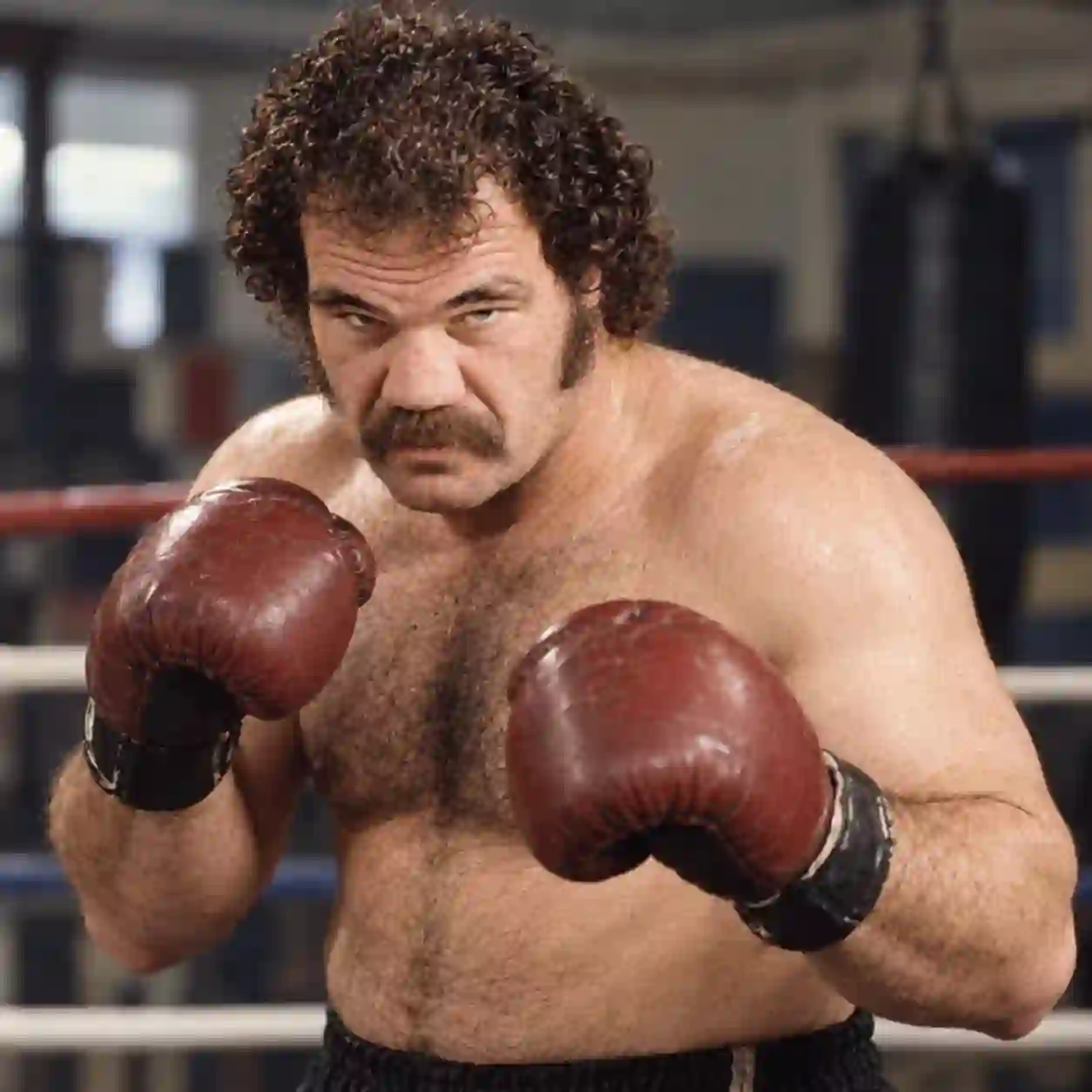
Bridge City, TX, USA - Randall “Tex” Cobb was one of the most recognizable heavyweight contenders of the late 1970s and early 1980s—a powerful brawler with a granite chin, an irreverent personality and a willingness to fight anyone placed in front of him.
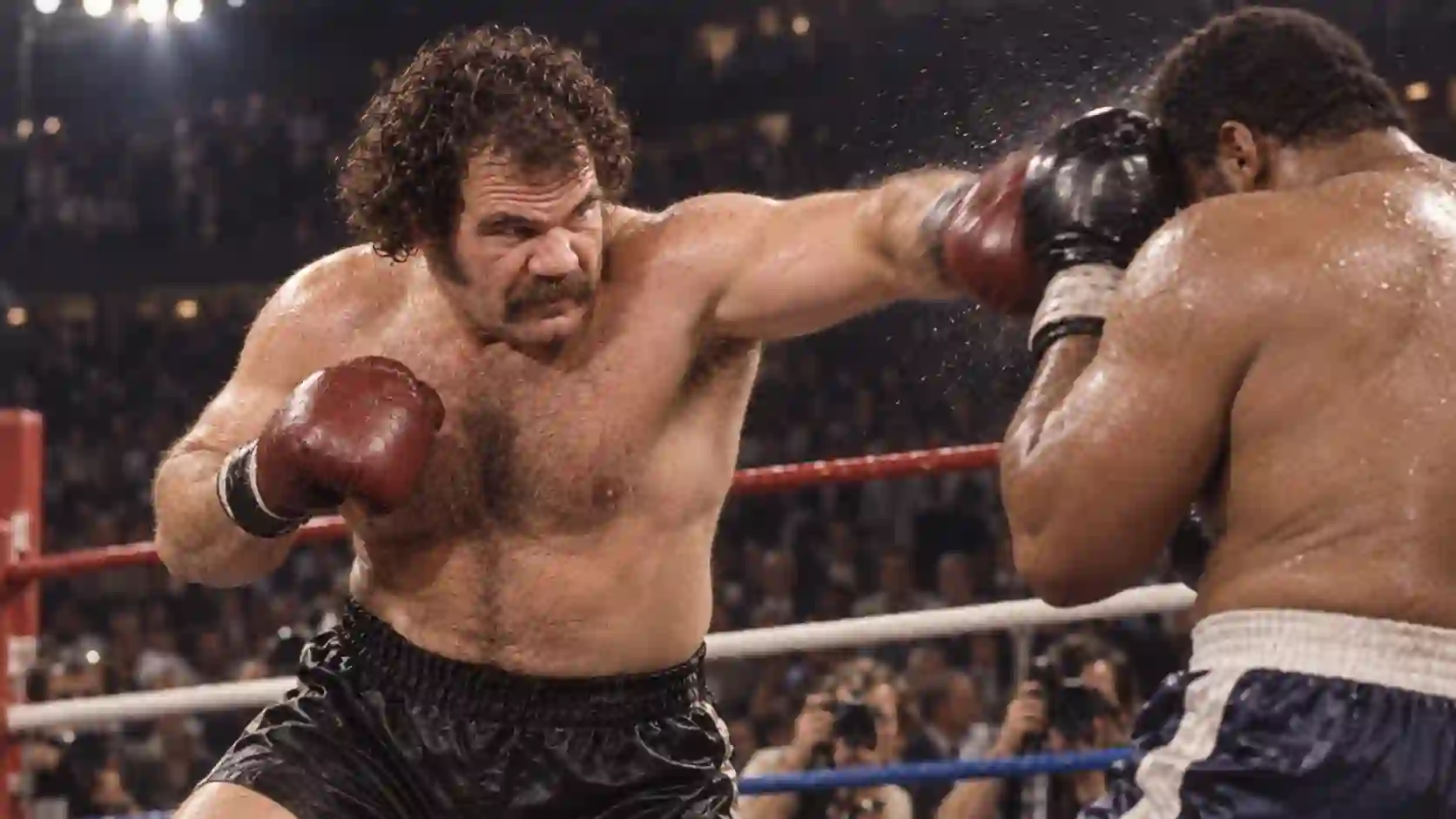
Cobb challenged Larry Holmes for the heavyweight championship, stopped the fearsome Earnie Shavers and pushed former champion Ken Norton to a split decision. He absorbed punishment with almost unbelievable durability, but there was considerably more to him than toughness. Before boxing, he was a karate black belt and professional kickboxer. Afterward, he developed a successful acting career that included one of the most memorable characters in a Coen brothers film.
He was never a polished heavyweight stylist, nor did he pretend to be. Cobb moved forward, threw heavy punches and turned fights into exhausting physical contests. His humour remained intact regardless of the result, making him one of boxing’s most entertaining and enduring personalities.
Randall Craig Cobb was born on May 7, 1950, in Bridge City, Texas, and raised in Abilene. The son of a factory foreman, he grew into a large and physically imposing young athlete.
Cobb played football at Abilene High School and later attended Abilene Christian University. He left college at 19 and began studying karate, reportedly living at a dojo and cleaning the training area in exchange for instruction. He eventually earned a black belt but found controlled martial-arts practice insufficient for his competitive temperament.
He wanted full contact.
Cobb began competing as a professional kickboxer during the formative years of the sport in the United States. He developed a reputation for power, winning his early contests by knockout. Kickboxing provided his introduction to professional fighting, but Cobb soon recognized that boxing offered stronger competition, greater exposure and significantly larger purses.
He relocated to Philadelphia, one of America’s great fighting cities, and began the difficult process of turning himself into a professional heavyweight boxer.
Cobb entered professional boxing with minimal conventional experience. He made his debut in El Paso on January 21, 1977, stopping Pedro Vega in the first round.
The result established the pattern of his early career. Cobb won his first 13 professional fights by knockout, advancing through the heavyweight ranks on strength, aggression and natural punching power. He was not technically refined, but he was large, fearless and exceptionally difficult to discourage.
Cobb fought from an orthodox stance and generally came forward behind a basic guard. His footwork was deliberate and his head movement limited, but he possessed a strong right hand, a heavy jab and damaging punches to the body. He was most effective when he could force opponents into prolonged exchanges and make the fight a test of physical endurance.
A decision victory over Roy Wallace ended his opening knockout streak but continued his unbeaten run. Cobb was no longer merely an attraction from the kickboxing world. He was becoming a ranked heavyweight.
His first major opportunity came against one of the most feared punchers in boxing history.
Cobb faced Earnie Shavers in Detroit on August 2, 1980. Shavers had challenged Muhammad Ali and Larry Holmes for the heavyweight championship and possessed a right hand capable of ending almost any fight instantly.
The matchup appeared dangerous for an inexperienced contender whose defence remained a work in progress. Shavers struck Cobb with the kind of punches that had dropped or stopped many of the division’s leading heavyweights.
Cobb kept advancing.
He weathered Shavers’ early assault, absorbed his heaviest shots and forced the older fighter to maintain a pace he could not sustain. As Shavers tired, Cobb increased his pressure and began overwhelming him with punches from both hands. Shavers did not answer the bell for the ninth round, giving Cobb the most important victory of his career.
The fight confirmed two things: Cobb belonged among the leading heavyweights, and his ability to withstand punishment was extraordinary. He later joked that Shavers could punch a man in the neck and break his ankle.
Behind the humour was a genuine achievement. Cobb had endured the power of one of boxing’s most destructive punchers and stopped him.
Three months after defeating Shavers, Cobb met former WBC heavyweight champion Ken Norton in San Antonio.
Norton remained a highly ranked and vastly more experienced opponent. He had defeated Muhammad Ali, fought Ali twice more on nearly even terms and taken Larry Holmes through 15 brutal rounds. Cobb, by comparison, had been a professional boxer for less than four years.
The fight became a rugged ten-round battle. Norton used his experience, jab and cross-armed defence, while Cobb pressed forward and forced exchanges. Norton received the split decision, but the result was extremely close. Two officials favoured Norton, while the third scored the fight for Cobb.
It was a defeat that enhanced Cobb’s reputation. He had pushed one of the outstanding heavyweights of the era to the limit and demonstrated that the Shavers victory had not been an accident.
Cobb next met fast-rising contender Michael Dokes and lost another competitive decision. Dokes’ hand speed and combination punching presented a different kind of difficulty, but Cobb again completed the distance.
Victories over Harry Terrell and Bernardo Mercado kept him in contention. Mercado was a dangerous Colombian puncher who had previously stopped Shavers, but Cobb defeated him over ten rounds.
Those performances, combined with Cobb’s durability and growing public profile, ultimately earned him a heavyweight championship opportunity.
Cobb challenged Larry Holmes for the WBC and lineal heavyweight championship at the Houston Astrodome on November 26, 1982.
Holmes was at the height of his powers. He possessed a brilliant left jab, excellent movement, championship endurance and one of the most complete skill sets in heavyweight history. Cobb entered with confidence and determination, but the difference in speed and technique became apparent almost immediately.
For 15 rounds, Holmes repeatedly struck Cobb with jabs, right hands and combinations. Cobb continued moving forward and never stopped attempting to fight back, but he could not close the distance consistently or disrupt the champion’s rhythm.
Holmes won a wide unanimous decision. The fight was so one-sided that broadcaster Howard Cosell, already troubled by the recent death of lightweight Duk Koo Kim following a championship bout, declared that he would no longer cover professional boxing.
Cobb responded with the dark humour that had become his trademark, describing Cosell’s departure as his contribution to the sport. When concern was expressed about the punishment he had absorbed, Cobb joked that if people wanted to ban a sport in which participants were repeatedly hit, they should start with football.
The performance became the most famous night of Cobb’s boxing career, but also the most misunderstood. His refusal to fall was remarkable, yet the fight demonstrated the danger of allowing courage and durability to substitute for competitive balance. Cobb’s toughness kept him upright, but it could not make the contest close.
He would never challenge for the heavyweight championship again.
Cobb continued facing respected opposition following the Holmes fight. He lost decisions to Greg Page and James “Buster” Douglas, both talented heavyweights who would become world champions. He also lost to former WBA champion Mike Weaver.
In November 1985, Cobb suffered the only stoppage defeat of his professional career when Dee Collier caught him early and ended the fight in the first round. It was a startling result for a man who had remained standing through 15 rounds with Holmes and survived Shavers at full power.
Cobb later returned to defeat former undisputed heavyweight champion Leon Spinks by decision in 1988. The names involved gave the matchup historical interest, although both men were well removed from their championship years.
After another extended absence, Cobb launched a comeback in 1992 and assembled a series of victories against limited opposition. His final appearance came in June 1993, when he stopped Andre Smiley in the second round.
Cobb completed his professional career with an official record of 42-7-1 (35 KOs), with one no contest. Across more than 50 bouts, Collier was the only opponent to stop him.
Cobb’s durability became the defining feature of his boxing reputation, but treating him solely as an indestructible opponent diminishes what he accomplished.
He was a legitimate heavyweight contender who defeated Shavers, Mercado and Spinks and came within one scorecard of beating Norton. His early knockout streak demonstrated authentic power, while his transition from karate to kickboxing and then professional boxing revealed considerable athletic adaptability.
Cobb understood his strengths. He could not match elite boxers for speed or finesse, so he applied pressure, attacked the body and forced opponents to work through every minute of a fight. He made himself physically and psychologically exhausting to face.
His limitations were equally clear. Cobb was relatively easy to hit and often depended too heavily upon his ability to absorb punches. Against a master boxer such as Holmes, that approach produced a prolonged and damaging defeat.
Yet Cobb never attempted to manufacture an image of technical brilliance. His appeal rested in his authenticity. He fought directly, spoke candidly and laughed at both the sport and himself.
Cobb’s physical presence, gravelly voice and natural sense of humour made him an ideal character actor. Unlike many athletes who appeared briefly on screen, he established a substantial second career in film and television.
He appeared in Uncommon Valor, The Golden Child, Police Academy 4, Fletch Lives, Blind Fury, Diggstown, Ace Ventura: Pet Detective, The Naked Gun 33⅓ and Liar Liar, among numerous other productions.
His most memorable role came in the Coen brothers’ 1987 film Raising Arizona. Cobb played Leonard Smalls, a terrifying bounty hunter and outlaw biker who seemed to emerge from a nightmare. With relatively little dialogue, his size, expression and physical presence made the character unforgettable.
Cobb also became a popular television guest. He appeared in programs including Miami Vice, MacGyver, Moonlighting, Married… with Children, Walker, Texas Ranger and The X-Files.
His explanation of the difference between boxing and acting was characteristically direct: if an actor makes a mistake, the scene can be filmed again. In boxing, a mistake gets answered with a punch in the mouth.
Cobb’s public personality could obscure his intelligence. His interviews were filled with sharp observations, perfectly timed one-liners and an awareness of boxing’s absurdities. He understood how he was perceived and frequently reached the joke before anyone else could.
Years after leaving the ring, he returned to higher education. In 2008, at the age of 57, Cobb graduated magna cum laude from Temple University with a degree in sport and recreation management.
For a man who had spent much of his life wearing boxing robes and movie costumes, the graduation gown represented an entirely different achievement. Cobb joked about finally hearing the cheers of a packed audience without having to worry about bleeding.
The accomplishment added another chapter to a life that had already moved from Texas football fields to karate schools, kickboxing cards, heavyweight championship arenas and Hollywood film sets.
Tex Cobb occupies a unique place in heavyweight history. He was not a world champion, but he fought during a deep and demanding era and earned his opportunity through legitimate victories. His win over Earnie Shavers remains an impressive display of courage and endurance, while his narrow fight with Ken Norton showed that he could compete at the highest level.
The Holmes fight will always be part of Cobb’s story. It became a symbol of both astonishing toughness and boxing’s capacity to let bravery become dangerous. But one punishing night should not eclipse the complete career.
Cobb was a ranked heavyweight contender, a professional kickboxer, a black belt, a championship challenger, a successful actor and a university graduate. He could absorb the hardest punches, deliver an unforgettable line and command a movie screen simply by entering the frame.
Many heavyweights have been champions. Very few have been anything like Tex Cobb.

Top Heavyweight Boxing covers the past, present and future of boxing's premier division. Copyright© 2026
Powered by Digital Dynasty Design