Oleksandr Usyk Wants Deontay Wilder Next
New York, NY, USA - Oleksandr Usyk has spent a decade building one of the cleanest résumés in modern boxing. At 24-0 (15 KOs) and already undisputed heavyweight champion, he has beaten every major active name of his era: Anthony Joshua, Tyson Fury, and Daniel Dubois—twice each.

But his latest move has triggered something new: backlash.
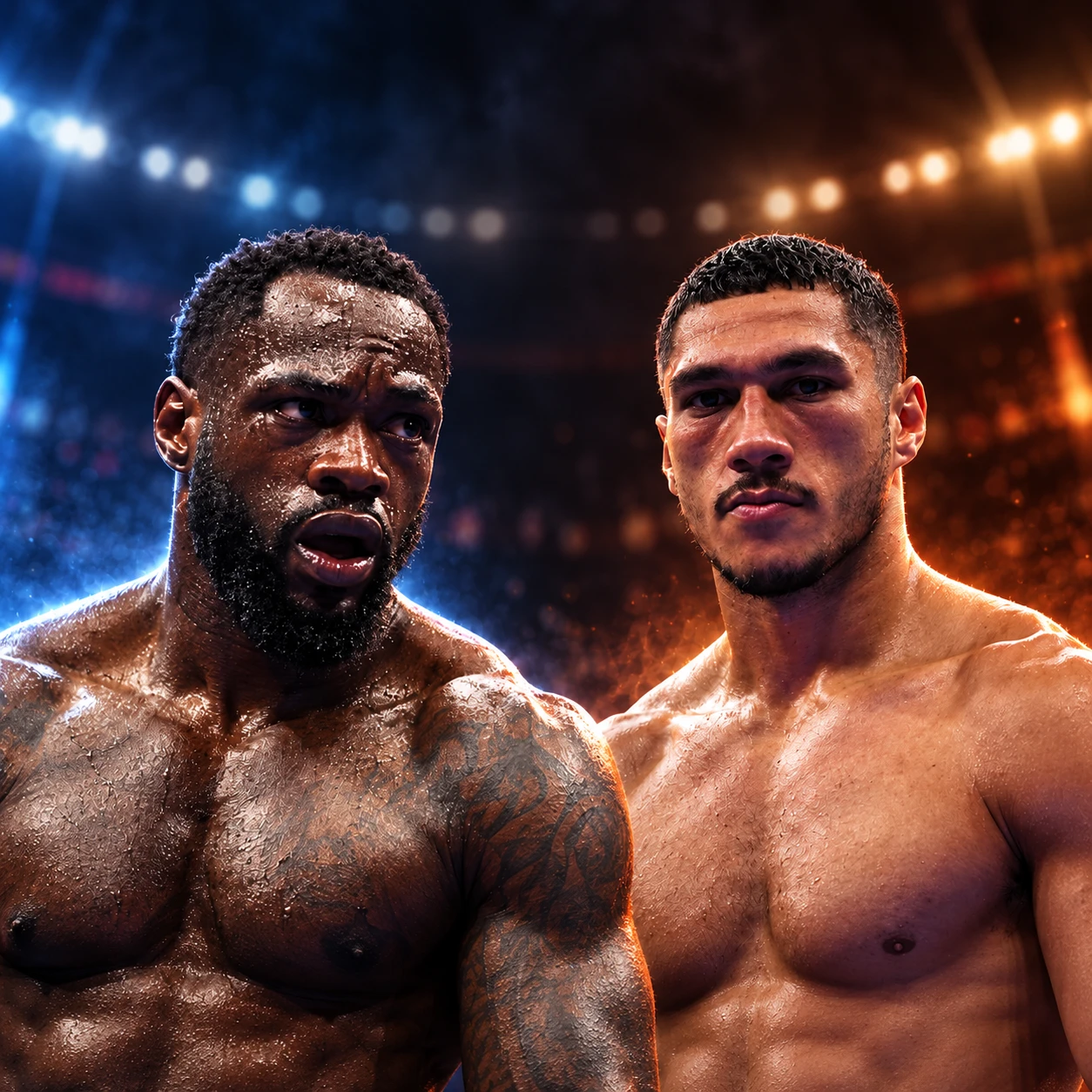
In late November, Usyk vacated the WBO heavyweight title rather than face mandatory challenger Fabio Wardley 20-0-1 (19 KOs). Days later, he stated publicly that his preferred opponent for 2026 is former WBC champion Deontay Wilder 44-4-1 (43 KOs)—a fighter now 40 years old, ranked only #13 by the WBC, and coming off four losses in his last six fights.
For the first time in his career, Usyk is being accused—loudly—of ducking.
Wilder's co-manager Shelly Finkel on the prospect of Oleksandr Usyk vs Deontay Wilder 💬 pic.twitter.com/Z7cKa523ue
— Sky Sports Boxing (@SkySportsBoxing) December 1, 2025
A Question of Standards, Not Fear
Nobody credible is suggesting that Usyk fears Wardley. The argument is conceptual: a “duck,” in this context, means choosing a less credible opponent over a more credible one while holding world titles.
And based purely on current form:
- Wardley is young, unbeaten, active, and a newly crowned title holder.
- Wilder is older, clearly declined, and coming off a laboured win over journeyman Tyrrell Herndon.
Under that definition, critics argue, Usyk has turned down the tougher, more legitimate challenge for a bigger-name but lesser-merit opponent.
The frustration is magnified because Wardley represents the exact kind of fighter mandatories are designed to protect: someone who fought his way up without promotional privilege and earned his shot the hard way.
But Wilder Is No “Joke Fight”
The harshest treatment has come from certain YouTube analysts who call Wilder “irrelevant” and “washed.” That goes too far.
Wilder’s résumé still matters. His punch is still a live threat. And globally, Usyk–Wilder is far more marketable than Usyk–Wardley today.
This isn’t a soft touch. It’s simply a fight with more story than sporting merit at this moment.
Usyk’s Perspective: Two Years, One Last Run
Usyk has said repeatedly that he intends to fight for only two more years. After a bruising schedule—Fury twice, Joshua twice, Dubois twice—his priorities now include:
- Big global events
- Big money
- Big names
- And fights that “interest” him
On that score, Wilder is a clean fit. Wardley may be tougher than some think, but his name doesn’t yet register internationally.
Usyk may see Wardley as a “later” fight, not a “now” fight.
Usyk has spoken! 🗣️
— DAZN Boxing (@DAZNBoxing) December 1, 2025
He wants to fight, Deontay Wilder!
Via: @boxingkingmedia pic.twitter.com/8yiIPcGRsu
The Real Issue: Titles vs. Freedom
The strongest argument from critics is not about fear—it’s about obligation.
If Usyk wants to spend his final years facing Wilder, Fury (again), or Joshua (again), that’s perfectly reasonable.
But holding belts comes with responsibilities. Mandatory challengers exist for a reason. And when a champion chooses the bigger name over the most deserving contender, the optics get messy.
A clean solution exists: drop the belts and continue as the lineal champion, free to make the biggest fights available. No controversy.
But Usyk appears to want both: the prestige of the belts and the freedom of a superstar.
That contradiction is what’s driving the “duck” debate.
Could we be seeing Oleksandr Usyk vs Deontay Wilder in the future? 👀 pic.twitter.com/A9yIABQp39
— Sky Sports Boxing (@SkySportsBoxing) December 1, 2025
A Great Fighter Making a Human Choice
Is this Usyk’s worst moment? Maybe.
Is it a disgrace? No.
He’s a great champion making a strategic decision about the final chapter of his career. It’s disappointing for purists—especially for Wardley—but it isn’t some moral collapse.
Wilder may not be the most deserving opponent, but he isn’t a fraudulent one. And the young contenders will still be waiting after the dust settles.
Usyk’s legacy remains secure. What changes now is the perception: for the first time, he’s acting not like the relentless conqueror of old—but like a superstar choosing the fights that appeal to him most.
In boxing, that’s not villainy.
It’s humanity.