February 7, 2024
via
via
Two Fight Saga: Michael Dokes vs. Mike Weaver
Two Fight Saga: Michael Dokes vs. Mike Weaver
Behind the scenes of these gripping encounters loomed the towering presence of American boxing promoter Don King.

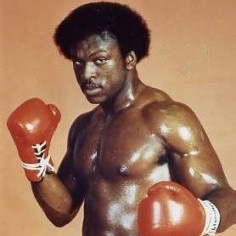
WBA Champion
Michael Dokes was a heavyweight champion whose fast hands made him stand out in a division more often associated with size and raw power. Known as “Dynamite,” he won the WBA title in 1982 and later produced a memorable challenge to the rising Evander Holyfield. He finished his professional career with a record of 53-6-2 (34 KOs).
Dokes's boxing talent was substantial, but his career and later life were damaged by addiction and serious criminal conduct. His championship, comeback and decline all belong in an account of a fighter whose ability did not lead to the stable career many had anticipated.
Born in Akron, Ohio, in August 1958, Dokes established himself as a leading American amateur before entering the professional ranks in 1976. He won the national AAU heavyweight championship in 1975 and the National Golden Gloves heavyweight title in 1976.
He also won a silver medal at the 1975 Pan American Games, losing the final to Cuba's Teofilo Stevenson. His amateur career brought experience against accomplished opposition, including future heavyweight champions John Tate and Greg Page.
As a professional, his quick combinations became his most recognisable asset. He could deliver punches in rapid sequences, creating a different problem from that posed by a slower heavyweight relying primarily on one powerful shot.
On December 10, 1982, Dokes challenged WBA heavyweight champion Mike Weaver in Las Vegas. The fight ended with a first-round technical knockout in Dokes's favour, but referee Joey Curtis's early intervention was widely criticised.
Dokes became champion through the official result. The controversy, however, is essential context: the contest did not provide the extended test that might have established his superiority more clearly.
The rematch in May 1983 went the full fifteen rounds and ended in a majority draw. Dokes retained the title, while Weaver demonstrated that their rivalry was considerably more competitive than the brief first fight had suggested.
In September 1983, Dokes defended against South Africa's Gerrie Coetzee. Coetzee knocked him out in the tenth round and became WBA heavyweight champion.
The defeat ended a reign of less than a year. Dokes's hand speed and pedigree had brought him to the title, but holding it required the consistency, preparation and sustained execution that separate a promising champion from a long-serving one.
His problems with substance abuse became a major obstacle. They affected the direction of his career and helped turn what had once looked like a strong platform for further achievement into a period of interrupted progress.
Dokes returned to prominence in the late 1980s and received The Ring's Comeback of the Year award for 1988. That recovery set up a March 1989 meeting with Holyfield, who had already become undisputed cruiserweight champion and was pursuing the heavyweight title.
The fight was a demanding exchange between two skilled heavyweights. Dokes tested Holyfield's ability to withstand pressure and respond against an experienced former champion. Holyfield eventually won by stoppage in the tenth round.
Although Dokes lost, the performance restored attention to his boxing ability. It remains one of the strongest examples of his speed and competitiveness against a high-level opponent. The contest was a significant step in Holyfield's heavyweight development and a major part of Dokes's own legacy.
In April 1990, Donovan “Razor” Ruddock knocked Dokes out in the fourth round. The defeat interrupted his renewed push towards another championship opportunity.
Dokes nevertheless received a further world title challenge against Riddick Bowe in February 1993. Bowe, making his first defence after defeating Holyfield, stopped him in the opening round. Dokes was no longer able to reproduce the form that had made him competitive with Holyfield four years earlier.
He continued fighting after another absence, with his final professional appearances coming in 1997. The late results added to his record without restoring him to the division's leading group.
Dokes later served a prison sentence following a violent attack on his partner. The seriousness of that conduct should not be disguised as merely another sporting setback. He died in Akron in August 2012 after suffering from liver cancer.
His boxing legacy remains complex. He earned a major heavyweight title, displayed unusual hand speed and returned strongly enough to push an emerging great in Holyfield. At the same time, the disputed Weaver stoppage, brief reign and damaging personal conduct prevent a simple celebratory account.
Dokes is remembered as a talented heavyweight whose best performances deserved attention, and whose career also illustrates how ability in the ring offers no guarantee of stability or sound judgement outside it.

Top Heavyweight Boxing covers the past, present and future of boxing's premier division. Copyright© 2026
Powered by Digital Dynasty Design