Anthony Joshua Returns Against Kristian Prenga: A Tune-Up With a Purpose
Jeddah, Saudi Arabia - Anthony Joshua returns to the ring on July 25 against Kristian Prenga in Jeddah, Saudi Arabia, in a fight that is easy to understand on paper.

It is a tune-up.
Joshua is expected to win, and the matchup has clearly been designed to give the former two-time unified heavyweight champion an opportunity to sharpen his tools before potentially moving on to something much bigger.
But Kristian Prenga is not quite a throwaway opponent.
Joshua (29-4, 26 KOs), 36, will be facing a 6’5” career heavyweight in Prenga (20-1, 20 KOs), 35, who has stopped every opponent he has beaten and has gradually worked his way toward the fringes of the heavyweight Top 30.
There is an enormous difference in experience and quality between the two men. Joshua should win decisively.
Still, Prenga is big enough, active enough and dangerous enough to make this a useful fight.
Joshua Begins Another Comeback
Few active heavyweights have experienced as many different chapters at the top of the sport as Joshua.
An Olympic super-heavyweight gold medalist at London 2012, Joshua turned professional the following year and rapidly emerged as one of boxing’s biggest stars.
He won the IBF heavyweight championship by stopping Charles Martin in 2016, but it was his dramatic victory over Wladimir Klitschko at Wembley Stadium the following year that established him as a genuine global attraction.
Joshua survived serious adversity that night before stopping Klitschko in the 11th round. Victories over Carlos Takam, Joseph Parker and Alexander Povetkin followed, leaving Joshua undefeated at 22-0 and in possession of the WBA, IBF and WBO heavyweight titles.
At the time, a showdown with Deontay Wilder for undisputed heavyweight supremacy appeared inevitable.
Then came Andy Ruiz Jr.
The Ups and Downs of a Heavyweight Champion
Joshua’s shocking stoppage loss to Ruiz at Madison Square Garden in 2019 changed the direction of his career.
He regained his championships six months later with a disciplined decision victory in Saudi Arabia, but the aggressive young heavyweight who had once simply overwhelmed opponents had learned an important lesson about the dangers of the division.
Two subsequent defeats to Oleksandr Usyk further altered Joshua’s position.
Unlike the chaotic first Ruiz fight, Joshua was beaten by a technically superior boxer in Usyk. He performed considerably better in their 2022 rematch but again came up short.
Joshua then began rebuilding.
Wins over Jermaine Franklin, Robert Helenius and Otto Wallin restored momentum. Against Wallin , Joshua again looked decisive and dangerous.
That resurgence came to an abrupt halt against Daniel Dubois at Wembley Stadium in September 2024.
Dubois dropped Joshua multiple times before stopping him in the fifth round, raising fresh questions about how much elite-level heavyweight boxing remained in Joshua’s future.
Now comes another rebuilding phase.

A Fight Joshua Is Supposed to Win
There should be no attempt to portray Joshua-Prenga as a 50-50 contest.
It isn’t.
Joshua has fought Klitschko, Usyk, Povetkin, Parker, Ruiz, Dubois and numerous other world-level heavyweights. He has fought championship bouts in packed stadiums and competed under pressures Prenga has never experienced.
Prenga is making an enormous jump in class.
But there is a difference between an opponent being carefully selected and an opponent having no credibility whatsoever.
Prenga falls into the former category.
At approximately 6’5” and well over 250 pounds, he is a genuine heavyweight with physical size. He is active, confident and accustomed to winning by knockout.
Joshua cannot simply show up.
He still has to fight him.
Who Is Kristian Prenga?
Prenga’s path to the biggest fight of his career has been almost the opposite of Joshua’s.
Born in Albania and now based in the United States, Prenga turned professional in 2016 without the Olympic fanfare or major promotional backing that accompanied Joshua into the professional ranks.
His career encountered trouble almost immediately.
Prenga lost a decision to Giovanni Auriemma in only his second professional fight, leaving him 1-1.
He has not lost since.
Prenga eventually avenged that defeat and has built his record to 20-1, with all 20 victories coming by stoppage.
That perfect knockout percentage is eye-catching, although it requires context.
Prenga has built most of his record against regional and journeyman-level opposition. He has never faced an opponent remotely comparable to Joshua, and the gap between the level he has been competing at and the one he encounters Saturday night is enormous.
Still, there are signs that Prenga possesses legitimate heavyweight power.
IT'S FIGHT WEEK ‼️
— Ring Magazine (@ringmagazine) July 20, 2026
Five days until Anthony Joshua makes his return 🔥#JoshuaPrenga | July 25th | Exclusively on DAZN 🥊 pic.twitter.com/ap8OJYI1Ym
The Long Road to a Major Opportunity
Perhaps the most useful victory on Prenga’s résumé came against veteran Joey Dawejko in October 2024.
Dawejko has spent years operating as a durable measuring stick in the heavyweight division and has shared the ring with numerous recognizable opponents. Prenga stopped him in five rounds.
It was not a victory that suddenly transformed Prenga into a contender, but it provided more substance than many of the knockouts earlier in his career.
He has continued winning since.
Prenga enters the Joshua fight having spent nearly a decade gradually climbing from small shows and modest opposition to an opportunity few would have predicted when his record stood at 1-1.
At 35, there may never be another chance like this.
One victory would change everything.
An Enormous Jump in Levels
The central question is how Prenga responds when he encounters a completely different level of heavyweight.
Joshua possesses advantages in virtually every measurable area of high-level experience.
His jab is sharper. His combinations are faster. His technique is more refined. He has fought bigger punchers, better boxers and stronger heavyweights under championship conditions.
Prenga has also accumulated relatively few professional rounds because so many of his fights have ended early.
That can be an advantage while building a knockout record, but it leaves unanswered questions when a fighter suddenly encounters someone who cannot simply be overwhelmed.
If Joshua establishes his jab, controls distance and begins landing the straight right hand cleanly, Prenga may quickly discover how large the gap is between knocking out regional heavyweights and facing a former unified champion.
But Prenga does bring one important ingredient to this tune-up.
He is physically a real heavyweight.
جدة تستقبل أنتوني جوشوا استعداداً للنزال المرتقب ضمن فعاليات تقويم جدة وبالتعاون مع #موسم_الرياض 🥊🔥
— TURKI ALALSHIKH (@Turki_alalshikh) July 18, 2026
📍 جدة سوبر دوم
🗓️ 25 يوليو
Jeddah welcomes Anthony Joshua ahead of the highly anticipated bout as part of Jeddah Calendar, in collaboration with Riyadh Season 🥊🔥
📍 Jeddah… pic.twitter.com/sgUV5yTp5Z
Enough Danger to Make It Useful
Joshua does not need an opponent who simply comes to survive.
He needs someone who will make him execute.
Prenga’s size and aggressive instincts should provide that opportunity.
His best chance is likely to make the fight uncomfortable early, before Joshua settles into a rhythm. He cannot reasonably expect to outbox Joshua over a long tactical contest.
He needs to be physical, throw with conviction and attempt to create uncertainty.
That also gives Joshua something meaningful to work against.
The ideal performance would see Joshua establish control, find his timing and gradually impose the considerable difference in class before producing a decisive finish.
He does not necessarily need ten rounds.
He needs to look sharp.
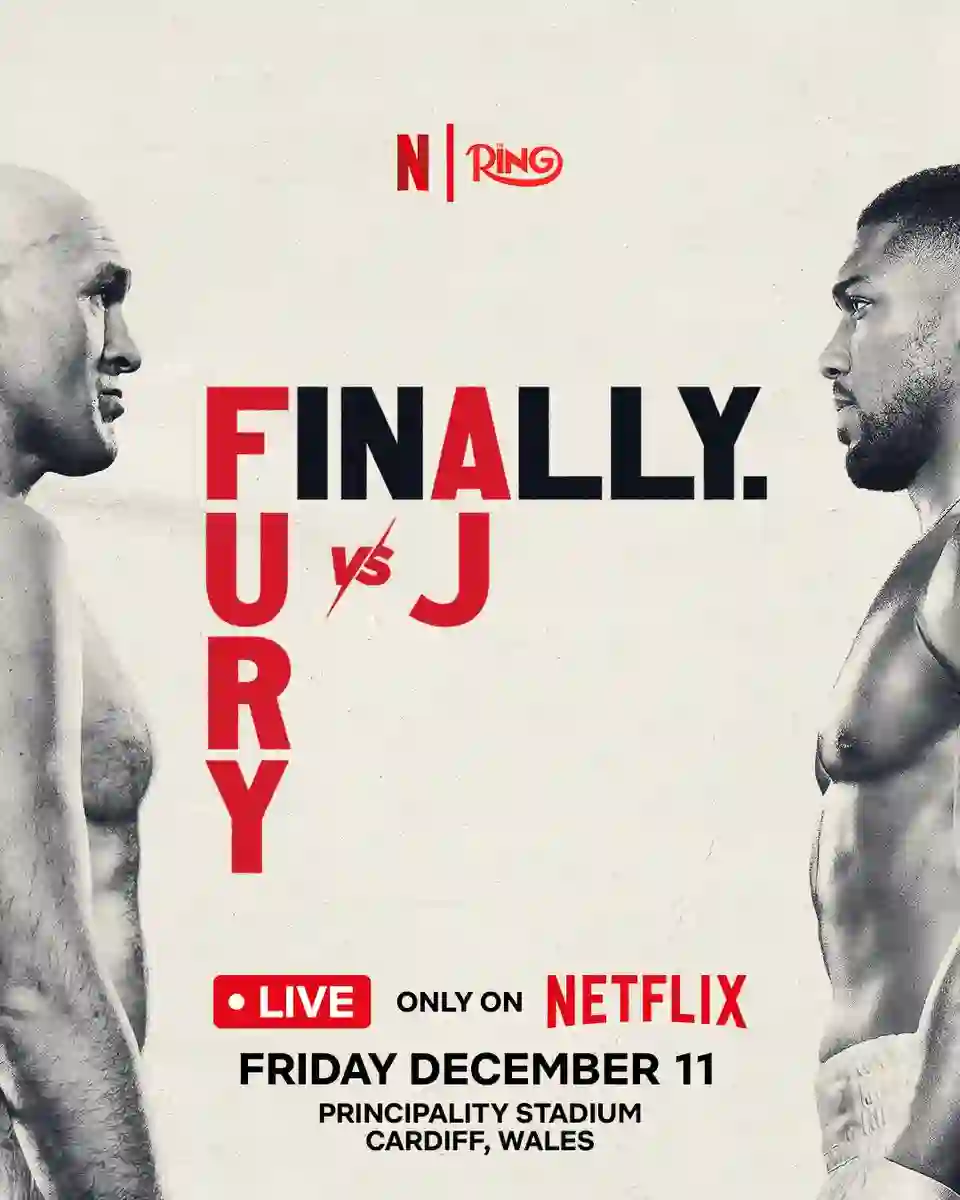
The Tyson Fury Fight Looms
There is also no escaping the larger story surrounding Joshua’s return.
Tyson Fury is fighting veteran Mariusz Wach one day earlier, on July 24, with both British heavyweights seemingly moving toward the long-awaited showdown that has eluded boxing for years.
The situation creates an unusual fight week.
Joshua and Fury are essentially taking parallel tune-ups within 24 hours of one another.
Both are heavily favored.
Neither can afford a disaster.
For Joshua, that makes Prenga dangerous in a very specific way.
The temptation in a fight like this is to look beyond the man standing across the ring.
Joshua knows better than most how badly that can go.
Andy Ruiz Jr. was once viewed as a manageable replacement opponent before producing one of the biggest heavyweight upsets of the modern era.
Prenga should not be confused with Ruiz, who entered the Joshua fight with considerably stronger credentials and experience.
But the lesson remains relevant.
In heavyweight boxing, future plans mean nothing if the next fight goes wrong.
A Tune-Up That Makes Sense
Joshua-Prenga is ultimately what it appears to be: a carefully selected comeback fight for a vastly more accomplished heavyweight.
Joshua should win.
If he remains anywhere near the fighter who has competed at championship level for the past decade, he should probably win convincingly.
But Prenga gives the matchup enough credibility to serve its purpose.
He is large, active and powerful. He has won 19 consecutive fights since his lone defeat, has stopped every opponent he has beaten and arrives at the biggest moment of his career with nothing to protect.
For Joshua, the stakes are entirely different.
At 36, there are only so many major nights remaining.
He has already been Olympic champion, unified heavyweight champion, Wembley Stadium headliner and one of the biggest attractions of his generation. His career has included spectacular victories, shocking defeats and multiple rebuilds.
Saturday night is not supposed to be another defining battle.
It is supposed to prepare him for one.
Joshua needs to show that the timing, confidence and finishing instincts are still there—and that another major chapter remains possible.
For Kristian Prenga, there is no complicated long-term plan.
After a decade spent largely outside boxing’s brightest lights, he has been given one night against Anthony Joshua to change the entire course of his career.
That is what makes this obvious tune-up worth watching.