WORLD Heavyweight Boxing

Month
Date
,
Year
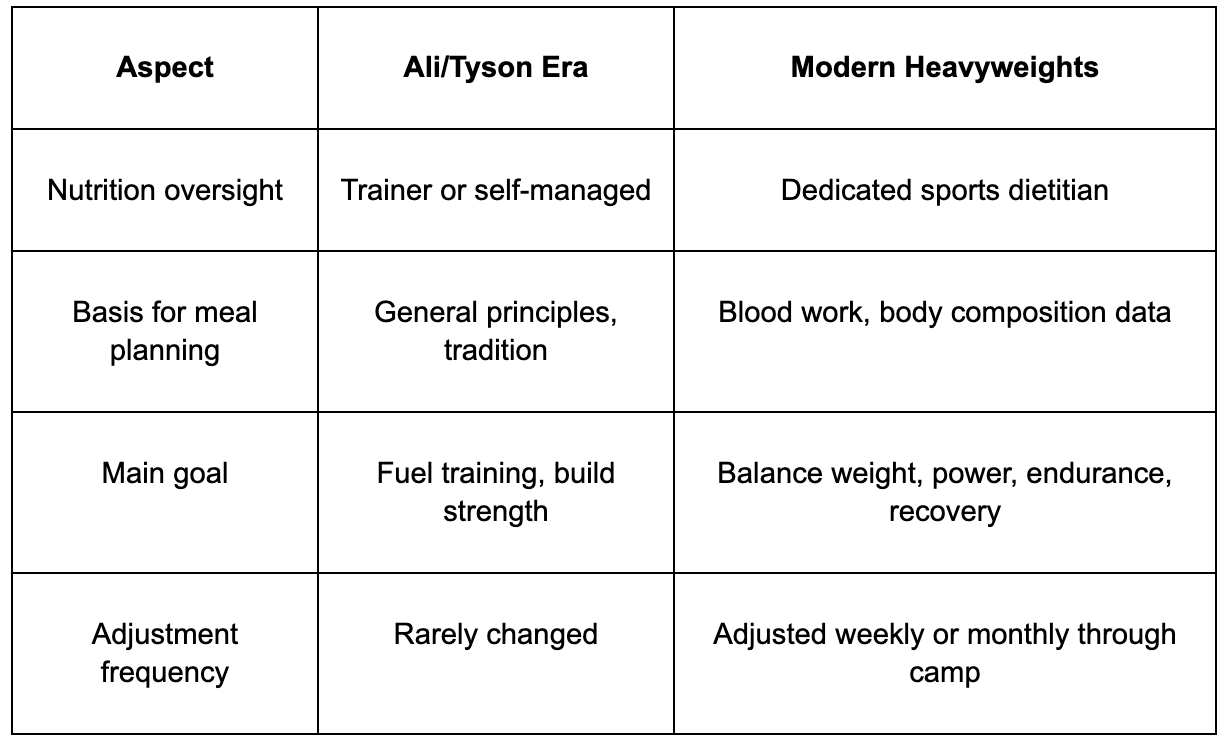
London, England, UK - There have been many changes in heavyweight boxing during the past three decades, both inside and outside the ring. Camps that once ran largely on intuition and experience now employ nutritionists, order blood panels and count macronutrients. Nutritional science is now as important to the preparation of today’s boxer as sparring and roadwork.

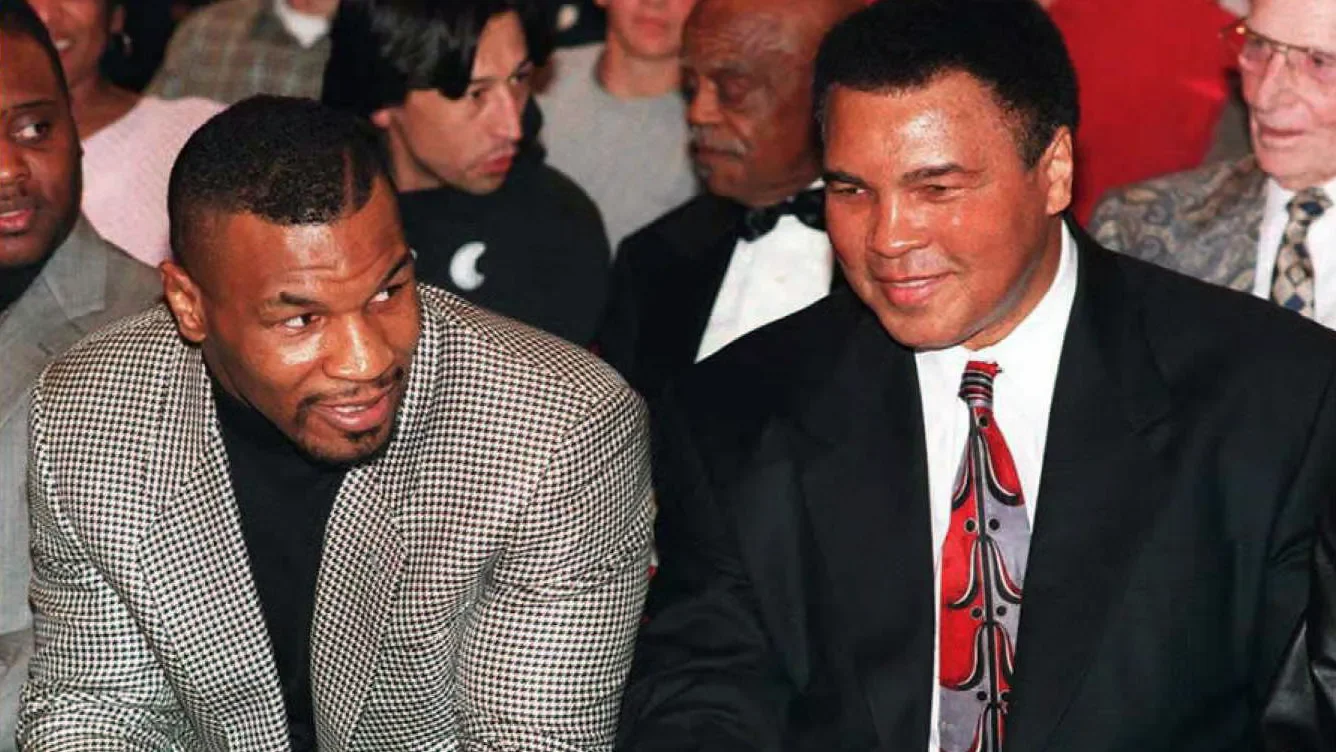
Muhammad Ali ate what his family cooked — fried chicken and collard greens in the early years, and later oats, grilled chicken, rice and vegetables. There was an order to the process, but certainly no specialized program like those many boxers rely on today.
Mike Tyson’s camp, guided by Cus D’Amato, had a strict diet. It included oats, milk, rice, pasta and around 200 grams of protein daily. This plan supported his training and was detailed by H&G Boxing. It was a disciplined approach for its time, but based largely on the nutritional knowledge available then.
Modern fighters also demonstrate how much nutrition and conditioning can affect preparation. Tyson Fury talked about his camp diet before a 2023 fight, mentioning “marshmallows, Big Macs, and McDonald’s,” according to Yahoo Sports. The comments came amid considerable discussion about his higher fight weight for that contest. Whether made entirely seriously or partly in jest, they also illustrate how closely diet and conditioning are scrutinized in modern heavyweight boxing.
Who controls the plate matters less than the amount of information behind each decision. This can include macronutrient ratios and even whether a meal is eaten before or after a workout. The change didn’t happen overnight, but nutrition has become an increasingly sophisticated part of preparing a heavyweight fighter.
Old-school heavyweights often placed considerable emphasis on size, weight and power. Modern camps have become more sophisticated in how those physical attributes are developed. They increasingly train athletes to achieve a particular combination of leanness, explosiveness, endurance and recovery.
Recovery also extends beyond the hours spent training. Rest and downtime are increasingly treated as part of the overall camp routine, with athletes looking for ways to switch off between demanding sessions. Away from the gym, entertainment can take many forms, from streaming and gaming to browsing sites such as Slotozilla to compare the Top casino bonus for the UK and other online promotions. For a fighter in camp, however, the objective remains the same: recover properly before returning to the training routine.
Research backs up the importance of nutrition in athletic development. A 2010 study published in the British Journal of Sports Medicine looked at 49 randomized controlled trials involving 1,863 participants. It found that protein supplementation combined with resistance exercise improved lean mass and strength. This finding has also been noted in more recent discussions of boxing rehabilitation.
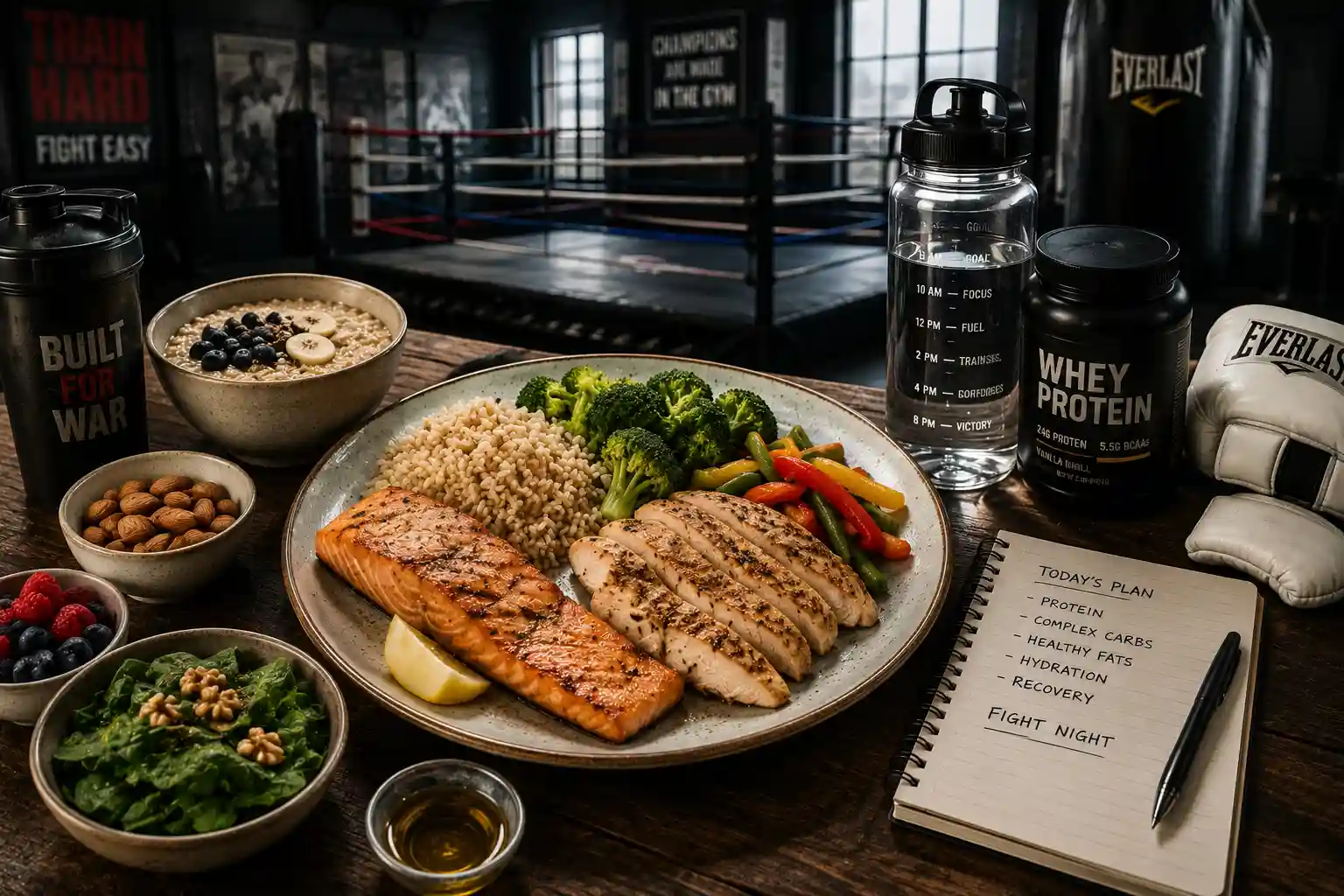
A modern heavyweight training camp typically includes several nutrition-focused roles and routines that simply weren’t standard a generation ago:
International guidelines on sports nutrition provide additional evidence of how much this area has developed. The International Society of Sports Nutrition has published a position stand on nutritional protocols for combat sports covering different stages of preparation, from general training through fight week and rehydration. This sort of detailed guidance simply wasn’t available during Ali’s or Tyson’s day.
Today’s heavyweights follow noticeably different diets from one another. Each fighter can follow a diet corresponding to his body structure, boxing technique and the goals established by his team.
Oleksandr Usyk undergoes monthly blood tests supervised by nutritionist and endocrinologist Kateryna Tolstikova. She calculates his intake of protein, fats and carbohydrates based on dry weight rather than relying on rough estimates.
“Nutrition is just as important as physical training,” Tolstikova said in an interview with RBC-Ukraine. She shared insights into Usyk’s diet, which includes buckwheat, salmon or tuna, vegetables, eggs and nuts.
Anthony Joshua’s team takes a higher-volume nutritional approach suited to his body type and the workload he undergoes during training. Mark Ellison, Joshua’s nutritionist, has said Joshua needs between 4,000 and 5,000 calories daily. This includes approximately 2–2.2 grams of protein per kilogram of body weight and 4–8 grams of carbohydrates.
These numbers vary depending on the stage of camp, as noted in Total Shape’s analysis of Anthony Joshua’s Training & Nutrition Routine. His nutritional requirements are closely linked to the demands of his training programme.
A few patterns stand out across the current heavyweight scene:
None of these patterns add up to one universal formula. Usyk’s nutritional strategy differs from Joshua’s because each camp is designed around different physical demands and fighting styles. Precision is the one thing they share, rather than any particular diet.
Nutrition has shifted from an afterthought to a key part of heavyweight boxers’ training. It is now treated as an important component alongside sparring, conditioning and strength training. The shift from Ali’s home cooking to Tyson’s more structured nutritional plan illustrates the gradual evolution, while Usyk’s use of blood testing and specialist nutritional advice demonstrates how sophisticated the process has become.
With sports science continuing to develop, there is little reason to expect that trend to slow down.


Top Heavyweight Boxing covers the past, present and future of boxing's premier division. Copyright© 2026
Powered by Digital Dynasty Design