WORLD Heavyweight Boxing

Month
Date
,
Year
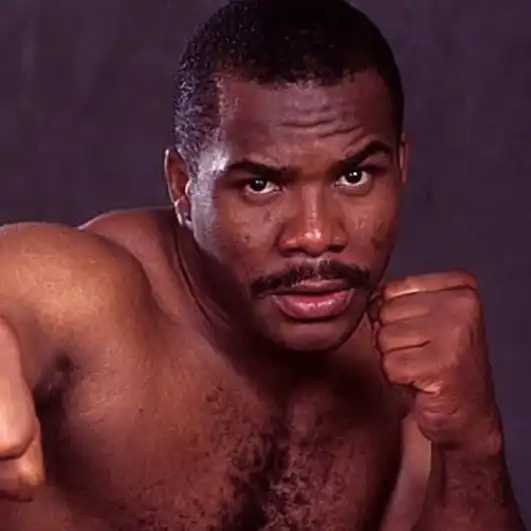
Legendary Contender
Ike Ibeabuchi earned his place among the heavyweight contenders of the late 1990s by beating two unbeaten opponents with very different styles: David Tua and Chris Byrd. The Nigerian boxer combined physical strength with a sustained attacking pace, showing that his threat extended beyond a single knockout punch. His original professional run ended at 20 wins without defeat, before criminal proceedings and imprisonment interrupted his career. He eventually returned to professional boxing in Nigeria in 2025, more than 26 years after his last bout of the 1990s.
Ike Ibeabuchi, the Nigerian heavyweight contender who defeated David Tua and Chris Byrd.
Born on February 2, 1973, Ibeabuchi developed his boxing career in the United States after moving to the Dallas area. Former world welterweight champion Curtis Cokes became an important figure in his professional development. Under Cokes, Ibeabuchi learned to combine his strength with a working jab, combinations and the ability to maintain pressure over longer distances.
He made his professional debut in October 1994 and progressed through a succession of heavyweight opponents. Those early victories established his power, but a contender's reputation required more than success against developing fighters and journeymen. The decisive test came against Tua, another unbeaten heavyweight whose left hook had already made him a dangerous presence in the division.
On June 7, 1997, Ibeabuchi faced Tua in Sacramento, California, for the WBC International heavyweight title. This was a regional sanctioning-body championship, not the world heavyweight crown. The importance of the contest lay in the quality of the two unbeaten fighters and the opportunity to establish a place in the championship picture.
Ibeabuchi did not try to keep Tua at a safe distance for twelve rounds. He met him in prolonged exchanges, working with both hands and maintaining a demanding tempo. Tua answered with heavy hooks and body punches. Their willingness to engage made the fight an unusually sustained contest of heavyweight activity, stamina and resistance.
The judges awarded Ibeabuchi a unanimous decision. The victory demonstrated that he could handle a powerful opponent over the full twelve-round distance and gave his career a foundation that early stoppages alone could not provide. It remains the central endurance test of his first professional career.
After further victories, Ibeabuchi met Chris Byrd on March 20, 1999, in Tacoma, Washington. Byrd presented a different problem from Tua: a mobile southpaw who used movement, anticipation and defensive reflexes to make opponents miss. Ibeabuchi had to apply pressure without relying exclusively on the exchanges that had suited him against Tua.
The fight ended in the fifth round. Ibeabuchi hurt Byrd, scored two knockdowns and forced a technical knockout at 2:59. Byrd would later win the WBO and IBF heavyweight titles, giving the result lasting significance. Ibeabuchi had beaten both a dangerous pressure fighter and a future champion known for defensive skill.
That victory brought his record to 20–0, with 15 stoppages. He was a serious contender, but he had not won a major world heavyweight title or fought for one. The difference matters when assessing a career whose championship potential was never tested during its original run.
Ibeabuchi was arrested in Las Vegas in July 1999. Contemporaneous court reporting records a plea agreement in November 2001 on charges of battery with intent to commit a crime and attempted sexual assault. In January 2002, he was sentenced to five to thirty years in prison. The plea did not include an admission of guilt, but it resulted in criminal convictions and a prison sentence.
His years in custody removed him from professional boxing through what would otherwise have been much of his prime. Comeback plans reported after his release from custody in 2015 did not produce a professional fight in 2016. Announcements and negotiations should therefore be distinguished from an actual return to the ring.
Ibeabuchi finally boxed again on August 23, 2025, at Teslim Balogun Stadium in Lagos. At 52, he defeated Idris Afinni, who retired after three completed rounds. The appearance ended an absence of more than 26 years dating back to the Byrd fight.
His return continued on December 24, 2025, when he faced Kabiru Towolawi in Lagos. Local reporting recorded a twelve-round unanimous-decision defeat, his first professional loss. These bouts belong to a separate late-career chapter; they do not make the abandoned comeback plans of the previous decade completed fights.
Ibeabuchi's heavyweight standing rests chiefly on what he achieved against Tua and Byrd. Together, those victories showed stamina, strength and the ability to overcome contrasting styles. They justify a place in the division's history without turning an interrupted career into an imaginary championship reign or assuming how he would have performed against the champions he never faced.

Top Heavyweight Boxing covers the past, present and future of boxing's premier division. Copyright© 2026
Powered by Digital Dynasty Design