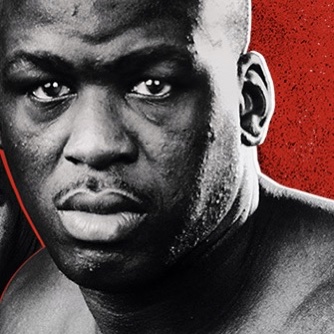
James “Buster” Douglas became undisputed heavyweight champion by knocking out Mike Tyson in Tokyo on February 11, 1990. The result was an extraordinary upset, but the performance was more than an unexpected finishing punch. Douglas controlled much of the fight with his jab, movement and combinations, recovered from an eighth-round knockdown and stopped the previously unbeaten champion in the tenth.
James “Buster” Douglas, the undisputed heavyweight champion following his 1990 victory over Mike Tyson.
A boxing upbringing in Columbus
Born on April 7, 1960, in Columbus, Ohio, Douglas grew up around the sport through his father, professional boxer Bill “Dynamite” Douglas. Buster brought size, reach and athletic ability to heavyweight boxing, with a jab that could establish control when he maintained his pace and concentration.
His early professional career was uneven. Wins showed his ability, while setbacks prevented him from establishing a straightforward rise toward the championship. That mixed record later contributed to the perception that he was an unlikely threat to Tyson, but it also concealed the experience he had accumulated against capable heavyweights.
The first title chance against Tony Tucker
Douglas challenged Tony Tucker for the vacant IBF heavyweight championship in Las Vegas on May 30, 1987. The bout formed part of the heavyweight unification programme, on the same card as Tyson's WBA and WBC defence against Pinklon Thomas.
Douglas boxed competitively and remained close on the official scorecards after nine rounds: one judge had him ahead, one had Tucker ahead and the third had the fight even. In the tenth, Tucker hurt him with a right hand and followed with an unanswered attack. Referee Mills Lane stopped the contest, giving Tucker the vacant belt.
The loss was a major disappointment, but Douglas had shown he could compete at championship level. It also established a contrast with Tokyo three years later: against Tucker, he could not sustain his challenge through the closing stages; against Tyson, he recovered from danger and finished the fight himself.
Rebuilding before the Tokyo opportunity
Douglas returned to contention after the Tucker defeat. His victories included decisions over former WBC champion Trevor Berbick and future WBC champion Oliver McCall in 1989. These results matter because his title challenge did not come from complete obscurity. He had already faced a world-title opponent and beaten experienced heavyweights.
Tyson nevertheless entered their meeting as the dominant figure in the division, holding the WBA, WBC and IBF belts. Douglas was widely viewed as a substantial underdog. His mother had died shortly before the contest, adding a personal loss to the demands of preparing for the biggest fight of his career.
Outboxing Tyson and surviving the eighth round
At the Tokyo Dome, Douglas used his long jab to interrupt Tyson's approach and create room for combinations. Rather than spending the early rounds simply surviving an assault, he repeatedly took the initiative. Tyson struggled to close the distance consistently, while Douglas's sustained work reduced the champion's opportunities to attack.
Late in the eighth round, Tyson landed a right uppercut that knocked Douglas down. Douglas rose before the referee completed the count, and the round ended. He recovered and resumed his attack in the ninth, showing that the knockdown had not reversed the broader pattern of the fight.
In the tenth, Douglas hurt Tyson with an uppercut and followed with a combination that put him on the canvas. Tyson tried to regain his feet but could not beat the count. Douglas won by knockout and claimed the undisputed championship.
Tyson's camp disputed the count following Douglas's earlier knockdown. The result stood, and Douglas was recognized as champion. The controversy does not change the official outcome or the quality of the boxing that put him in position to win.
Holyfield takes the championship
Douglas made his first defence against Evander Holyfield at The Mirage in Las Vegas on October 25, 1990. Holyfield was an unbeaten former undisputed cruiserweight champion who had established himself as a leading heavyweight challenger.
Douglas weighed 246 pounds, substantially more than he had in Tokyo. Holyfield controlled the opening rounds and, in the third, countered a Douglas uppercut with a right hand. Douglas went down and was counted out. Holyfield took the WBA, WBC and IBF titles by third-round knockout.
The defeat ended a short championship reign. It did not erase the Tyson victory, but it showed that producing an outstanding title-winning performance and sustaining a reign were different challenges. Douglas stepped away from boxing after the loss.
A health crisis and the professional comeback
In 1994 Douglas suffered a diabetic coma. His recovery was followed by renewed training and an eventual return to professional boxing in 1996, after nearly six years away from competition.
He won the first six fights of the comeback before Lou Savarese stopped him in the first round on June 25, 1998. Douglas then won two further bouts and finished his professional career in 1999. The comeback did not restore him to the world championship, but it formed a meaningful later chapter after a serious health crisis.
The lasting meaning of the Tyson victory
Douglas's place in heavyweight history rests on a completed achievement: he defeated the reigning undisputed champion in the ring. His career also included an earlier title challenge, a difficult first defence and a later return that deserve attention beyond the familiar upset narrative.
Tokyo remains the clearest expression of his ability. He used established boxing skills to control a feared opponent, survived a dangerous knockdown and found the finish. That combination of sustained performance and recovery explains the victory more accurately than treating it as a miracle detached from the action.
What makes a boxing match unforgettable? Explore the rivalries, drama, historic moments, and performances that have shaped the sport's greatest contests.
In the end, the path to undisputed greatness is fraught with challenges and obstacles, but for those who dare to dream, the rewards are beyond measure.
Mike Tyson entered the Tokyo matchup as an astonishing 42-to-1 betting favorite. The fight was initially viewed as a mere warm-up for Evander Holyfield