October 5, 2023
via
via
Leon Spinks: Sudden Highs and Sudden Lows
Leon Spinks: Sudden Highs and Sudden Lows
The day before the rematch with Ali, Spinks' destructive behaviour included consuming alcohol, cocaine, marijuana, and engaging with women.
Undisputed Champion
Leon Spinks achieved in eight professional fights what most heavyweights never achieve in a lifetime. In February 1978, the Olympic champion from St. Louis defeated Muhammad Ali and became the undisputed heavyweight champion. It was a startling rise, followed by a much harder career. His story combines an outstanding amateur foundation, one extraordinary championship performance and the challenge of sustaining success against experienced professionals.
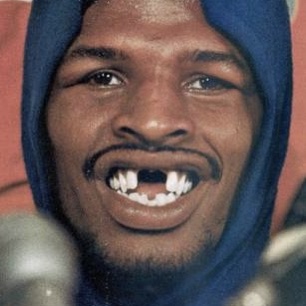
Leon Spinks smiling in a hooded robe. His gap-toothed grin became one of boxing’s most recognisable images.
Born in St. Louis on July 11, 1953, Spinks developed his boxing during service in the United States Marine Corps. The military programme gave him regular competition and a disciplined setting in which to turn his energy into a formidable amateur game. He earned bronze at the 1974 World Championships and silver at the 1975 Pan American Games before reaching the biggest amateur stage.
At Montreal in 1976, he won the Olympic light-heavyweight gold medal, stopping Cuba’s Sixto Soria in the final. His younger brother Michael Spinks won middleweight gold at the same Games. Their shared success made the family an important part of an exceptional American boxing team.
Leon’s Olympic achievement is essential to understanding the Ali upset. He was inexperienced as a professional, but he was not an untrained newcomer. He had already demonstrated the speed, work rate and competitive nerve needed to win an international tournament against accomplished opponents.
Spinks turned professional in 1977. After seven bouts, his record stood at six wins and one draw. That distinction matters: Ali was his eighth professional opponent, rather than the eighth step in an uninterrupted winning streak.
The jump from a brief professional apprenticeship to a fifteen-round championship fight was enormous. Amateur success did not supply experience of managing a long title contest, and Ali had spent years solving the division’s best challengers. Spinks nevertheless offered something troublesome for an older champion: sustained activity, quick combinations and a willingness to keep forcing the pace.
On February 15, 1978, Spinks challenged Ali in Las Vegas for the WBA and WBC titles. Ali was 36; Spinks was 24. The challenger made the champion work rather than allowing his reputation to dictate the contest.
Spinks pressed forward and threw combinations through fifteen rounds. Ali had moments of success, but he could not consistently interrupt the younger man’s activity. The fight became a test of who could impose his rhythm across the full distance.
Spinks won a split decision and took the undisputed and lineal heavyweight championship. The result remains remarkable because of the gap in professional experience and the stature of the man he defeated. It was also an earned victory: his effort over the scheduled distance gave the upset substance beyond the surprise of the announcement.
Ali–Spinks highlights from their 1978 championship rivalry.
The championship quickly became complicated. The WBC required Spinks to defend against Ken Norton. He chose an Ali rematch instead, and the organisation stripped him of its belt in March 1978 and recognised Norton as champion. Spinks still held the WBA title.
The rematch took place at the Louisiana Superdome in New Orleans on September 15, 1978. Ali prepared for a different contest, used his experience more effectively and won a unanimous decision over fifteen rounds. He became heavyweight champion for the third time; Spinks’s reign ended seven months after it had begun.
These were two separate reversals. The WBC belt was lost through a sanctioning dispute before the rematch, while the WBA championship was lost in the ring. Treating them as a single punishment for fighting Ali obscures what actually happened.
CBS review of the Ali–Spinks rivalry and its championship significance.
Spinks’s return was difficult. Gerrie Coetzee knocked him out in the first round in June 1979, exposing the danger of facing a powerful, experienced heavyweight without the margin for error that his aggression required.
He subsequently produced an important recovery against Bernardo Mercado in Las Vegas on October 2, 1980. Spinks stopped Mercado in the ninth round. This was a meaningful contender’s victory and a reminder that the former champion could still compete successfully beyond the Ali upset.
The Mercado performance helped bring another world-title opportunity. It also gives his record a necessary balance: the years after Ali were uneven, but they were not simply an uninterrupted decline.
Leon Spinks against Bernardo Mercado, October 1980: a ninth-round stoppage restored his position in the heavyweight picture.
On June 12, 1981, Spinks challenged Larry Holmes for the WBC heavyweight championship in Detroit. Holmes’s controlled boxing and accurate punching presented a different problem from the older Ali. The champion stopped Spinks in the third round.
Spinks later competed at cruiserweight. He won the NABF title against Jesse Burnett in 1982 and challenged Dwight Muhammad Qawi for the WBA world championship in 1986. Qawi stopped him in the sixth round. A move to a lighter division did not remove the difficulty of facing an established champion with a mature professional style.
His continued willingness to seek those opportunities reflected ambition and courage. It could not supply the consistency, defence and preparation required to turn every opportunity into a sustained reign.
Spinks continued boxing until 1995 and finished with a professional record of 26-17-3, including 14 knockout victories. He died on February 5, 2021, aged 67. His brother Michael went on to win world championships at light heavyweight and heavyweight, while Leon’s son Cory became a champion at welterweight and junior middleweight.
Leon’s own legacy rests on two achievements that stand independently of the difficult years that followed: Olympic gold and an undisputed heavyweight championship won against Ali. The shortness of the reign should be recorded, but it should not erase the quality of the night on which he earned it.
At his best, Spinks brought an urgent, combination-punching attack and refused to be overawed by a famous opponent. His career shows both the possibilities created by that approach and the limits of relying on it without a dependable professional foundation. He remains a champion whose defining victory deserves to be understood as a boxing performance, not merely remembered as a startling headline.

Top Heavyweight Boxing covers the past, present and future of boxing's premier division. Copyright© 2026
Powered by Digital Dynasty Design