HEAVYWEIGHT
BOXINGTHE DIVISION HEADQUARTERS HEAVYWEIGHTBOXING.COM
BOXINGTHE DIVISION HEADQUARTERS HEAVYWEIGHTBOXING.COM
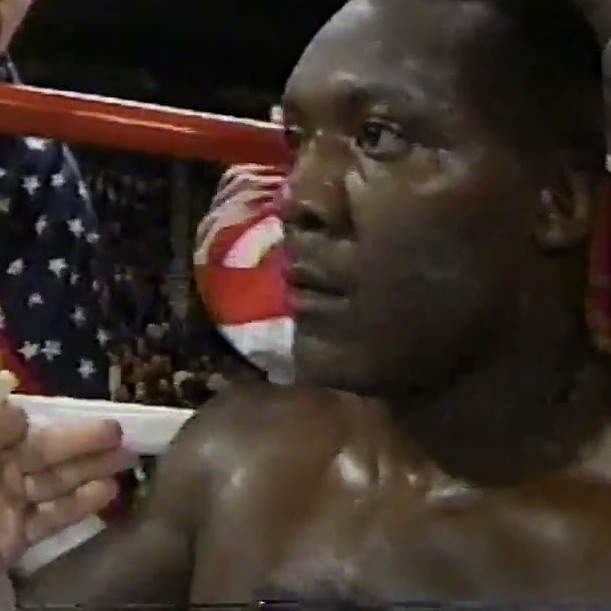
WBA Champion
Bruce Seldon held the WBA heavyweight championship from 1995 to 1996. The Atlantic City fighter won the vacant belt against Tony Tucker, defended it successfully against Joe Hipp and lost it to Mike Tyson. His short reign belonged to a divided championship landscape; he was a WBA titleholder, not the undisputed heavyweight champion.
Seldon’s strongest weapon was an effective jab, supported by fast hands and a powerful physique. Those qualities carried him through setbacks and into a championship opportunity. His first-round loss to Tyson became the dominant public memory, but it does not erase the performances that earned and retained his title.
Bruce Seldon, the Atlantic City Express, pictured in the ring.
Bruce Samuel Seldon was born on January 30, 1967, in Atlantic City, New Jersey. After amateur experience that included a New Jersey Golden Gloves championship, he turned professional on October 4, 1988, stopping Joel McGraw in the first round.
He won his first eighteen professional fights, progressing from new professional to a heavyweight attracting serious attention. Victories over experienced opponents helped establish that his athleticism and punching could function beyond the earliest prospect stage.
The nickname “Atlantic City Express” reflected his home city and the forward momentum of that rise. The division, however, contained opponents who could test whether his speed and power would remain effective when a fight became longer or more physically demanding.
On April 18, 1991, Oliver McCall gave Seldon his first defeat. Seldon had built a lead on all three scorecards, but McCall knocked him down three times in the ninth round and secured a technical knockout.
The ending demonstrated the difference between winning rounds and finishing a heavyweight contest. Seldon’s earlier scoring success was real, yet McCall’s late power changed the result before he could reach the final bell.
On August 9, 1991, Seldon faced Riddick Bowe in Atlantic City. Bowe knocked him out in the opening round, producing a second consecutive defeat. Bowe was still a contender at the time and would become undisputed champion the following year.
These were different kinds of setbacks: one came after Seldon had established a points advantage, the other before he could develop a sustained contest. Together they made rebuilding his standing essential.
Seldon returned to winning form but lost a ten-round unanimous decision to former WBA champion Tony Tubbs in October 1992. Tubbs’s experience supplied another reminder that heavyweight advancement required more than an impressive physical presence.
Seldon then assembled another sequence of victories that brought him back towards championship contention. The recovery matters because his eventual title was not the immediate continuation of an unbeaten rise. He had already suffered clear setbacks and worked his way into a fresh opportunity.
Tony Tubbs vs Bruce Seldon, Heavyweight Crossroads fight, 1992 Atlantic City UD10 pic.twitter.com/RrViXbRiTU
— FightOdyssey (@FightOdyssey1) January 28, 2024
The results around that period form a better account of his development than claims that every defeat simply made him stronger. Some experienced opponents solved his approach; against others, his jab and sustained offence were sufficient to advance.
George Foreman won the WBA and IBF titles from Michael Moorer in November 1994. A dispute over the WBA’s required defence led that organisation to strip Foreman, creating a separate championship opportunity.
The WBA’s leading contenders, Seldon and Tony Tucker, were matched for the vacant belt. Their contest was not an attempt to defeat Foreman in the ring, and the winner would not thereby acquire every heavyweight championship.
That context is essential to Seldon’s status. He won a major sanctioning-body world title in a fragmented division, a genuine achievement that should be described without turning it into an undisputed championship reign.
On April 8, 1995, Seldon met Tucker at Caesars Palace in Las Vegas. Tucker was a former IBF champion who had previously taken Tyson and Lennox Lewis through twelve rounds.
Seldon used his jab effectively and gradually damaged Tucker’s left eye. He was ahead on all three scorecards after seven rounds, although the contest had not been an uninterrupted one-sided performance.
Following an examination of Tucker’s swollen eye, the ringside doctor determined that he should not continue. The fight ended after seven completed rounds, with Tucker unable to begin the eighth. It is recorded as a retirement stoppage, often summarised as a TKO after seven.
This was the championship-winning performance. Seldon had recovered from earlier defeats and used his best technical weapon to force an experienced opponent out of the contest.
On August 19, 1995, Seldon defended the WBA title against Joe Hipp at the MGM Grand in Las Vegas, on the card featuring Tyson’s return against Peter McNeeley.
Seldon’s jab again played a central role. Hipp continued competing despite facial damage, but a cut beneath one eye and swelling around the other eventually made continuation unsafe. Referee Richard Steele stopped the fight at 1:47 of the tenth round.
The result was Seldon’s first and only successful WBA title defence. Hipp belongs before Tyson in the championship chronology, not among opponents from Seldon’s later comeback years.
The retained fight footage provides context for a reign frequently reduced to its final one hundred and nine seconds. Seldon did not merely obtain a vacant belt; he also defended it in the ring.
On September 7, 1996, Seldon made his second WBA defence against Mike Tyson at the MGM Grand. Tyson had returned from prison and was pursuing the heavyweight championships again.
The fight ended at 1:49 of the first round after two knockdowns. Steele stopped the contest, and Tyson won the WBA title by technical knockout. The brevity of the performance and the appearance of the knockdowns prompted public criticism and accusations that Seldon had not made a genuine effort.
Seldon denied taking a dive. An accurate biography can report the controversy without treating spectators’ accusations as proof of a fixed contest. The official result was a Tyson stoppage victory, and Seldon’s championship reign ended that night.
The loss became disproportionate to the rest of his career. It was undeniably a poor championship performance, but the Tucker and Hipp fights remain separate accomplishments requiring their own account.
After a lengthy absence, Seldon returned to professional boxing in March 2004. He continued into 2009, recording further victories but also suffering stoppage defeats, including a loss to Gerald Nobles.
His recorded career finished with forty wins and eight losses, including thirty-six knockout victories. Those totals cover both the climb to his championship and the later return; they should not be used to imply that he remained a leading contender throughout.
Seldon’s place in heavyweight history is specific. He was a WBA champion who won his belt against Tucker, defended it against Hipp and lost it to Tyson. His jab and athletic ability enabled those achievements, while his defeats exposed limits against powerful and experienced opponents.
A balanced record neither inflates the reign nor dismisses it because of its ending. The Atlantic City Express reached a major championship after setbacks, retained it once and left a career more substantial than the single fight for which he is most often remembered.

Top Heavyweight Boxing covers the past, present and future of boxing's premier division. Copyright© 2026
Powered by Digital Dynasty Design