WORLD Heavyweight Boxing

Month
Date
,
Year
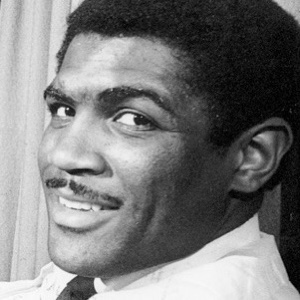
WBA Champion
Ernie Terrell held the WBA heavyweight championship from 1965 to 1967 and earned his place through victories over leading contenders. His long left jab and ability to tie up opponents made him difficult to beat, even when his fights were less pleasing to spectators than the performances of Muhammad Ali. The loss to Ali is his best-known night, but it should not obscure the championship he won, the two successful defences he made or the demanding route that brought him there.
Ernie Terrell in a black-and-white portrait. His WBA reign lasted from March 1965 to February 1967.
Born in Belzoni, Mississippi, on April 4, 1939, Terrell became closely associated with Chicago. Before turning professional in 1957, he won the Chicago Golden Gloves Tournament of Champions and the Intercity Golden Gloves at light heavyweight.
At roughly six feet six inches, he was unusually tall for the heavyweight division of his period. Height alone did not explain his success. He developed a jab that used his reach and a method of controlling close exchanges that made it difficult for shorter opponents to settle into a comfortable attacking rhythm.
His style was practical rather than spectacular. He could score from outside, frustrate an opponent’s attempt to close the distance and make a fight proceed on terms that suited his frame.
Cleveland Williams stopped Terrell in the seventh round in 1962. Terrell returned to beat Williams by a ten-round split decision in 1963, an important reversal against a powerful, established heavyweight.
He also defeated Zora Folley and stopped future light-heavyweight champion Bob Foster before reaching his own world-title opportunity. These results gave his candidacy a substantial foundation. He was not simply a tall fighter selected to fill a vacancy.
The Williams rematch also demonstrated improvement under pressure. Terrell could lose to a dangerous opponent, adjust and produce a different result. His route to the championship required effective boxing against men with the skill or power to punish mistakes.

The WBA stripped Ali of its title after he agreed to a return bout with Sonny Liston. Terrell and Eddie Machen were matched for the vacant belt at Chicago’s International Amphitheatre on March 5, 1965.
Terrell won a unanimous decision over fifteen rounds. The contest was marked by clinching and awkward exchanges, and the crowd did not warmly receive the spectacle. His jab nevertheless did enough scoring work to secure the official result.
Former heavyweight champion Joe Louis had helped Terrell prepare. That association linked him to an earlier championship generation, but it did not make the performance a showcase of Louis’s attacking style. Terrell succeeded with his own more restrictive approach.
The WBA victory made him a recognised titleholder. Ali remained the lineal champion and held the WBC belt, so Terrell was not the undisputed heavyweight champion. The division’s split recognition would ultimately require a meeting between them.

Terrell defended against George Chuvalo at Maple Leaf Gardens in Toronto on November 1, 1965. He won a fifteen-round unanimous decision, using his jab against a durable challenger who wanted to get close and work.
It was a successful defence on Chuvalo’s home ground. The lack of a knockout did not reduce the title’s importance or the difficulty of dealing with such a persistent opponent. Terrell’s task was to win rounds and retain control, rather than satisfy expectations of a dramatic finish.
On June 28, 1966, he made his second successful defence by outpointing Doug Jones over fifteen rounds at Houston’s Sam Houston Coliseum. Jones had previously given Ali a demanding contest. Terrell’s victory kept the WBA belt in his hands and strengthened the case for settling the divided championship in the ring.
Terrell met Muhammad Ali at the Houston Astrodome on February 6, 1967. Before the fight, Terrell’s use of Ali’s former name, Cassius Clay, had made the rivalry intensely personal. Ali insisted that his chosen name be respected.
Inside the ring, Ali’s speed, combinations and ability to control distance were decisive. He repeatedly taunted Terrell during the contest, and the fight became associated with the question “What’s my name?” Terrell endured fifteen rounds but could not impose the jab-and-clinch pattern that had served him against earlier opponents.
Ali won a clear unanimous decision and regained the WBA belt, unifying it with the championship he already held. Terrell’s toughness deserves recognition, but the result was not a narrow or disputed points defeat. He was comprehensively outboxed.
The personal conflict has sometimes swallowed the rest of Terrell’s biography. His title reign, contender wins and two defences supply the necessary context for why this was a championship unification rather than simply a famous champion punishing an anonymous challenger.
After Ali was stripped of the championship over his refusal of military induction in 1967, Terrell entered the WBA’s eight-man elimination tournament. Thad Spencer defeated him by a twelve-round unanimous decision in August, ending that route back to the belt.
Terrell later returned to competition and recorded further victories, but he did not regain a world championship. He retired in 1973 after losses to Chuck Wepner and Jeff Merritt. His final record was 46 wins and nine defeats, with 21 knockout victories.
Those later defeats contrasted with his strongest years as a contender and champion. Terrell had earned his place among the leading heavyweights and held a major title through three fifteen-round victories.
Terrell’s best boxing depended on the jab, reach and interruption of an opponent’s rhythm. His clinching could make a contest untidy and unpopular, but it was part of a deliberate method rather than evidence that he lacked skill.
He belonged to a period when heavyweight contenders could remain prominent through patient, difficult fights against one another. His victories over Williams, Folley, Machen, Chuvalo and Jones are a better measure of his standing than an assessment based only on the Ali loss.

Music was another important part of Terrell’s life. He performed as well as boxed, and his sister Jean became lead singer of the Supremes after Diana Ross. Boxing and music gave Terrell two distinct forms of public life.
Terrell died on December 16, 2014, aged 75. His legacy rests on an accomplished and sometimes overlooked championship career: a contender who recovered from setbacks, won the WBA belt and defended it against credible opposition before encountering the exceptional ability of Ali.

Top Heavyweight Boxing covers the past, present and future of boxing's premier division. Copyright© 2026
Powered by Digital Dynasty Design