Toronto, ON, Canada - George Chuvalo was a Canadian heavyweight boxing legend whose extraordinary toughness carried him through one of the strongest eras in the division’s history. During a professional career spanning 93 fights, Chuvalo faced Muhammad Ali, Joe Frazier, George Foreman, Floyd Patterson, Ernie Terrell and Jerry Quarry—and was never knocked off his feet.
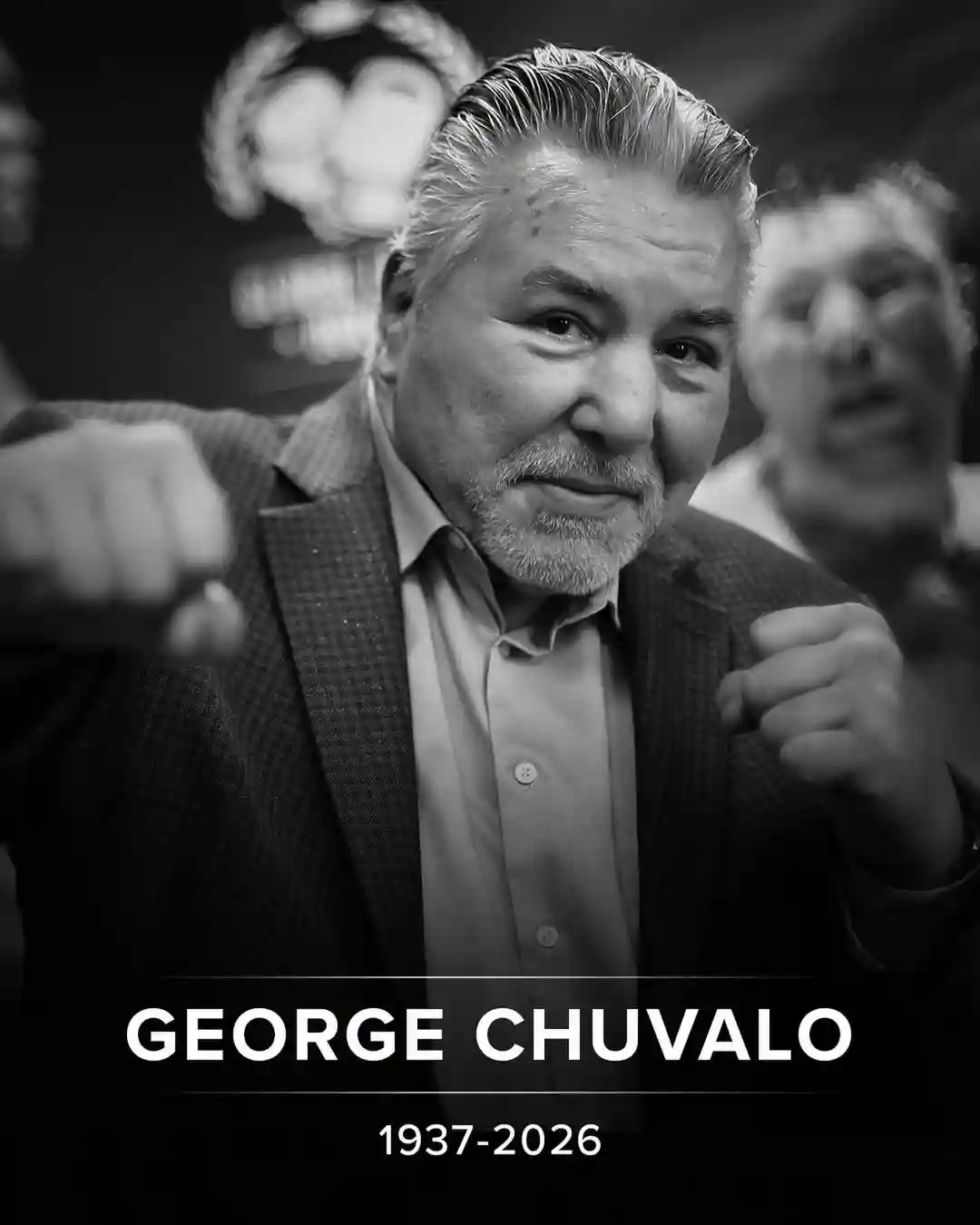
George Chuvalo, the five-time Canadian heavyweight champion and two-time world heavyweight title challenger, passed away at 89 years old - TSN
A five-time Canadian heavyweight champion and two-time challenger for the world title, Chuvalo became a national sporting icon. His strength outside the ring ultimately proved even more remarkable, as he turned devastating family tragedy into a lifelong campaign against drug abuse.
From Toronto’s Junction to the Canadian Championship
George Louis Chuvalo was born in Toronto on September 12, 1937, to Croatian immigrant parents. He grew up in the city’s working-class Junction neighbourhood, where his physical strength and willingness to fight quickly became apparent.
Chuvalo compiled a perfect amateur record before turning professional in 1956. Strong, aggressive and physically mature from the beginning, he developed into a relentless pressure fighter who attacked the body and willingly absorbed punches to land his own.
On September 15, 1958, three days after his 21st birthday, Chuvalo knocked out James J. Parker in the opening round at Maple Leaf Gardens to win the vacant Canadian heavyweight championship. It was the beginning of a long association with the national title, which Chuvalo would hold on five occasions across two decades.
Becoming a World-Class Heavyweight
Chuvalo’s rise was not uninterrupted. He engaged in a fiercely contested domestic rivalry with Montreal heavyweight Bob Cleroux, meeting him three times and losing two close decisions while winning one.
Those setbacks did not prevent Chuvalo from entering the international rankings. He defeated a succession of respected heavyweights, including Yvon Durelle, Alex Miteff, Mike DeJohn and Willie Besmanoff.
One of his finest victories came in October 1964, when he stopped highly rated contender Doug Jones in the 11th round at Madison Square Garden. The win established Chuvalo as a legitimate world-title challenger and placed him firmly among the leading heavyweights of the period.
Patterson, Terrell and the World Championship
In February 1965, Chuvalo met former two-time heavyweight champion Floyd Patterson at Madison Square Garden. The two fought at a furious pace for 12 rounds, with Patterson earning a unanimous decision after an exceptionally competitive and punishing contest.
The battle was selected as The Ring magazine’s Fight of the Year and became one of the defining performances of Chuvalo’s career. Even in defeat, he demonstrated the pressure, body punching and exceptional durability that made him such a difficult opponent.
Later that year, Chuvalo challenged Ernie Terrell for the WBA heavyweight championship in Toronto. Terrell used his considerable height and reach to win a 15-round decision, although Chuvalo and many Canadian observers believed he had done enough to earn the verdict.
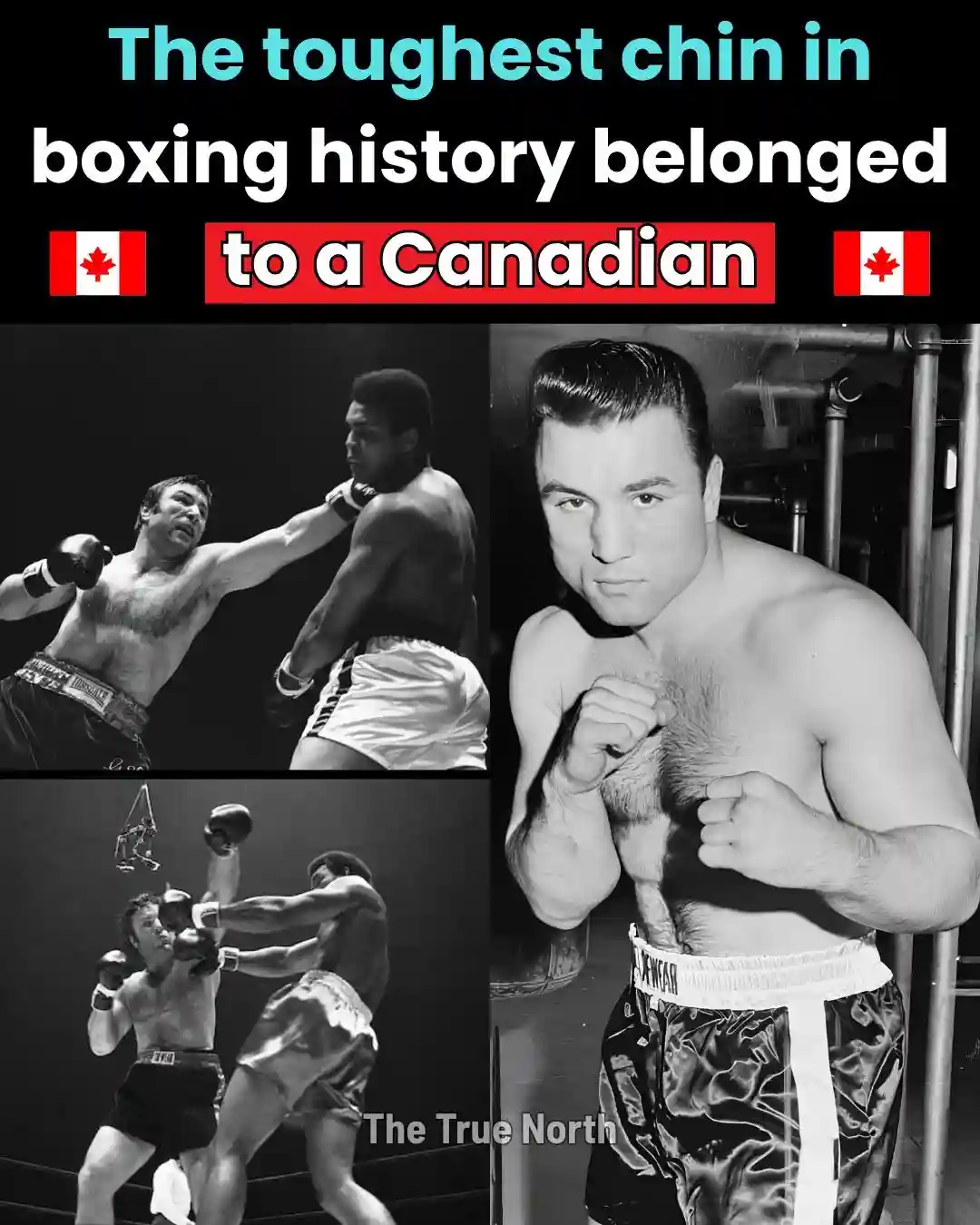
The Canadian who took Muhammad Ali's best punches and never went down - The True North
Fifteen Rounds with Muhammad Ali
Chuvalo received another championship opportunity when he was called to face Muhammad Ali at Maple Leaf Gardens on March 29, 1966. He accepted the fight on only 17 days’ notice after Terrell withdrew.
Ali predicted that he would become the first fighter to knock Chuvalo down, but the Canadian refused to cooperate. For 15 rounds, Chuvalo marched forward, absorbing Ali’s rapid combinations while directing a punishing attack toward the champion’s body.
Muhammad Ali vs. George Chuvalo II (1972) showcased the brilliance of The Greatest against one of boxing’s toughest warriors. It was a battle of skill, endurance, and determination during Ali’s journey back to the top.#Boxingpic.twitter.com/JKao66xzMv
Ali won a clear unanimous decision, but Chuvalo remained standing until the final bell. Afterward, Ali described him as the toughest man he had ever fought.
Chuvalo later joked that while Ali went to the hospital after the fight, he went dancing with his wife. The performance transformed him from a Canadian favourite into an internationally recognized symbol of toughness.
Frazier, Quarry and Foreman
Chuvalo continued facing the most dangerous heavyweights in the world. In July 1967, he met the relentless Joe Frazier at Madison Square Garden. Frazier fractured Chuvalo’s orbital bone, causing the fight to be stopped in the fourth round. Chuvalo remained upright and protested the decision.
#OnThisDay - In 1967, Joe Frazier defeated George Chuvalo by 4th round TKO. Smokin’ Joe becomes the first of an eventual two to stop the iron-chinned Canadian. pic.twitter.com/S7OsRRG0YI
In December 1969, he returned to Madison Square Garden and scored one of his greatest victories against Jerry Quarry. After dropping Quarry in the seventh round, Chuvalo watched as his opponent rose just after the referee completed the count. The knockout restored Chuvalo’s position among the leading contenders.
Six months later, he faced the emerging George Foreman. Foreman unleashed a brutal assault and the contest was stopped in the third round, but once again Chuvalo never touched the canvas.
The fights with Frazier and Foreman were the only two occasions on which Chuvalo failed to complete the scheduled distance during his entire 22-year professional career. Even against two of the hardest punchers in heavyweight history, he was stopped on his feet.
A Second Fight with Ali
Chuvalo earned another meeting with Ali in May 1972 in Vancouver. Although no world championship was at stake, the fight attracted enormous attention throughout Canada.
Once again, Ali promised to accomplish what no previous opponent had managed and knock Chuvalo down. Once again, Chuvalo remained standing.
Ali controlled much of the action and won a unanimous decision after 12 rounds, but Chuvalo continued pressing forward until the final bell. Six years after their first meeting, his durability remained intact.
Later that year, Chuvalo added another notable victory by defeating former world-title challenger Cleveland Williams over ten rounds.
Chuvalo initially stepped away from boxing in 1973 but returned four years later and regained the Canadian heavyweight championship. He fought for the final time in December 1978, retiring with a record of 73-18-2 (64 KOs).
His record included victories over Doug Jones, Jerry Quarry, Cleveland Williams, Mike DeJohn, Alex Miteff and Yvon Durelle. He competed against six heavyweight champions and spent much of his career ranked among the world’s leading contenders.
Most remarkably, Chuvalo was never knocked down in 93 professional fights. His ability to withstand punches from Ali, Frazier, Foreman and many other leading heavyweights established his reputation as the owner of one of the greatest chins in boxing history.
Chuvalo faced suffering outside the ring that dwarfed anything he endured inside it. Three of his sons became addicted to heroin. Jesse died by suicide in 1985, George Lee died from an overdose in 1993, and Steven died from an overdose in 1996. Chuvalo’s wife, Lynne, died by suicide only days after the death of George Lee.
Rather than allow those losses to destroy him, Chuvalo began travelling across Canada to speak with young people about addiction. Through his Fight Against Drugs campaign, he shared his family’s story with schools, community groups and correctional institutions.
His advocacy earned him appointment as a Member of the Order of Canada in 1998. He was also inducted into Canada’s Sports Hall of Fame, received a star on Canada’s Walk of Fame and was presented with the key to the City of Toronto.
Legacy
George Chuvalo died on September 12, 2026—his 89th birthday—following a lengthy battle with dementia. His passing brought tributes from across Canada and throughout the boxing world.
Chuvalo never captured the world heavyweight championship, but his place in boxing history was never dependent upon a belt. He fought nearly every important heavyweight available to him, challenged for the championship twice and remained standing through every one of his 93 professional contests.
To Canadians, he was more than a fighter. George Chuvalo represented toughness, perseverance and the ability to keep moving forward when life delivered its hardest blows. His granite chin made him famous, but the courage with which he confronted unimaginable personal loss became his greatest legacy.