WORLD Heavyweight Boxing

Month
Date
,
Year
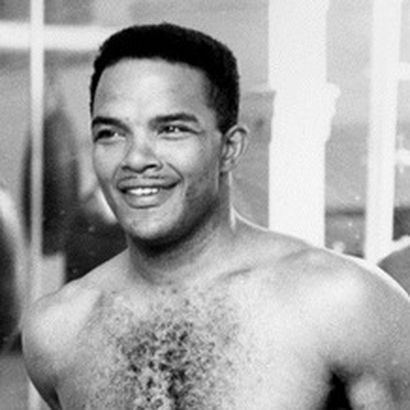
Legendary Contender
Eddie Machen was one of the leading heavyweight contenders of the late 1950s and early 1960s, a skilled boxer whose record was built against unusually demanding opposition. He defeated established names such as Nino Valdes, Joey Maxim and Tommy Jackson, went the distance with Sonny Liston and eventually fought Ernie Terrell for the vacant WBA heavyweight title.
Machen never became world champion, but his career belongs in the history of the division for more than the fighters who defeated him. His rise, recovery from a devastating loss to Ingemar Johansson and later victory over Jerry Quarry show both his ability and the difficulty of sustaining a career among elite heavyweights.
Eddie Machen, a leading heavyweight contender whose career included victories over established opponents and an emerging Jerry Quarry.
Born on June 15, 1932, in Redding, California, Machen entered professional boxing with limited amateur experience. His early development did not follow a long sequence of amateur championships. He turned professional in 1955 and quickly proved capable of competing beyond the usual novice level.
Working with manager Sid Flaherty, Machen advanced through increasingly experienced opposition. Victories over former light-heavyweight champion Joey Maxim, powerful heavyweight Nino Valdes and contender Tommy Jackson helped establish him nationally. Those opponents represented different problems: championship experience, physical strength and unconventional pressure.
He won his first 24 professional contests before a 1958 draw with Zora Folley. The draw left him unbeaten and still firmly in the championship picture. By then, Machen had earned his standing through results against recognised contenders rather than a record assembled entirely against inexperienced opposition.
On September 14, 1958, Machen faced Ingemar Johansson at Nya Ullevi in Gothenburg, Sweden. Both men were pursuing a world-title opportunity. Johansson was not yet world heavyweight champion; Floyd Patterson held that championship.
Johansson’s right hand ended the contest in the first round. Machen was knocked down repeatedly and suffered his first professional defeat. The result was decisive and altered the immediate direction of the division: Johansson went on to challenge Patterson and win the championship in 1959.
For Machen, the loss was especially damaging because it came at a time when he was close to the sport’s most valuable opportunity. A proposed return contest did not materialise before Johansson fought Patterson. Machen had to rebuild his position while the man who had beaten him moved directly into the championship.
The Johansson fight also exposed the limits of any description of Machen as an invulnerable defensive boxer. His skill was real, but an opponent’s timing and power could still overturn years of progress in a single exchange.
Machen met Sonny Liston on September 7, 1960, at Sicks’ Stadium in Seattle. Liston was a leading contender, not yet the world champion. Their twelve-round contest was another meeting between men attempting to force their way into a fight with Patterson.
Liston won a unanimous decision. Machen used movement, defensive judgement and counterpunching to remain competitive in stretches, but Liston’s pressure and effective work secured the verdict. Going the distance against such a dangerous opponent demonstrated Machen’s toughness without turning a clear defeat into a moral victory on the scorecards.
Machen said afterwards that a shoulder injury had restricted his right hand. That was his explanation for part of the performance, rather than grounds to disregard the official result. The fight remains significant because it tested his boxing ability against the division’s most intimidating emerging heavyweight.
On July 1, 1961, Machen faced Harold Johnson in Atlantic City. Johnson was a light-heavyweight champion competing above his title division. The bout was a ten-round, non-title contest, not an NABF heavyweight championship fight.
Johnson won on points. Their meeting showed that Machen’s challenges came from skilled smaller men as well as physically imposing heavyweights. The result belonged to the competitive contender circuit of the period, where a defeat could interrupt progress without immediately ending a fighter’s relevance.
Machen also shared the ring with Cleveland Williams and later faced Floyd Patterson. Patterson outpointed him over twelve rounds in Sweden on July 5, 1964, after Patterson’s own world-title reign had ended. It was not the championship opportunity Machen had once hoped to receive.
Machen’s world-title chance finally came on March 5, 1965, against Ernie Terrell at the International Amphitheatre in Chicago. They fought for the vacant WBA heavyweight championship after the organisation withdrew recognition from Muhammad Ali over his agreement to a Liston rematch.
Terrell was therefore competing to win the belt, rather than defending an existing championship. Ali remained recognised elsewhere, so the contest belonged to a divided championship landscape. Winning the WBA title would not have made either participant universally accepted as the undisputed heavyweight champion.
Terrell’s height, reach and jab presented a difficult problem for Machen. Frequent holding disrupted the action, and the veteran struggled to turn his attempts to work inside into enough effective scoring. Terrell won the fifteen-round unanimous decision.
The loss ended Machen’s only world heavyweight title challenge. It also illustrates why his career must be assessed as that of an accomplished contender and challenger, rather than a champion whose reign has been overlooked.
In 1966, Machen defeated the unbeaten young Jerry Quarry over ten rounds in Los Angeles. It was Quarry’s first professional defeat and one of the most important victories of Machen’s later career.
Quarry was developing into the fighter who would become a major contender, while Machen had already accumulated years against leading heavyweights. The veteran’s win showed that experience and craft could still overcome an opponent’s youth and momentum.
That result deserves a prominent place in Machen’s biography. A career described only through the Johansson, Liston and Terrell defeats misses the wins that established his ability and the occasions when he remained a serious obstacle to the next generation.
On November 21, 1966, Machen faced the unbeaten Joe Frazier at Los Angeles’s Olympic Auditorium. Frazier was still rising toward world championship status, and his relentless pressure proved too much for the older contender.
Frazier knocked Machen down early and repeatedly forced him into punishing exchanges. Machen continued fighting and had moments of resistance, but the referee stopped the contest in the tenth round. Frazier’s performance announced a formidable new heavyweight while revealing how difficult continued competition had become for Machen.
Machen’s professional career ended in 1967. Personal illness and financial difficulties had complicated his later years, but they should not replace the boxing record as the centre of his story. He died in San Francisco on August 8, 1972, after a fall from an apartment window. The circumstances should not be assigned a definite motive without reliable evidence.
Machen’s standing rests on his competitive record across a changing heavyweight era. He rose quickly, beat established opponents, recovered from setbacks and remained capable of a notable victory late in his career.
His boxing depended on positioning, movement and well-timed punches, although the division’s strongest opponents could force him away from the contest he wanted to fight. The contrast between his successes and defeats makes him a useful example of how technical ability interacts with power, size, pressure and timing.
Eddie Machen was never a world champion. He was a leading contender whose opponents, victories and missed opportunities place him firmly within the history of heavyweight boxing.

Top Heavyweight Boxing covers the past, present and future of boxing's premier division. Copyright© 2026
Powered by Digital Dynasty Design