Joe Frazier was an Olympic gold medalist, an undisputed heavyweight champion and the first professional boxer to defeat Muhammad Ali. His pressure, head movement and left hook made him one of the most demanding opponents of a remarkable heavyweight era. The Ali trilogy was central to his career, but Frazier’s championship was built before their first meeting, through victories over established contenders and the unification of a divided title.
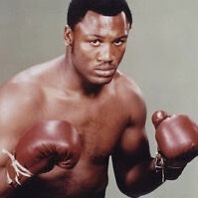
Joe Frazier with raised boxing gloves. His left hook was the best-known weapon in a style built around sustained pressure.
From South Carolina to Olympic gold
Joseph William Frazier was born in Beaufort, South Carolina, on January 12, 1944, the youngest of twelve children in a sharecropping family. He eventually settled in Philadelphia, where trainer Yank Durham helped develop his boxing.
Frazier lost to Buster Mathis at the 1964 United States Olympic Trials and traveled to Tokyo as an alternate. A hand injury forced Mathis to withdraw, giving Frazier his opportunity. He advanced through the heavyweight tournament and defeated Germany’s Hans Huber by a 3–2 decision in the final to win gold.
The Olympic achievement did not immediately remove the financial difficulties of his early life. His professional career began in 1965 with Durham’s guidance and backing from the Philadelphia-based Cloverlay group. The city became inseparable from his identity as a fighter.
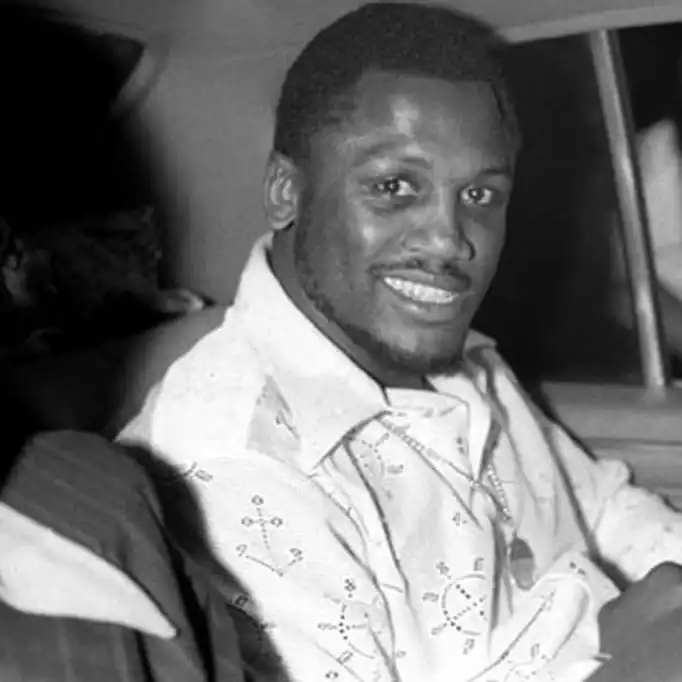
An archival portrait of Frazier away from the ring.
A contender shaped by pressure and endurance
Frazier’s approach demanded that he close distance against taller opponents. He slipped and bobbed beneath punches, worked the body and returned repeatedly with his left hook. The aim was to make an opponent fight at a pace and range that became increasingly uncomfortable.
One of his earliest major tests came against Oscar Bonavena at Madison Square Garden on September 21, 1966. Bonavena dropped him twice in the second round, but Frazier recovered and won a ten-round split decision. The contest exposed his vulnerability to a strong, awkward opponent while demonstrating his ability to continue effectively after serious trouble.
Victories over Doug Jones and George Chuvalo helped establish him among the leading contenders. By the end of 1967, he was unbeaten as a professional and ready for championship competition.
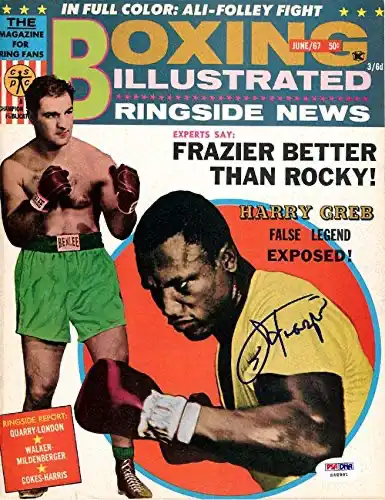
The June 1967 Boxing Illustrated cover reflected the attention Frazier was attracting before his first recognized heavyweight title.
The Mathis title and unification against Jimmy Ellis
After Muhammad Ali was stripped of championship recognition and prevented from boxing in 1967, the heavyweight title became divided. Frazier did not enter the WBA’s elimination tournament. Instead, he fought Mathis at Madison Square Garden on March 4, 1968, for the vacant championship recognized by the New York State Athletic Commission.
Mathis’s size made the early rounds difficult, but Frazier’s body attack gradually wore him down. A left hook put Mathis on the canvas in the eleventh round, and the referee stopped the fight after he rose. Frazier now held a recognized share of the world championship, while Jimmy Ellis held the WBA belt.
The division was unified when they met at the Garden on February 16, 1970. Frazier dropped Ellis twice in the fourth round. Ellis’s corner stopped the contest before the fifth began, leaving Frazier with the WBA and WBC championships and undisputed recognition. His 1968 title and 1970 unification were separate stages of that rise.
Beating Ali in the Fight of the Century
Frazier defended against Ali at Madison Square Garden on March 8, 1971. Both were unbeaten. Ali had returned from his enforced absence, while Frazier had established himself as the active champion. Their meeting was a contest between two legitimate heavyweight claims, with enormous attention extending beyond boxing.
Ali’s speed and combinations gave Frazier problems early, but the champion continued closing distance and attacking the body. Frazier hurt Ali with his left hook during the later rounds and landed the defining knockdown early in the fifteenth.
Ali got up and completed the fight. Frazier won by unanimous decision over fifteen rounds, retaining his championship and handing Ali his first professional defeat. The knockdown was decisive imagery, but the result was a points victory, not a knockout.
The win remains the clearest measure of Frazier at his best: he sustained pressure across the championship distance against an opponent with exceptional speed, durability and technical skill.
George Foreman ends the championship reign
Frazier remained champion until January 22, 1973, when he faced George Foreman at National Stadium in Kingston, Jamaica. Foreman’s strength, reach and heavy punches presented a very different problem from Ali’s movement.
Foreman knocked Frazier down three times in the first round and three more in the second before the referee stopped the contest. It was Frazier’s first professional loss. His determination could not compensate for the damage he was taking as he tried to move into range.
The defeat ended his undisputed reign, but it did not end his relevance among the leading heavyweights. His remaining career would include another title challenge against Ali and a second meeting with Foreman.
The Ali rematch and the Thrilla in Manila
Ali won their second fight by unanimous decision over twelve rounds at Madison Square Garden on January 28, 1974. It was for the NABF heavyweight belt, not the world championship, which Foreman still held. Ali used movement and clinching to limit Frazier’s attack, and the rivalry stood at one victory each.
The third meeting took place at Araneta Coliseum in Quezon City, Metro Manila, on October 1, 1975. Ali had regained the world championship from Foreman. Frazier was now the challenger, and their bitter rivalry culminated in a punishing fifteen-round title contest.
Ali began quickly, but Frazier’s body attack and hooks brought him strongly into the middle rounds. As the fight progressed, both absorbed extraordinary punishment. Ali finished the later rounds more effectively, while swelling increasingly obstructed Frazier’s vision.
Trainer Eddie Futch stopped the fight after fourteen completed rounds, refusing to send Frazier out for the fifteenth. Ali retained the title. The “Thrilla in Manila” was a defeat for Frazier, but his sustained resistance made it one of the most demanding defenses of Ali’s career.
Final return, Philadelphia gym and lasting legacy
Frazier’s final appearance came in Chicago on December 3, 1981, when he returned after a long absence to draw over ten rounds with Floyd Cummings. He finished with 32 wins, four losses and one draw, including 27 knockout victories. All four defeats came against Ali or Foreman.
Beyond competition, his Philadelphia gym became an important part of his boxing legacy. The facility opened as Cloverlay Gym in 1968; he later bought out its shareholders and renamed it Joe Frazier’s Gym. Fighters including Bert Cooper and his son Marvis developed within that environment.
Frazier entered the International Boxing Hall of Fame in 1990. He died of liver cancer on November 7, 2011, aged 67. His place in heavyweight history rests on his championship achievements as well as his rivalry with Ali: Olympic gold, title unification and a style capable of testing the finest opponents of his generation.
Frazier away from competition, in an archival image shared by Mad.aboutboxing.
What makes a boxing match unforgettable? Explore the rivalries, drama, historic moments, and performances that have shaped the sport's greatest contests.
In the end, the path to undisputed greatness is fraught with challenges and obstacles, but for those who dare to dream, the rewards are beyond measure.