HEAVYWEIGHT
BOXINGTHE DIVISION HEADQUARTERS HEAVYWEIGHTBOXING.COM
BOXINGTHE DIVISION HEADQUARTERS HEAVYWEIGHTBOXING.COM
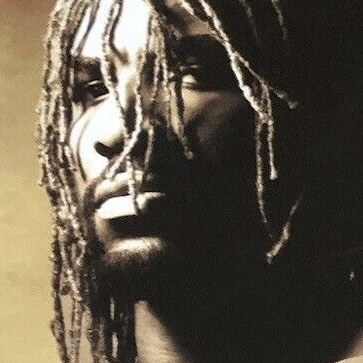
WBO Champion
Shannon Briggs reached the heavyweight championship picture twice, in very different circumstances. In 1997 he defeated George Foreman by a disputed majority decision to take the lineal title. Nine years later, a last-round stoppage of Siarhei Liakhovich gave him the WBO championship. Between those moments, and through later comeback campaigns, Briggs remained a heavyweight whose explosive power made him dangerous even when his activity and endurance did not match his ambitions.
Shannon Briggs, former lineal and WBO heavyweight champion.
Born on December 4, 1971, Briggs grew up in Brooklyn and developed into a prominent American amateur heavyweight before turning professional in 1992. Nicknamed “The Cannon,” he built his early reputation on fast starts, hand speed and the ability to finish opponents before a fight settled into a rhythm.
That approach carried him through an unbeaten opening run, but Darroll Wilson stopped him in the third round in March 1996. The defeat interrupted his rise and showed the limits of treating knockout power as a guarantee of success. Briggs rebuilt his position and eventually secured a meeting with Foreman, the veteran whose 1994 victory over Michael Moorer had restored him to the heavyweight championship.
Briggs faced Foreman in Atlantic City on November 22, 1997. Foreman was no longer holding the WBA or IBF belts, but retained the lineal championship claim tracing through his victory over Moorer. Their contest therefore needs to be distinguished from a fight for those sanctioning-body titles.
Briggs used movement and bursts of punches against Foreman's steady advance and jab. After twelve rounds, the official result was a majority decision for Briggs: two judges favoured him and the third scored a draw. The decision drew widespread criticism, with both HBO's unofficial scorer and an Associated Press scorecard favouring Foreman.
The verdict remained the official result. It gave Briggs the lineal title, while the controversy became an inseparable part of the victory's history. His first championship chapter was consequently shaped by both the official victory and the lasting debate over the verdict.

On March 28, 1998, Briggs challenged WBC champion Lennox Lewis at Atlantic City's Boardwalk Convention Hall. The contest brought Briggs's lineal claim together with Lewis's WBC title and gave him a chance to turn his disputed Foreman victory into a more convincing championship position.
Briggs hurt Lewis early with aggressive combinations and a left hook, forcing the champion to recover his balance and composure. Lewis then established his jab and superior control of distance. His right hands and combinations began to break Briggs down, and repeated knockdowns shifted the fight decisively.
Lewis won by technical knockout in the fifth round. Briggs's early success was real, but it was Lewis who retained the WBC title and took the lineal championship. Briggs had shown he could threaten Lewis, but could not sustain that success once the champion took control.

Briggs continued competing after the Lewis defeat. His route back to a major title was not a continuous march through the division's leading contenders: setbacks, including a decision loss to Jameel McCline in 2002, were followed by a rebuilding campaign against less prominent opposition.
Heavyweight championship recognition during these years was divided among different titleholders, with belts changing hands among American and European fighters. Briggs's eventual opportunity came against Belarus's Siarhei Liakhovich, who had won the WBO title from Lamon Brewster in 2006. It was a chance to regain championship standing through a different route from his earlier lineal reign.
On November 4, 2006, at Chase Field in Phoenix, Briggs challenged Liakhovich for the WBO title. He entered the twelfth round behind on all three official scorecards. With the contest nearly over, Briggs scored two knockdowns, the second sending Liakhovich through the ropes.
The referee stopped the fight at 2:59 of the final round. Briggs had secured the WBO championship with one second remaining, an unusually late reversal that highlighted the danger of his punching power even at the end of a slow-paced fight.
Briggs lost the WBO title in his first defence, against Sultan Ibragimov on June 2, 2007, in Atlantic City. Ibragimov's cautious movement, timing and southpaw boxing limited Briggs's opportunities to land decisive counters. The challenger won a unanimous decision over twelve rounds.
Another major-title opportunity arrived on October 16, 2010, when Briggs faced Vitali Klitschko for the WBC championship in Hamburg. Klitschko controlled the bout with his reach and sustained punching. Briggs completed the twelve rounds but lost a wide unanimous decision and required hospital treatment afterwards.
Briggs's resistance carried him to the final bell in a contest dominated by the champion. Klitschko's command of the fight was reflected in both the action and the official scorecards.
Briggs resumed professional competition in 2014 and built another run of victories. His public persona became closely associated with the phrase “Let's go champ,” and he pursued attention around potential meetings with Wladimir Klitschko and David Haye. Those campaigns produced extensive publicity without a completed fight against either man.
His later results included a first-round stoppage of Emilio Ezequiel Zárate in London on May 21, 2016. A planned 2017 meeting with Fres Oquendo for the WBA's secondary heavyweight title did not take place. The WBA subsequently imposed a six-month suspension after a positive doping test, as recorded in its own disciplinary announcement.
Briggs's career spans the Foreman and Lewis era through the years dominated by the Klitschko brothers. His record includes a lineal championship victory and a separate WBO reign, alongside clear defeats in other title opportunities. His lasting heavyweight significance comes from those contrasting results: early-round danger, a remarkable late championship finish and the difficulty of sustaining success against elite opponents over the full distance.

Top Heavyweight Boxing covers the past, present and future of boxing's premier division. Copyright© 2026
Powered by Digital Dynasty Design