July 18, 2024
via
via
7 UK Heavyweight Boxers Who Left a Mark
7 UK Heavyweight Boxers Who Left a Mark
The United Kingdom was the birthplace of boxing and it's connection to the heavyweight division is timeless.

Undisputed Champion
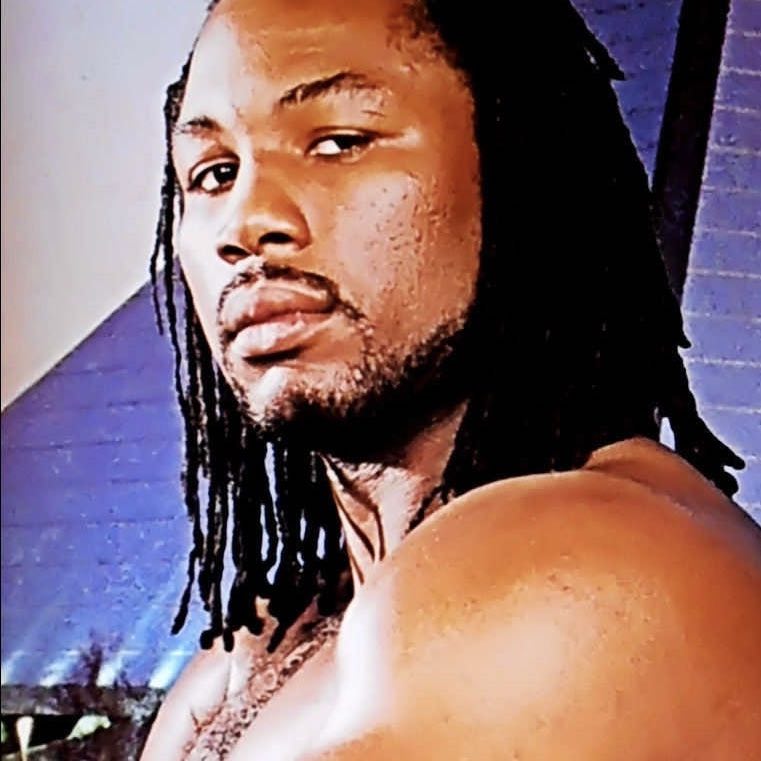
Lennox Lewis became undisputed heavyweight champion in 1999 and retired as a reigning world champion in 2004. His career combined Olympic gold, three WBC title reigns and victories over many of the strongest heavyweights of his generation. His two professional defeats were both avenged, and he also won the rematch following his draw with Evander Holyfield.
Lewis's success was built on more than his size. A long jab, powerful right hand and increasingly assured work at close range allowed him to adapt to very different opponents. His championship story includes setbacks, recovery and a final difficult defence, rather than an uninterrupted sequence of effortless victories.
Born in London on September 2, 1965, to Jamaican parents, Lennox Claudius Lewis moved to Kitchener, Ontario, at the age of twelve. Canada was where he developed as an amateur, while his British birthplace and Jamaican family background remained important parts of his identity.
Lewis represented Canada at the 1984 Los Angeles Olympics, losing a decision to eventual super-heavyweight gold medallist Tyrell Biggs. He continued as an amateur rather than turning professional immediately. Four years later in Seoul, he stopped Riddick Bowe in the second round of the Olympic final to win super-heavyweight gold.
The amateur years supplied competition against different styles and a foundation for a long professional career. Olympic success did not make his later rivalry with Bowe a completed professional contest: the two never met in the professional ring.
Lewis turned professional in 1989 and built his career in Britain. Regional titles and victories over established opponents moved him from Olympic prospect to world contender. He won the European heavyweight championship in 1990 and stopped unbeaten Gary Mason in 1991 to take the British title.
His most important breakthrough came against Donovan “Razor” Ruddock on October 31, 1992. Ruddock had given Mike Tyson two demanding fights, but Lewis knocked him down repeatedly and stopped him in the second round of a WBC eliminator. The result showed that the young contender's right hand could decide a fight against a proven heavyweight.
After Bowe defeated Holyfield for the undisputed championship, negotiations for a mandatory defence against Lewis failed. Bowe relinquished the WBC belt, and the organisation recognised Lewis as its champion in December 1992. Lewis's first world title therefore came by elevation after an eliminator, not by a professional victory over Bowe.
Lewis defended successfully against Tony Tucker, Frank Bruno and Phil Jackson. Those contests gave him championship experience, but his development remained incomplete. His power could sometimes encourage him to rely on a decisive right hand before establishing full control of an opponent.
Oliver McCall stopped him in the second round in London on September 24, 1994. Lewis rose after the knockdown but the referee ended the contest. The result exposed the consequences of being caught out of position by a compact counter.
Lewis subsequently began working with Emanuel Steward. Their partnership developed his balance, use of the jab and ability to impose his height and reach consistently. The aim was not to remove his punching power, but to put it within a more reliable method of controlling a fight.
Victories over Tommy Morrison and Ray Mercer helped Lewis rebuild. Morrison was stopped in 1995; Mercer took him through a demanding ten-round contest in 1996, which Lewis won by majority decision. The contrasting fights required both finishing ability and the endurance to work through a competitive distance bout.
On February 7, 1997, Lewis met McCall again, this time for the vacant WBC title. McCall became unwilling to engage and the referee stopped the contest in the fifth round. Lewis regained the championship, although the unusual ending should not be described as a conventional exchange in which he knocked McCall unconscious.
Lewis's second reign included a first-round victory over Andrew Golota and further defences before the opportunity to unify against Holyfield. He was becoming more comfortable choosing between a controlled long-range contest and an immediate attack when an opponent left a clear opening.
Lewis brought the WBC title to Madison Square Garden on March 13, 1999; Holyfield held the WBA and IBF belts. Lewis controlled much of the contest with his jab and straight punches, but the official result was a split draw. The verdict was widely criticised, and the division remained without a unified champion.
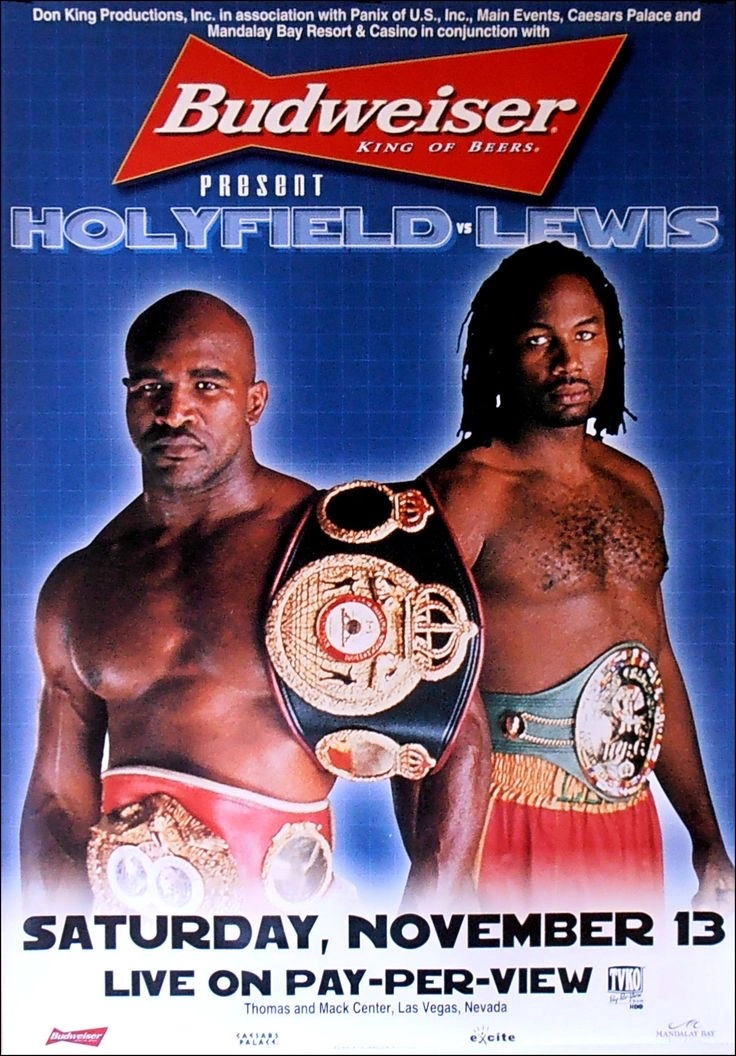
Their rematch took place in Las Vegas on November 13, 1999. Holyfield offered a more competitive performance, but Lewis won by unanimous decision over twelve rounds. He united the WBC, WBA and IBF championships and became the undisputed heavyweight champion of the three-belt era.
The WBA stripped Lewis of its title in 2000, and he relinquished the IBF belt in 2002. Lewis did not retain all three belts until retirement. His recognised standing as the leading heavyweight and his possession of individual organisational titles need to be distinguished when describing the later years.
Lewis stopped Michael Grant and Francois Botha in 2000, then defeated David Tua by unanimous decision. Against Tua, his jab and distance control neutralised a dangerous left hook. The performance showed that a clear points victory could be just as authoritative as an early knockout.
On April 22, 2001, in South Africa, Hasim Rahman knocked Lewis out in the fifth round. The champion had been heavily favoured, but Rahman's right hand ended the fight and transferred the WBC and IBF championships. It was a genuine defeat, not an administrative loss of a belt.
Lewis responded in their November 17, 2001 rematch in Las Vegas. He controlled the distance and knocked Rahman out in the fourth round with a forceful left-right combination. The victory began his third WBC reign and completed the reversal of his second professional loss.
Lewis defended against Mike Tyson in Memphis on June 8, 2002. Tyson's early pressure did not develop into sustained control. Lewis established his jab, tied him up when necessary at close range and increasingly landed the right hand as the challenger tired.
An eighth-round knockout completed a decisive victory. Tyson was no longer the fighter of his late-1980s peak, a distinction that matters when assessing the historical comparison. Lewis nevertheless had to defeat the opponent in front of him, and did so with discipline rather than being drawn into an uncontrolled early exchange.
Lewis's last fight came against Vitali Klitschko in Los Angeles on June 21, 2003. Klitschko took the bout at short notice after Lewis's original opponent withdrew, but both men had to adjust their preparations. The challenger made a strong start and led on all three official scorecards through six rounds.
Lewis landed punches that opened serious cuts around Klitschko's left eye. The ringside doctor advised that the contest be stopped after the sixth round, giving Lewis a stoppage victory. The cuts were caused by legal punches; Klitschko's lead at the time did not overturn the official result.
The competitive action and medical ending left demand for a rematch. Lewis instead announced his retirement on February 6, 2004, while still holding the WBC championship. The unresolved sporting question of a second fight should not be turned into a guessed account of what either boxer would certainly have done.
Lewis finished with 41 wins, two losses and one draw, including 32 knockout victories. He entered the International Boxing Hall of Fame in 2009. His ability to win the return fights after every blemish on his professional record is a central part of his achievement.
For many years, Lewis was the division's most recent undisputed champion. That description changed on May 18, 2024, when Oleksandr Usyk defeated Tyson Fury and united the WBA, WBC, IBF and WBO titles. Lewis remains the undisputed champion of 1999; Usyk became the first undisputed heavyweight champion of the four-belt era.
Lewis helped demonstrate how a large heavyweight could combine physical advantages with careful technical development. His jab and right hand were obvious weapons, but the mature fighter's decisions about distance, pace and risk were equally important. The full career shows both the danger of a single lapse and the value of making a convincing correction in the next meeting.

Top Heavyweight Boxing covers the past, present and future of boxing's premier division. Copyright© 2026
Powered by Digital Dynasty Design