HEAVYWEIGHT
BOXINGTHE DIVISION HEADQUARTERS HEAVYWEIGHTBOXING.COM
BOXINGTHE DIVISION HEADQUARTERS HEAVYWEIGHTBOXING.COM
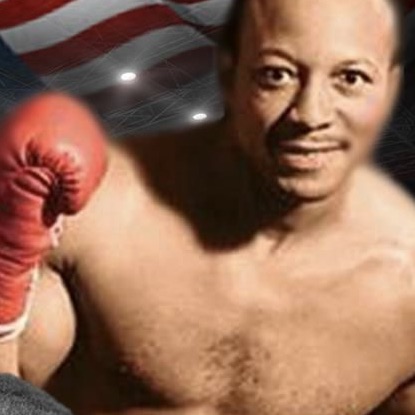
WBA Champion
James “Bonecrusher” Smith won the WBA heavyweight championship by stopping Tim Witherspoon in the first round on December 12, 1986. He had entered the professional ranks at 28 and lost his debut, yet a little over five years later he had beaten Frank Bruno, challenged Larry Holmes and earned a place among the heavyweight titleholders of the 1980s.
His reign was brief, ending against Mike Tyson in March 1987. It was nevertheless a substantial achievement for a late starter whose career repeatedly turned on a single decisive attack. Smith’s story also carries an unusual distinction: the Shaw University graduate became the first world heavyweight boxing champion with a college degree.
Profile photograph: Smith with a red glove and an American flag, reflecting the fighting identity behind his “Bonecrusher” nickname.
James Odell Smith was born on April 3, 1953, in Magnolia, North Carolina. He graduated from Shaw University in Raleigh in 1975 with a degree in business administration, then served in the US Army. Boxing developed during his military service, before his eventual move into the professional sport.
The degree was already part of his life when he became champion, rather than an honour received after sporting success. Shaw recognises him as the first heavyweight boxing champion to enter the ring with a college degree. That background makes his route to a world title distinctive, without needing to exaggerate how quickly he learned the sport.
Smith turned professional on November 5, 1981, at 28. His first opponent, James Broad, stopped him in the fourth round in Atlantic City. The result was a defeat, not the knockout victory attributed to him in some summaries of his career.
He continued boxing and built a winning run. The early years were an apprenticeship rather than a straight passage to elite status: he had to develop while already competing as an adult heavyweight. The nickname promised destructive power, but his progress required enough resilience to keep working after an immediate setback.
Smith met unbeaten Frank Bruno at Wembley Arena in London on May 13, 1984. Bruno had controlled much of the fight and was approaching a points victory when Smith changed the result in the tenth and final round.
A sustained attack trapped Bruno on the ropes and ended with the British heavyweight on the canvas. Smith won by knockout, handing Bruno his first professional defeat. The finish demonstrated why he remained dangerous even when an opponent appeared to be ahead: getting through the early rounds did not remove the threat of his power.
The Bruno victory brought Smith into the world-title picture. It came before his challenge to Holmes later that year, an important point in the chronology of his rise.
On November 9, 1984, Smith challenged Larry Holmes for the IBF heavyweight championship in Las Vegas. Holmes’s experience, jab and ability to manage a long contest presented a different problem from the Bruno fight. Smith was stopped on a cut in the twelfth round of a scheduled 15-round bout.
The loss did not end his ambitions. During 1985 he lost decisions to Tony Tubbs and Tim Witherspoon, the latter over 12 rounds on June 15. Those results show the level of opposition he was encountering. They also prevent his later championship victory from being mistaken for the product of an unbeaten rise.
Smith produced another significant first-round finish against former WBA champion Mike Weaver on April 5, 1986. Weaver had recently revived his own position with a knockout of Carl Williams, making the victory meaningful within the heavyweight division rather than simply another name on Smith’s record.
Smith followed with decision victories over Jesse Ferguson and David Bey. By the end of the year he was in a position to accept another major opportunity, even though it arrived with little preparation time.
When Tubbs withdrew from his scheduled rematch with Witherspoon in December 1986, Smith replaced him on roughly a week’s notice. Witherspoon had already outpointed him, and Smith had to reverse the terms of that earlier meeting.
At Madison Square Garden on December 12, Smith attacked immediately. He knocked Witherspoon down three times in the opening round, bringing the contest to a first-round stoppage and winning the WBA heavyweight title. A fight expected to last much longer ended before the first bell.
The result was the defining achievement of his career. Smith had moved from a debut defeat and an unsuccessful Holmes challenge to a recognised world championship, while gaining revenge over the man who had beaten him the previous year.
Smith’s first defence was a unification contest with WBC champion Mike Tyson in Las Vegas on March 7, 1987. The aggressive opening that had overwhelmed Witherspoon did not reappear. Smith spent much of the fight tying Tyson up and was penalised for excessive holding.
He lasted the full 12 rounds, but Tyson won a clear unanimous decision and added the WBA belt to his WBC championship. Smith landed a dangerous right near the end, yet it was not enough to change a contest in which he had generated too little sustained offence.
The performance drew criticism for its lack of action. It belongs in his record alongside the title-winning explosion: Smith could produce a decisive attack, but did not consistently impose that approach against the strongest opposition.
Smith continued fighting well beyond the loss of his title. Later opposition included Donovan “Razor” Ruddock, Greg Page and Michael Moorer. He also beat Weaver again, this time by decision, showing that his career included longer victories as well as sudden stoppages.
His final professional contest was a rematch with Holmes on June 18, 1999, in Fayetteville, North Carolina. Holmes stopped him in the eighth round. Smith was 46, closing an 18-year professional career with 44 wins, 17 defeats and one draw, including 32 knockout victories.
Smith was not a long-reigning champion, but he earned his title through a decisive victory over an established titleholder. The Bruno comeback knockout, Weaver stoppage and Witherspoon championship win are the strongest evidence of what he could do when he committed to an attack.
His career also illustrates the volatility of the 1980s heavyweight title scene. A contender could suffer significant defeats, rebuild and reach the championship through a newly available opportunity. Smith’s place in that history is grounded in actual results: a late professional start, a college degree earned before the title, and a first-round victory that made him WBA champion.

Top Heavyweight Boxing covers the past, present and future of boxing's premier division. Copyright© 2026
Powered by Digital Dynasty Design