WORLD Heavyweight Boxing

Month
Date
,
Year
WBO Champion
Ray Mercer converted Olympic heavyweight gold into a WBO professional championship, then remained a difficult opponent for some of the strongest heavyweights of the 1990s. His career combined a late start, a forceful jab and exceptional durability with performances that could vary sharply from one fight to the next.
Mercer won the WBO title from Francesco Damiani in 1991 and made one successful defence against Tommy Morrison. He never became undisputed heavyweight champion. His later contests with Holyfield, Lewis and Witherspoon nevertheless made him an important part of a demanding heavyweight era.
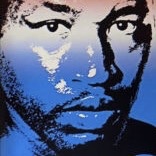
A stylised portrait of Ray “Merciless” Mercer, the 1988 Olympic heavyweight gold medallist and 1991 WBO champion.
Raymond Anthony Mercer was born in Jacksonville, Florida, on April 4, 1961. He took up boxing during his service in the United States Army, beginning his serious development in his twenties rather than through a long childhood amateur career.
His progress led to the United States Olympic trials in 1988. He beat Morrison during that selection process and also overcame Michael Bentt in the trials and subsequent box-offs. The route to Seoul involved several tests, not simply one qualifying victory.
At the 1988 Olympics, Mercer competed in the heavyweight division, then limited to ninety-one kilograms. The super-heavyweight category was separate and was won by Lennox Lewis. Mercer stopped all four opponents he faced, including South Korea’s Baek Hyeon-Man in the first round of the final.
That gold medal made his punching strength internationally visible. It also provided a strong foundation for a professional career: he had succeeded against different opponents under tournament conditions, even though the longer professional distances would demand a different rhythm.
Mercer turned professional in 1989. A points victory over Bert Cooper for the NABF title in August 1990 helped establish him against experienced opposition before his first world-title opportunity.
On January 11, 1991, he challenged Damiani for the WBO heavyweight championship in Atlantic City. Damiani’s boxing and movement gave the Italian the advantage on the scorecards as the fight entered its later stages.
Mercer changed the result with a damaging punch in the ninth round. Damiani was unable to beat the count, and Mercer became WBO champion by knockout. The victory showed why an opponent could not treat a points lead over Mercer as protection against his power.
The WBO championship was one version of the heavyweight title. Mercer did not defeat the undisputed champion, Evander Holyfield, or unify the leading belts. His achievement was a legitimate championship victory over the organisation’s reigning titleholder, with its scope defined by that context.
Mercer defended against Morrison on October 18, 1991, returning to Atlantic City for a meeting between two unbeaten professionals who had already encountered one another in the amateurs.
Morrison attacked quickly and had success with combinations in the early rounds. Mercer absorbed the pressure, stayed competitive and found a decisive opening in the fifth. His sustained attack forced a stoppage and preserved the WBO championship.
This was Mercer’s first and only successful WBO defence. It belongs among his defining performances because he defeated a dangerous challenger after working through the challenger’s strongest early phase.
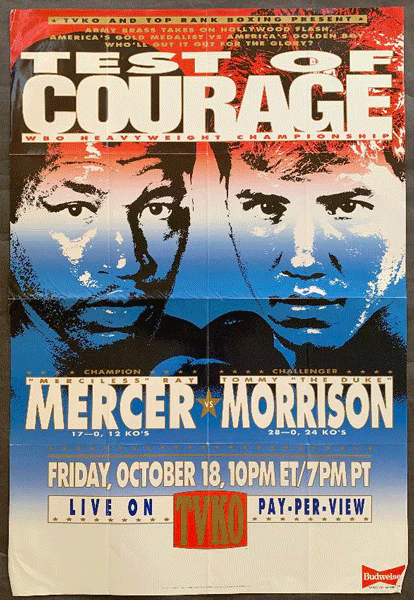
Top Rank’s archival footage of Mercer’s fifth-round stoppage of Morrison in his 1991 WBO title defence.
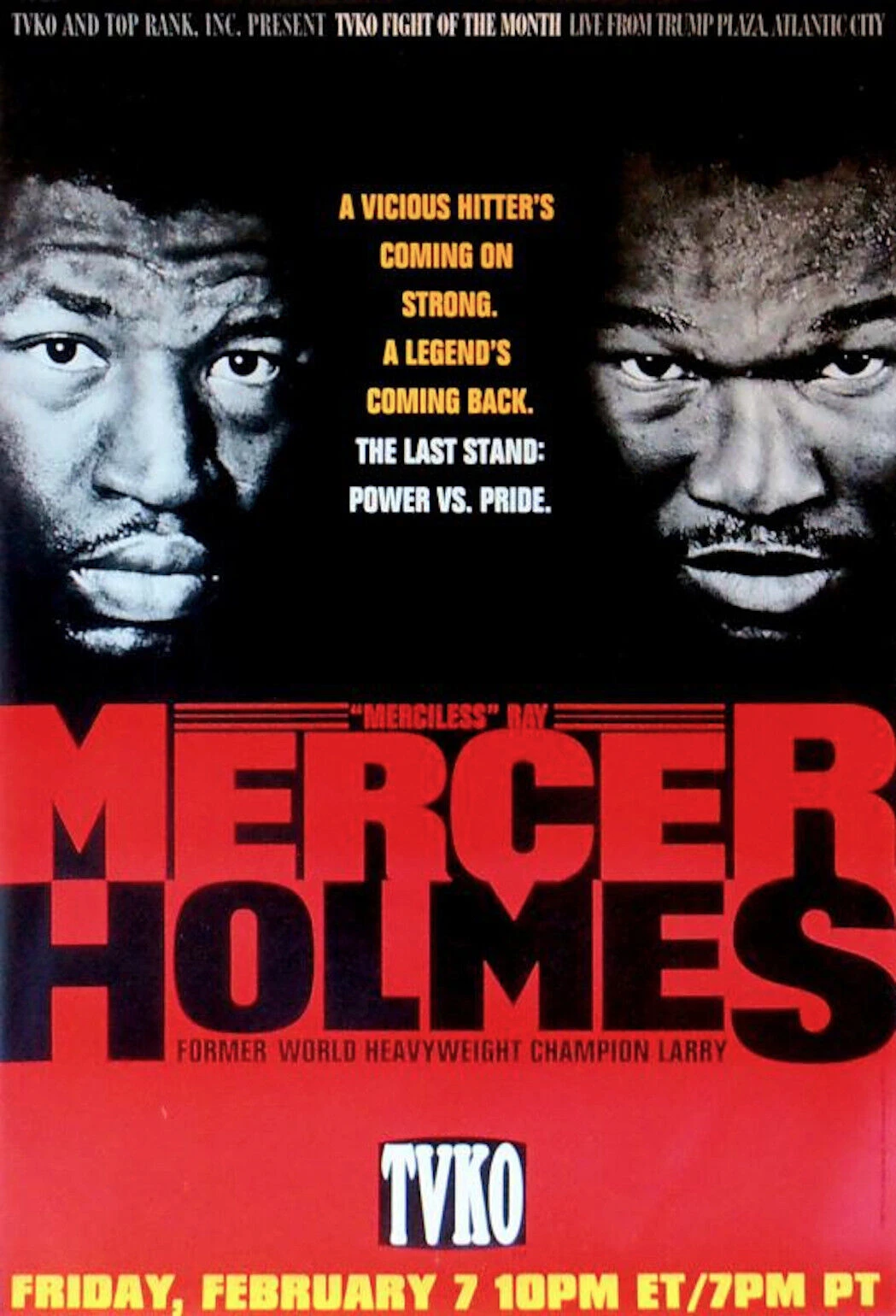
Mercer chose to face Larry Holmes rather than fulfil a WBO mandatory defence against Michael Moorer. The organisation stripped him of its championship before the Holmes contest. The Holmes fight consequently took place without the WBO title at stake.
On February 7, 1992, forty-two-year-old Holmes defeated Mercer by a twelve-round unanimous decision in Atlantic City. The veteran’s jab, judgement of distance and ability to control exchanges prevented Mercer from imposing the fight he wanted.
It was Mercer’s first professional defeat and a substantial setback in his pursuit of the division’s leading championship. His power remained dangerous, but Holmes demonstrated the difference between being able to hurt an opponent and consistently winning rounds against one.
Mercer lost a ten-round unanimous decision to Jesse Ferguson at Madison Square Garden on February 6, 1993. The defeat cost him a proposed championship meeting with Riddick Bowe and interrupted his attempt to regain a position near the top of the division.
Ferguson alleged that Mercer had offered him money to lose during the bout. Mercer denied the allegation and pleaded not guilty to the resulting sports-bribery charge. On March 29, 1994, a New York jury acquitted him. The criminal case ended in an acquittal, not a conviction.
The men had already fought a rematch in November 1993, which Mercer won by split decision. It restored a victory to his record but did not immediately recover the championship opportunity lost earlier that year.
On May 20, 1995, Mercer lost a ten-round unanimous decision to Evander Holyfield. Their contest was a demanding exchange between former champions, rather than a world-title fight.
Mercer gave Lennox Lewis another difficult ten rounds at Madison Square Garden on May 10, 1996. Lewis won a majority decision, but Mercer’s pressure and effective jab made the verdict disputed among observers. The official loss and the quality of Mercer’s performance both belong in his record.
He closed 1996 with a ten-round unanimous-decision victory over Tim Witherspoon in Atlantic City. That win gave his late-career standing a tangible result against another accomplished former champion.
Contemporary reporting in June 1998 documented Mercer’s withdrawal from a scheduled fight after testing positive for hepatitis B. The illness-related withdrawal came more than five years after his first Ferguson fight. His subsequent boxing career continued after an extended interruption.
On June 29, 2002, Mercer challenged Wladimir Klitschko for the WBO championship in Atlantic City. Klitschko’s range and accurate punching prevented Mercer from establishing sustained pressure, and the champion retained his title by a sixth-round technical knockout.
Further professional appearances followed. Shannon Briggs knocked him out in the seventh round in 2005, and Mercer continued boxing into 2008. Those later contests extended his career without bringing a second world championship.
Mercer’s strongest work combined a solid jab, heavy punches and the ability to remain dangerous through difficult exchanges. His uneven performances also mattered: Holmes and Ferguson exposed weaknesses that could not be explained away by his best nights.
His place in heavyweight history rests on Olympic gold, the Damiani championship victory, the Morrison defence and the demanding opposition he faced afterwards. He was capable of troubling elite heavyweights without always defeating them, and his career illustrates the difference between a formidable contender and a sustained championship reign.

Top Heavyweight Boxing covers the past, present and future of boxing's premier division. Copyright© 2026
Powered by Digital Dynasty Design